Roland Garros Rebellion: Top Tennis Stars Slam French Open Over Prize Money, Threaten Boycott
The pristine red clay of Roland Garros is supposed to be the stage for tennis’s greatest drama. But this year, the most explosive story isn’t unfolding on Court Philippe Chatrier. It is happening in press rooms and on social media, where the sport’s biggest names are launching a blistering attack on the French Open’s 2026 prize money structure.
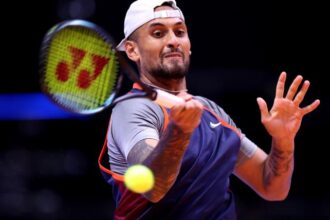
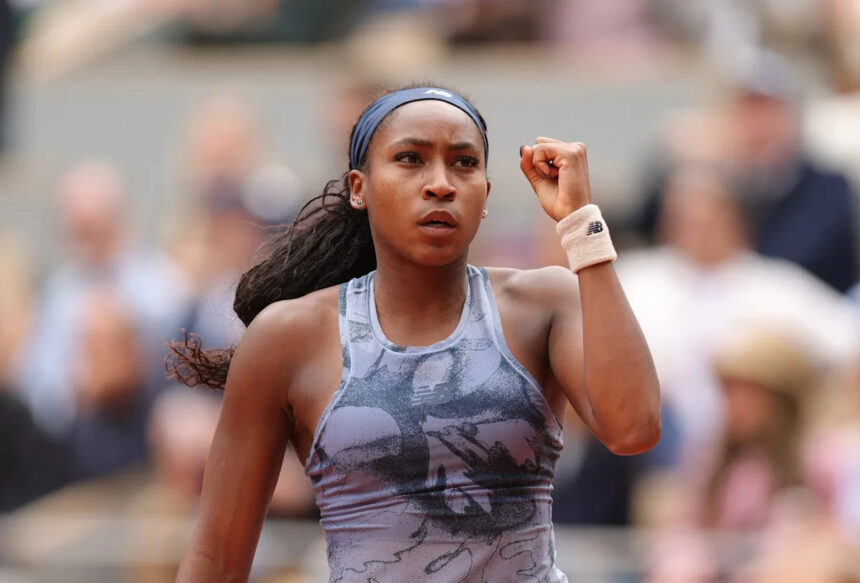
Led by world number one Jannik Sinner, Australian Open champion Aryna Sabalenka, and US Open winner Coco Gauff, a growing coalition of players is accusing the French Tennis Federation (FFT) of shortchanging the very athletes who fill the stands and drive broadcast ratings. The core grievance? A shrinking percentage of tournament revenue being paid to players, coupled with a lack of transparency and collective bargaining power.
“Without us there wouldn’t be a tournament and there wouldn’t be that entertainment,” Sabalenka declared on Tuesday at the Italian Open. “I feel like definitely we deserve to be paid more percentage.” Her warning was stark: “I think at some point we will boycott it. I feel like that’s going to be the only way to fight for our rights.”
As the clay-court season heats up, this financial feud threatens to overshadow the tennis itself. Here is the full breakdown of the dispute, the numbers behind the anger, and what a potential boycott could mean for the future of the sport.
The Numbers That Sparked the Fury: Prize Money vs. Revenue
On paper, the 2026 prize money figures for the French Open look impressive. The men’s and women’s singles champions will each receive 2.8 million euros ($3.28 million), while runners-up will take home 1.4 million euros ($1.64 million). Total prize money for the tournament will exceed 60 million euros for the first time.
But context is everything. The players are not looking at the absolute numbers; they are looking at the percentage. According to a joint statement posted to social media by a group of leading players, the players’ share of Roland Garros tournament revenue has declined from 15.5% in 2024 to 14.9% projected in 2026.
This decline is happening while the tournament’s overall revenue is exploding. The statement notes that with estimated revenues of over 400 million euros ($468,426,000) for this year’s tournament, the prize money as a percentage of revenue will likely still be less than 15%. That is far short of the 22% that players have requested to bring the Grand Slams into line with ATP and WTA Combined 1000 events.
For perspective:
- 2024 French Open: Players received 15.5% of revenue.
- 2026 French Open Projected: Players receive 14.9% of revenue.
- Players’ Demand: 22% of revenue.
- Estimated 2026 Tournament Revenue: Over 400 million euros.
The math is simple: as the French Open gets richer, the players’ slice of the pie is getting smaller. This is not a case of greedy players asking for more; it is a case of players asking for a fairer share of a rapidly expanding business.
Beyond the Paycheck: Health, Pensions, and Representation
The prize money dispute is only the tip of the iceberg. According to a report from ESPN, the players have other demands that have not been addressed by officials, including better representation, health provisions, and pensions from the four Grand Slam tournaments: the Australian Open, the French Open, Wimbledon, and the U.S. Open.
The current system is fractured. While the ATP and WTA tours have their own governance structures, the Grand Slams operate independently. This leaves players with limited collective leverage. They are essentially individual contractors negotiating with four separate billion-dollar entities.
Coco Gauff, the 2023 US Open champion, made this point explicitly. “From the things I’ve seen with other sports, usually to make massive progress and things like this, it takes a union,” Gauff said, per the Associated Press. “We have to become unionized in some way… We definitely can move more as a collective.”
When asked directly about the possibility of a boycott, Gauff did not shy away. “If everyone were to move as one and collaborate, yeah, I can 100% see that.”
This is a significant shift in tone. For years, top players have grumbled privately about prize money and scheduling. Now, they are speaking publicly and in unison. The demands are clear:
- Higher Prize Money Percentage: A minimum of 22% of Grand Slam revenue.
- Better Health Coverage: Comprehensive medical insurance and injury recovery support for players and their teams.
- Pension Plans: Retirement benefits for players who dedicate their careers to the sport.
- Player Representation: A formal seat at the table when Grand Slam policies are decided.
Expert Analysis: Is a Boycott Realistic?
The word “boycott” is the nuclear option in professional sports. It is rarely used, and even more rarely executed. But the fact that Jannik Sinner, Aryna Sabalenka, and Coco Gauff are all openly discussing it signals a level of frustration not seen since the early 1970s, when players boycotted Wimbledon to form the ATP.
Let’s be realistic: a full-scale boycott of the 2026 French Open is unlikely. The financial and reputational damage to the players would be immense. Missing a Grand Slam means forfeiting millions in prize money, endorsement bonuses, and ranking points. However, a partial boycott—such as a one-day strike or a coordinated refusal to participate in media obligations—is far more plausible.
My prediction: The FFT will blink first. The threat of a boycott, even a symbolic one, is a nightmare for tournament directors and sponsors. The French Open is a crown jewel of the global sports calendar. A player strike would dominate headlines for all the wrong reasons, damaging the brand’s prestige and potentially scaring off future sponsors.
I expect the FFT to come to the table with a revised offer within the next six months. They will likely bump the prize money percentage to around 18-19%, still short of the 22% demand but enough to claim a “concession.” The players, in turn, will accept this as a victory and use the momentum to push for structural changes in how the four Grand Slams are governed.
The real battle is not about one year’s prize money. It is about the future of tennis economics. The players have finally realized that their individual star power, when pooled together, is a formidable weapon. They are no longer asking politely. They are demanding, and they have the leverage to back it up.
What This Means for the French Open and the Sport
The French Open has long prided itself on tradition. But tradition does not pay the bills. The tournament generates over 400 million euros in annual revenue through ticket sales, broadcast rights, corporate hospitality, and merchandise. The players are the product. Without them, the 400 million euro machine grinds to a halt.
If the FFT continues to stonewall, the damage could be long-lasting. Younger players, inspired by the outspokenness of Sabalenka and Gauff, may begin to view the Grand Slams as adversaries rather than partners. This could lead to a fractured relationship that takes years to repair.
On the flip side, if a fairer revenue-sharing model is achieved, it could set a new standard for the other three Grand Slams. The Australian Open, Wimbledon, and the US Open are all watching closely. A precedent at Roland Garros would force them to re-evaluate their own compensation structures.
Conclusion: The Players Have the Power
The dust has not settled on this controversy, but one thing is crystal clear: the era of passive acceptance is over. Jannik Sinner, Aryna Sabalenka, and Coco Gauff have drawn a line in the red clay. They are not just fighting for a bigger paycheck; they are fighting for respect, representation, and a sustainable future for the athletes who make the sport possible.
The French Open has a choice. It can continue to treat its players as replaceable assets, risking a historic boycott that would tarnish the tournament’s legacy. Or it can recognize that the athletes are partners in a multi-million dollar enterprise and offer them a fair share of the spoils.
My money is on the players. They have the talent, the platform, and now, the unity. The French Open’s response will define not just the 2026 tournament, but the entire power dynamic of professional tennis for the next decade.
Hearst Magazines and Yahoo may earn commission or revenue on some items through these links.
Source: Based on news from Yahoo Sports.