McAvoy Gets Six Games for Stick-Swinging Incident: A Just Verdict or a Missed Opportunity?
The NHL’s Department of Player Safety dropped the hammer on Tuesday evening, announcing that Boston Bruins defenseman Charlie McAvoy will be suspended for the first six games of the 2024-25 regular season. The punishment stems from a violent, retaliatory slash on Buffalo Sabres forward Zach Benson during the final seconds of Game 6 of their first-round playoff series. It was a moment that capped a bitterly disappointing end to Boston’s season, and it now casts a long shadow over their opening month next autumn.
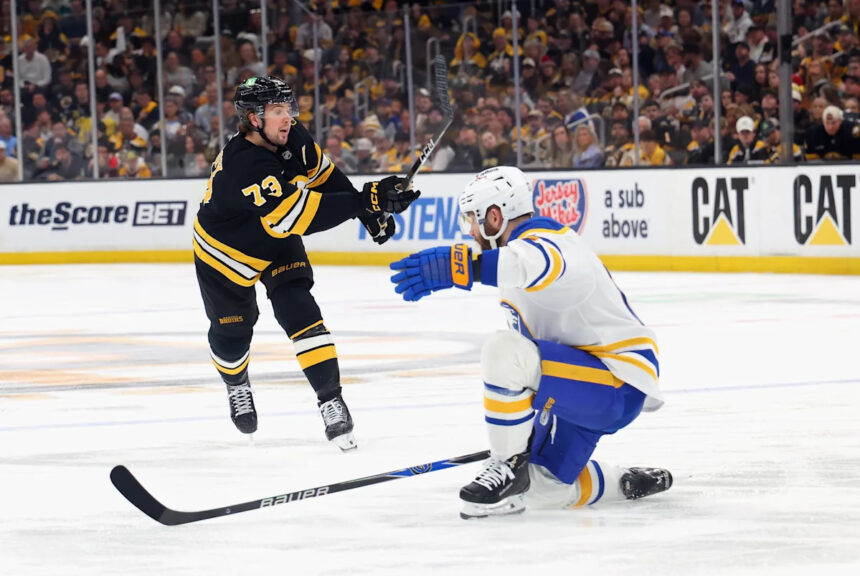
Let’s be clear from the start: this was not a routine hockey play. With less than 90 seconds left on the clock and the Bruins facing elimination, McAvoy snapped. After being slew-footed by Benson—a dangerous trip that sends a player off-balance and vulnerable—McAvoy rose to his feet and, in a fit of frustration, swung his stick like a baseball bat at Benson’s midsection. The contact was significant, the intent obvious, and the result was a major penalty, a game misconduct, and now, a six-game suspension that will bleed into next season.
As a journalist who has watched the league’s disciplinary process for years, I have to admit: the NHL’s “explainer video” for this decision was as bizarre as ever. You know the ones—stilted narration, slow-motion replays with red circles, and a tone that suggests the league is trying to convince you, the viewer, that they actually have a clue. But regardless of the production value, the conclusion was sound. McAvoy deserved supplemental discipline. The question is: did he get the right amount?
The Anatomy of the Incident: Retaliation vs. Recklessness
To understand the suspension, we have to break down the sequence of events. It starts with Benson, a talented but feisty rookie who had been a thorn in Boston’s side all series. With the game winding down and the Sabres protecting a lead, Benson engaged McAvoy behind the net. The Sabres forward executed a clear slew foot—a move where a player uses his leg to kick an opponent’s feet out from under him while pushing backward. It is, by rule, a dangerous, suspendable offense in its own right.
McAvoy went down hard, his back hitting the ice. But here’s where the line is crossed. Instead of skating away, or even engaging in a standard scrum, McAvoy got to his feet, wound up, and delivered a two-handed chop to Benson’s ribs. The stick made contact with the numbers on Benson’s back, a spot that referees are trained to protect at all costs. It was not a slash of frustration; it was a weaponized swing.
- The Slew Foot: Benson’s initial infraction was dirty. It deserves a fine or a suspension of its own (though none was announced).
- The Retaliation: McAvoy’s response was disproportionate and dangerous. A hockey player cannot take the law into his own hands with a stick.
- The Context: The incident occurred with under 90 seconds left in a game the Bruins had already lost. This was not a momentum swing; it was a frustration-fueled lapse in judgment.
In the NHL’s video, they highlighted that McAvoy had time to choose a different path. He could have dropped the gloves. He could have shoved Benson. Instead, he chose to swing a piece of carbon fiber with enough force to cause serious injury. The league’s logic is simple: you cannot use your stick as a weapon, period.
Expert Analysis: Why Six Games Feels Right (and Wrong)
From a strict disciplinary standpoint, six games for a stick-swinging incident is actually on the lighter side of the league’s historical precedent. Let’s look at the data. In recent years, we’ve seen players get eight, ten, or even fifteen games for similar actions, especially when the stick makes contact with an opponent’s head or neck. McAvoy’s slash hit the torso, which likely saved him from a longer ban.
However, the context of a playoff series matters. The NHL has a long-standing, if unspoken, tradition of letting players police themselves in the postseason. Physicality escalates. Tempers flare. But McAvoy’s act crossed the line from “playoff hockey” into “personal vendetta.” The league sent a clear message: the postseason is not a lawless wasteland.
Let’s also consider the player profile. McAvoy is a star. He is a top-pairing defenseman, a Team USA Olympian, and a core piece of the Bruins’ future. The NHL often gives star players a longer leash, but they also make examples of them when they cross the line. By suspending McAvoy for six games, the league is saying, “We don’t care who you are. This is unacceptable.”
But here is where the “right” part gets complicated. Zach Benson was not innocent. He initiated the physical contact with a dangerous, illegal play. The NHL’s Player Safety department has a history of ignoring the “victim’s” role in these situations. By focusing solely on the retaliatory slash, they effectively gave Benson a free pass. That is a dangerous precedent. If a player can take a cheap shot and know that the only consequence will be on the other guy, we are encouraging more of these baiting tactics.
Prediction: The Fallout for Boston and the League
The immediate impact is obvious: the Boston Bruins will be without their top minute-muncher for the first six games of the 2024-25 season. That is a massive hole in their lineup. The Bruins are a team that relies on structure, defensive zone exits, and physicality. Without McAvoy, their power play loses a quarterback, and their penalty kill loses a shot-blocker. Expect general manager Don Sweeney to be on the phone looking for a short-term rental or a veteran stop-gap.
But the long-term implications are more interesting. This suspension will follow McAvoy into training camp. He will have to sit and watch his teammates play while he serves his time. For a player of his competitive nature, that is a brutal punishment. It also puts a target on his back. Opposing forwards will test him early in the season, knowing he is already on the league’s radar.
For the NHL, this decision reinforces a double-edged sword. On one hand, they look tough on stick violence, which is a positive for player safety. On the other hand, they look inconsistent by ignoring Benson’s slew foot. The league’s “explainer video” tried to gloss over this, but fans and analysts are not stupid. If the NHL wants to be taken seriously as a disciplinary body, they need to start addressing the initial instigator in these situations.
Finally, expect a change in how the Bruins handle their emotions. Coach Jim Montgomery will likely preach restraint, but McAvoy is a fiery player. That fire makes him great, but it also makes him a liability. The team will need to build a system that protects him from himself.
A Strong Conclusion: The Lesson That Must Be Learned
At the end of the day, Charlie McAvoy got six games because he forgot the most basic rule of hockey: you are in control of your stick. It is not a weapon. It is a tool for passing, shooting, and checking. When you swing it at another human being with malicious intent, you forfeit your right to play.
Zach Benson should have been fined for his slew foot. That is a separate conversation. But McAvoy’s retaliation was a choice. He had three seconds to think about it. He chose violence. And now, he will pay for it with six games of lost salary (over $200,000, by the way) and a stained reputation.
For the Bruins, this is a wake-up call. They lost the series. They lost their composure. And now, they will lose their best defenseman for the first month of next season. The silver lining? McAvoy is young, talented, and hopefully, smart enough to learn from this. If he doesn’t, the next suspension will be for a lot longer than six games.
The NHL made a statement on Tuesday. It was loud, it was clear, and it was necessary. But it was also incomplete. Until the league starts punishing the instigators as harshly as the retaliators, we will keep seeing these ugly incidents. For now, McAvoy sits. Benson skates. And the rest of the league watches, wondering what happens next time the stick comes up.
Source: Based on news from Yahoo Sports.