Crawley’s Gritty Fifty Anchors England’s Fightback in Brisbane Crucible
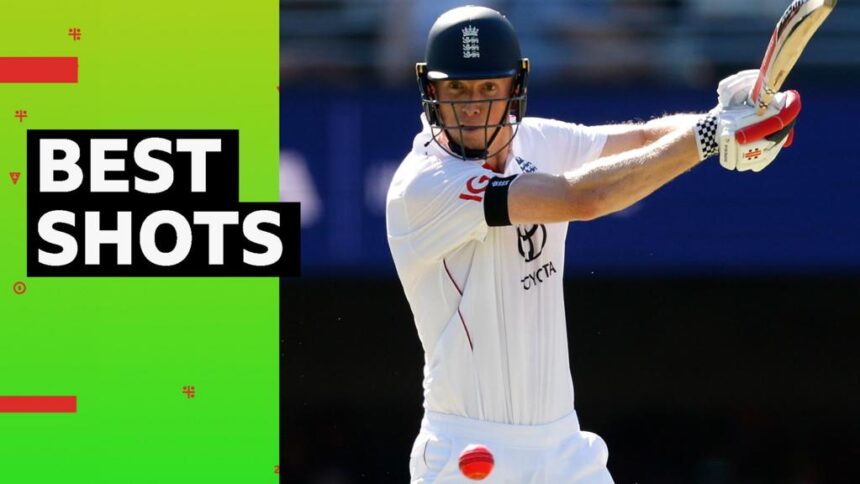
The roar that greeted Pat Cummins’s first-ball wicket at the Gabba was a familiar, intimidating sound for England fans. After the trauma of Adelaide, the nightmare start had been replicated: 5 for 2, Rory Burns and Dawid Malan gone, the scoreboard a sickly echo of recent failures. Yet, by the time lunch was called on the opening day of the second Ashes Test, a different, more resilient England had emerged, steered by the composed blade of Zak Crawley. His unbeaten half-century, a cocktail of crisp drives and unwavering concentration, dragged England to a lunchtime 98-2, transforming a potential collapse into a platform of genuine promise.
Weathering the Storm: England’s Early Scare and Crawley’s Response
Under a thick Brisbane cloud cover, with the Gabba pitch showing a tantalising hint of green, Australian captain Pat Cummins had no hesitation in bowling first. His decision was vindicated in the most dramatic fashion. Mitchell Starc, under pressure after a quiet first Test, produced a vicious, swinging delivery first up to castle Rory Burns for a golden duck. The very next over, Cummins himself joined the fray, removing the dangerous Dawid Malan, caught behind for a scratchy 4. At 5-2, the ghosts of England’s batting frailties were dancing on the green Gabba turf.
Enter Zak Crawley. The tall Kent right-hander, whose place was under scrutiny, walked in with the kind of crisis that defines careers. Alongside the experienced Joe Root, Crawley displayed a temperament often absent from England’s top order in recent times. He eschewed flashiness for fundamentals:
- Leaving with authority: Judging the bounce and line of the Gabba pitch impeccably outside off-stump.
- Capitalising on width: Punishing anything short or wide with powerful cuts and drives.
- Strong front-foot presence: Using his height to get forward and smother the swing.
His fifty, brought up just before lunch with a confident clip off his pads, was more than just runs; it was a statement of intent and a testament to his technical overhaul since a difficult 2021.
Tactical Analysis: The Shifting Momentum of the Morning Session
The first session was a masterclass in the ebb and flow of Test cricket. Australia’s initial plan was simple and effective: exploit the conditions, attack the stumps, and prey on the fragile confidence of England’s top order. For seven overs, it worked perfectly. The bowling was relentless, the fielding sharp, and the atmosphere electric.
However, as Crawley and Root settled, the dynamic shifted. The Australian attack, so lethal with the new, hard Kookaburra, began to search for answers as the ball softened. Nathan Lyon was introduced earlier than expected, a sign of Cummins looking to disrupt the growing partnership. While Lyon posed questions, the English pair played him with cautious respect.
Joe Root’s role was equally crucial. The England captain, still searching for that elusive first century in Australia, looked assured. His presence at the other end allowed Crawley to play his natural game. The partnership, worth 93 unbroken runs by lunch, did two critical things:
- It blunted the psychological advantage Australia seized with the early wickets.
- It forced the Australian bowlers into longer, more taxing spells under a warming sun, a factor that could pay dividends later in the day and the match.
The key battle now moves into the second session. Can Crawley convert his start into a match-defining hundred? Can Root break his Australian century duck? The old ball will be less potent, but the new ball, due after 80 overs, looms as a pivotal moment in the innings.
Looking Ahead: Predictions for the Rest of the Day and Series Implications
Lunchtime in Brisbane has left this second Test fascinatingly poised. England have won the first mini-session post-collapse, but Australia know one wicket can open up a middle order that includes the returning Ben Stokes and the talented but inconsistent Ollie Pope.
The next two sessions are monumental for the series. If Crawley and Root can bat through the majority of the afternoon, pushing the score beyond 250-2, England will have not only recovered but seized control of the game and potentially the momentum of the Ashes. Setting a total in excess of 350 would allow their varied attack, likely to feature Mark Wood’s express pace, to attack an Australian batting line-up that is not without its own questions.
Conversely, if Australia can strike early after lunch, perhaps with a fired-up Starc or a cunning Cummins change-up, they will expose England’s softer underbelly and aim to bowl them out for under 250. The pitch is expected to remain good for batting for the first two days, making a first-innings total paramount.
From a series perspective, this fightback is psychologically vital for England. It proves they can withstand the early onslaught on Australian soil—a fundamental requirement for competing here. For Australia, it is a reminder that England, down but not out, possess the individual talent to counter-punch.
Conclusion: A Session that Redefined the Narrative
The opening morning of the second Ashes Test at the Gabba was a microcosm of what makes this rivalry so compelling: sudden drama, sustained resilience, and a narrative that flipped on its head within a single session. From the despair of 5-2 to the hope of 98-2, England’s journey was charted by the mature innings of Zak Crawley. His half-century under extreme pressure was the innings England desperately needed, not just for the runs, but for the message it sent.
This was not a fluke or a pretty thirty; it was a hard-edged, technically sound, and mentally robust knock that has given his team a foothold in a match they were in danger of letting slip away before most fans had found their seats. The fightback is underway, but the battle is only just beginning. The Gabba, a fortress for Australia for over three decades, has been challenged. Whether England can storm its walls depends on how they build from the foundation laid by Crawley and Root. One thing is certain: the 2021-22 Ashes is well and truly alive.
Source: Based on news from BBC Sport.
Image: Source – Original Article