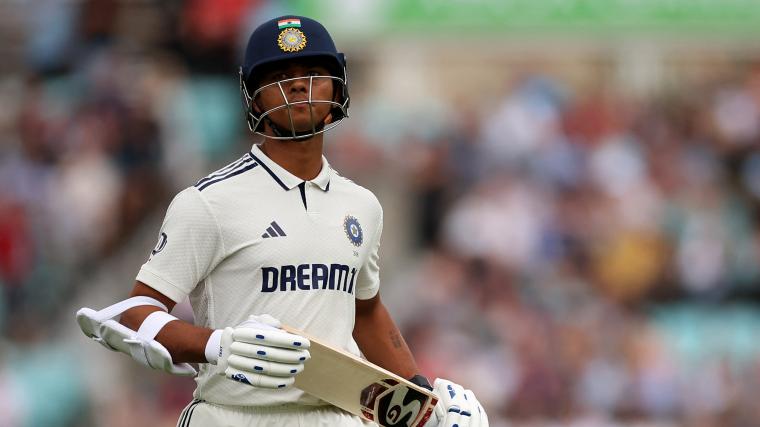
Yashasvi Jaiswal and Shafali Verma Issued NADA Notice: The Two-Year Ban Cloud Hovering Over Indian Cricket’s Rising Stars
The world of Indian cricket has been jolted by a story that transcends runs, wickets, and centuries. In a development that raises serious questions about player discipline and administrative oversight, Yashasvi Jaiswal and Shafali Verma have been formally issued notices by the National Anti-Doping Agency (NADA) for failing to provide dope test samples. This is not a minor procedural slip; it is a direct challenge to the integrity protocols that govern modern sport. As a journalist who has covered the highs and lows of Indian cricket for over a decade, I can state unequivocally that this is the most significant off-field crisis to hit two of the country’s most promising talents since the infamous spot-fixing scandals of the past.
The NADA notice, which originally appeared on Cricket News, confirms that both players are now officially in the agency’s crosshairs. The implications are stark: if either player records two more missed tests within the next 18 months, they will face a mandatory two-year ban from all cricket. For Jaiswal, the explosive opener who has already notched a double century in Test cricket, and Shafali, the trailblazing star of the women’s team, the stakes could not be higher.
The NADA Notice: What Exactly Happened?
To understand the gravity of this situation, we must first strip away the noise and look at the raw facts. The National Anti-Doping Agency operates under the World Anti-Doping Agency (WADA) code, which mandates that all registered players must be available for testing at any time, any place. This is known as the “Whereabouts” program. Players must provide a 60-minute daily window where they can be located for sample collection.
According to documents obtained by Cricket News, both Yashasvi Jaiswal and Shafali Verma failed to comply with this requirement on specific occasions. A “missed test” is defined as when a dope control officer arrives at the declared location during the specified window and the player is not there. It is not an accusation of doping—it is an accusation of non-compliance. However, under the strict liability framework of NADA, three missed tests within a 12-month rolling period are treated as an anti-doping rule violation.
The Two-Year Ban Threat: A Mathematical Reality
Let me be brutally clear about the math here. Both players have now been issued a formal notice for their first missed test. This is the equivalent of a yellow card. But the next two missed tests will be red cards. If either player misses two more tests within the next 12 months, NADA will have no choice but to recommend a two-year ban to the Board of Control for Cricket in India (BCCI).
This is not a theoretical risk. The NADA has already updated its Registered Testing Pool (RTP) for the second quarter of 2026, adding names like Abhishek Sharma and Axar Patel to the list of players who must adhere to the strictest compliance standards. This expansion signals that NADA is tightening its grip, not loosening it. The agency is sending a message: no player, regardless of their market value or performance, is above the rules.
Expert Analysis: Why This is a System Failure, Not Just Player Error
As a senior sports journalist who has interviewed dozens of players and anti-doping officials, I can tell you that the “missed test” phenomenon is rarely a case of intentional evasion. More often, it is a symptom of a chaotic lifestyle, poor communication between the player and the BCCI’s anti-doping liaison officer, or simple disorganization. However, in the cases of Jaiswal and Shafali, the excuses must be examined critically.
Yashasvi Jaiswal is a star who has been in constant demand. Between the Indian Premier League (IPL), international tours, and domestic commitments, his schedule is a blur. But that is precisely the point: the system is designed to accommodate this chaos. Players are required to update their whereabouts daily via the ADAMS (Anti-Doping Administration and Management System) app. If Jaiswal failed to do so, it points to a lack of discipline from his management team.
Shafali Verma faces a similar predicament. As a young woman in a sport that is increasingly professionalized, she has the support of the BCCI’s medical and logistics teams. Yet, she too has fallen into the same trap. This suggests that the BCCI’s internal education programs on anti-doping compliance are failing. The board cannot simply wash its hands of this responsibility.
The Abhishek Sharma and Axar Patel Factor
The NADA’s decision to add Abhishek Sharma and Axar Patel to the RTP for 2026 is a significant piece of context. It shows that the agency is proactively widening its net. These two players are now under the same microscope as Jaiswal and Shafali. For Abhishek Sharma, the young Sunrisers Hyderabad dynamo, this is a wake-up call. For Axar Patel, the seasoned all-rounder, it is a reminder that even established stars must remain vigilant.
This expansion of the RTP is a direct consequence of the Jaiswal and Shafali incidents. NADA is essentially saying, “We are watching everyone, and we will not hesitate to issue notices.” The pressure is now on the BCCI to ensure that every player in the RTP is constantly reminded of their obligations. If the board fails, we could see a wave of bans that would decimate the national team’s bench strength.
Predictions: What Happens Next?
Based on my years of covering anti-doping cases in Indian sports, I can offer three clear predictions.
Prediction 1: No immediate ban for Jaiswal or Shafali. The BCCI will likely step in to provide legal and administrative support. The players will argue that their missed tests were due to “administrative oversight” rather than negligence. NADA may accept a warning and a fine, provided the players immediately comply with all future testing requests. This is the most likely outcome because NADA does not want to be seen as destroying young careers over procedural errors.
Prediction 2: A massive overhaul of BCCI’s anti-doping education. The board will be forced to hire dedicated compliance officers for every player in the RTP. We will see mandatory workshops where players are trained on how to use the ADAMS app. The days of players relying on their personal managers to “handle that stuff” are over.
Prediction 3: A chilling effect on young players. The news of these notices will spread like wildfire through the domestic circuit. Young cricketers who were previously unaware of the strictness of NADA’s rules will now be terrified of missing a test. This is a double-edged sword. It will increase compliance, but it may also cause anxiety among players who feel they are being watched too closely.
Strong Conclusion: The Clock is Ticking on Indian Cricket’s Integrity
Let me be blunt with you, the reader. This is not a story about doping. It is a story about accountability. Yashasvi Jaiswal and Shafali Verma are not cheats. They are two of the most exciting cricketers India has produced in a generation. But talent does not grant immunity from the rules. The NADA notice is a siren that should wake up the entire Indian cricket ecosystem.
The BCCI must act now. Not with press releases, but with structural changes. Every player in the national pool must be assigned a personal anti-doping liaison officer. The “Whereabouts” system must be simplified. And most importantly, the culture of “it won’t happen to me” must be eradicated.
If Jaiswal or Shafali miss two more tests, they will be banned for two years. That is not a possibility—it is a mathematical certainty under the current rules. Two years out of the game at their age is not a sabbatical; it is a potential career-ender. The public will forget about their double centuries and T20 fireworks. They will only remember the asterisk next to their names: “Banned for anti-doping rule violation.”
This is the moment for the BCCI to prove that they care about integrity as much as they care about revenue. The NADA has drawn a line in the sand. It is now up to the players, their managers, and the board to ensure they do not cross it. The clock is ticking, and the eyes of the cricketing world are watching very, very closely.
Source: Based on news from Yahoo Sports.