Haaland v Mbappe, Dream Ties, and YMCA: The Unforgettable Spectacle of the World Cup Draw
The glittering balls have been placed, the pots are empty, and the map for soccer’s greatest carnival is finally drawn. In a ceremony that veered from tense tactical anticipation to pure, unadulterated spectacle, the 2026 World Cup draw in Washington D.C. did more than just sort 48 teams into 12 groups. It gave us a glimpse of the narratives that will define next summer, culminating in a surreal moment where global politics and disco famously collided.
From Seeding to Show-Stopping: A Draw Like No Other
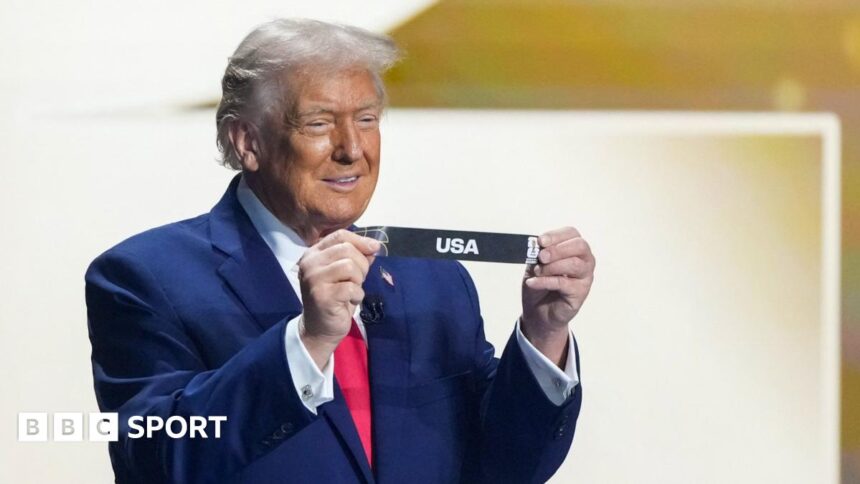
Let’s address the finale first, because it was anything but an afterthought. As the final ball was slotted, the ceremony took a left turn into a time machine headed straight for 1978. The Village People, in full iconic regalia, launched into “YMCA.” And there, captured for the world, was former U.S. President Donald Trump, on his feet, enthusiastically mirroring the dance moves. It was a bizarre, unforgettable coda that underscored the event’s unique blend of sport and stateside showmanship. The World Cup, arriving on North American soil, is promising a tournament unlike any other, and the draw set that tone perfectly.
But before the disco ball spun, the serious business unfolded. The expansion to 48 teams created a new dynamic, with a group stage consisting of 12 quartets. The new format means the top two from each group, plus the eight best third-place finishers, will advance to a 32-team knockout round. This structure injected an extra layer of intrigue, making every draw consequential.
Group Stage Fireworks: The Clash of the Titans
While the draw was largely kind to the host nations—the USA, Canada, and Mexico—one group immediately stole the headlines and set the footballing world ablaze.
Group F is the undeniable “Group of Death,” and it delivers a dream matchup years in the making. Norway’s Erling Haaland and France’s Kylian Mbappe, the two heirs to the Cristiano Ronaldo-Lionel Messi throne as the planet’s most devastating forwards, will meet in the group stage. This isn’t a potential semifinal clash; it’s a guaranteed head-to-head battle in the tournament’s opening act.
- Erling Haaland: The Nordic cyborg, a goal-scoring machine whose physicality is unmatched. This is his first World Cup, a stage he was born to dominate.
- Kylian Mbappe: The French phenom, blending warp speed with icy composure. A World Cup winner already, seeking to cement his legacy as the defining player of his generation.
Their stylistic clash—power versus pace, cold efficiency versus flamboyant genius—will be a tactical chess match for their managers and a feast for fans. The result could dictate the tournament’s golden boot race and psychological momentum from day one.
Knockout Roadmaps: The Dream Collision Course
Beyond the group stage, the draw laid out potential knockout paths that are almost too tantalizing to contemplate. The bracket mechanics suggest a collision course for two modern legends who have defined international soccer for over a decade.
If Argentina and Portugal both win their groups—a likely scenario—they are projected to meet in the round of 16. Yes, you read that correctly. Lionel Messi and Cristiano Ronaldo, in what is almost certainly their final World Cup appearances, could face off in a single, winner-takes-all knockout match. The sheer narrative weight of such a fixture is staggering. It would be the most-watched, most-hyped match in World Cup history, a definitive final chapter to their epic, parallel careers played out on the grandest stage.
Other potential dream ties litter the bracket:
- A possible quarterfinal between a Kylian Mbappe-led France and an England side brimming with young talent like Jude Bellingham.
- A heavyweight semifinal in the West region that could pit Brazil against Spain or Germany.
- The host USA, if they navigate their group and win their round of 32 match, could face a monumental round of 16 tie against a European giant like the Netherlands.
Winners, Losers, and the Long Road Ahead
While some teams left Washington smiling, others have a monumental task ahead.
Winners: The host nations avoided nightmare scenarios. Canada will be delighted with a manageable group. Mexico faces a test but has a clear path to advancement. The USA will fancy their chances to top their group and build momentum. Italy, returning to the party, also received a favorable draw.
Losers: Beyond Norway and France in Group F, the draw was cruel to Ghana, who find themselves in a brutal group with Spain, Japan, and a tricky playoff winner. Some of the debutant nations, like Panama or New Zealand (if they qualify), face steep climbs to reach the knockouts.
The key takeaway? The new format means safety is scarce. With only the bottom team in each group definitely going home, the fight for third place will be frantic and calculated. Goal difference could become more crucial than ever.
Conclusion: The Countdown is Well and Truly On
The 2026 World Cup draw did its job spectacularly. It provided immediate drama (Haaland vs. Mbappe), long-range fantasy (Messi vs. Ronaldo), and a cultural moment no one saw coming (YMCA). It made next summer’s tournament feel viscerally real. Fans from Miami to Vancouver, from Buenos Aires to Berlin, can now trace their team’s potential path to glory or heartbreak.
The stories are written in pencil, waiting for the players to ink them in on the field. Will a legend ride into the sunset with the trophy? Will a new king be crowned in a head-to-head duel? The road to the 2026 World Cup final at MetLife Stadium is now charted. After a draw that had it all—tactical intrigue, generational clashes, and a disco finale—the beautiful game’s greatest show is finally on the horizon. Let the countdown begin.
Source: Based on news from BBC Sport.
Image: Source – Original Article