‘He has to score, or we replace him’: Thierno Barry’s Drought-Busting Moment of Redemption
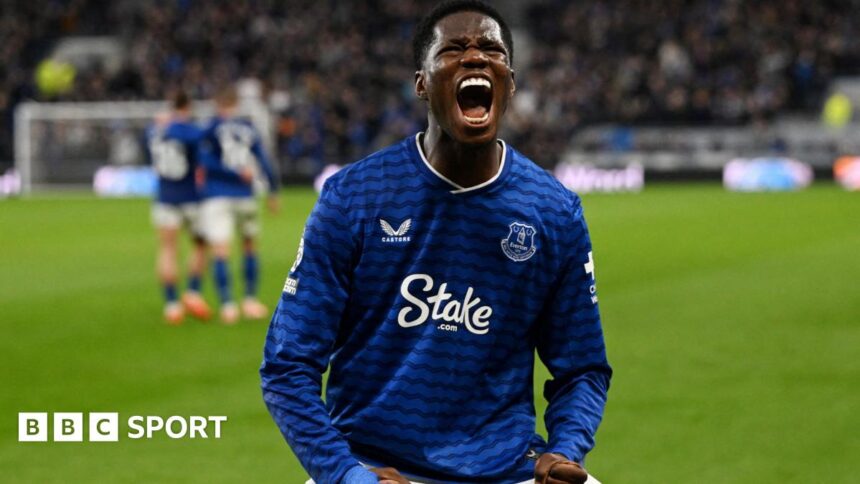
The weight of expectation at a club like Everton is measured in goals. For Thierno Barry, the summer signing brought in to add a cutting edge, that weight had become a crushing, 16-game burden. The narrative was hardening: talented, yes, but ultimately not the solution. Then, in the dying embers of the first half against Nottingham Forest, the release valve blew. A quick break, a composed finish, and an eruption of pure, unadulterated relief. The smile on Thierno Barry’s face said it all. A player, and perhaps a club, exhaled.
The Weight of the Shirt and the Manager’s Ultimatum
When Sean Dyche uttered the words, “He has to score, or we replace him,” in his typically blunt manner a fortnight ago, it wasn’t a public shaming. It was the stark, Premier League reality. Everton’s struggle for survival has been a multi-season saga, and their inability to convert chances has been its central theme. Barry, arriving with a prolific reputation from Ligue 1, was the chosen fix.
Yet, game after game, the near-misses piled up. Shots flashed wide, headers sailed over, and one-on-ones were met by inspired goalkeepers. Each miss seemed to tighten the vice. The Goodison Park crowd, famously patient with grafters, maintained a supportive but anxious murmur. Barry’s confidence visibly waned; his movements in the box became hesitant, his decisions a fraction slow. The 16-game goal drought wasn’t just a stat—it was a psychological wall.
- The Pressure Mounted: Every missed chance amplified the scrutiny on Everton’s recruitment and Dyche’s faith.
- System vs. Scorer: Questions arose: was the system failing Barry, or was he failing to adapt to the Premier League’s physicality?
- A Tipping Point: Dyche’s ultimatum was a final, public challenge. It was a test of mentality as much as finishing.
The Moment of Liberation: Anatomy of a Goal
Saturday’s match against Forest was trending towards familiar frustration. Everton led, but Barry had spurned a golden chance earlier. Then, in the third minute of first-half stoppage time, the game broke open. A Forest corner was cleared, Idrissa Gueye surged forward, and the counter-attack was on. The pass to Barry was perfectly weighted, putting him through with a sliver of angle against the advancing keeper.
This was the moment of truth. The Barry of previous weeks might have snatched at it, or tried to power it. Instead, he showed a composure that belied his drought, opening his body and rolling the ball with precision inside the far post. The net rippled. The explosion of sound from the Gwladys Street End was matched only by the striker’s own cathartic celebration—a scream of defiance, a fist-pump, and that beaming, unforgettable smile.
Barry wheeled away to celebrate a moment he might have started fearing would never come. Teammates mobbed him, their genuine joy underscoring the collective burden they felt for him. As he headed down the tunnel at halftime, the grin was still plastered across his face. This was more than a goal; it was an exorcism.
Expert Analysis: What This Means for Barry and Everton’s Survival Fight
From a tactical perspective, the goal was a classic Dyche-era Everton strike: defensive resilience turned into rapid, direct offense. But its psychological impact is immeasurable. For Barry, this is a circuit breaker. Strikers live on confidence, and a first goal, especially under such duress, can unlock a floodgate. The muscle memory of scoring is now restored.
For the team, it provides a crucial second reliable goal threat alongside the ever-industrious Dominic Calvert-Lewin. Defenses can no longer solely focus on one man. Furthermore, it validates Dyche’s man-management. His tough love was a gamble, but by stating the pressure publicly, he may have inadvertently freed the player from the silent, creeping doubt.
Everton’s survival hopes have long been built on a formidable defensive record. The missing piece has been the ability to kill games. Barry’s goal did exactly that, making it 2-0 at a critical juncture and allowing Everton to control the second half. If this moment transforms him into a consistent contributor, their chances of staying up increase exponentially.
Predictions: A Corner Turned or a Temporary Reprieve?
The Premier League is unforgiving. One goal does not make a season. The true test for Thierno Barry begins now. Opponents will see the drought is over and adjust. Can he now handle the expectation to *continue* scoring? The signs are promising. The nature of his finish suggested a clarity of thought returning.
We predict a surge in Barry’s productivity in the final games of the season. The relief will translate into sharper movement and more instinctive play. He is unlikely to become a 20-goal savior overnight, but a return of 4-5 more goals could be the difference between safety and the Championship for Everton.
Long-term, this moment could be the foundation of his Everton career. Players are often defined by how they respond to adversity. Barry has stared down a potentially career-derailing stretch and emerged with a vital goal. It earns him time, faith, and the opportunity to become the striker Everton believed they were buying.
Conclusion: More Than Just a Goal
Thierno Barry’s first Everton goal will be filed in the stats as a stoppage-time strike in a 3-0 win. But its significance reverberates far deeper. It was the culmination of a personal battle fought in the most public of arenas. It was a response to his manager’s challenge and a gift to a support that craves a hero.
In the relentless grind of a relegation battle, moments of human triumph can shift momentum. Barry’s beaming smile as he headed down the tunnel wasn’t just about personal joy; it was a symbol of released tension for an entire club. The drought is over. The narrative is reset. For Everton and their long-awaited number nine, the real work—and hopefully, the real scoring—starts now.
Source: Based on news from BBC Sport.
Image: Source – Original Article