Why the Tyne-Wear Derby is More Than Just a Game: The Fire, the History, and the Unbreakable Bond of Rivalry
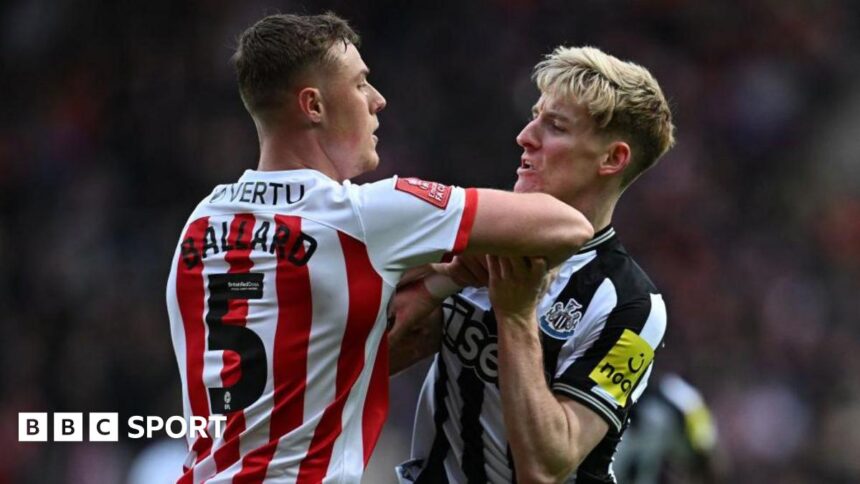
The air in the North East of England crackles with a different kind of electricity on derby day. It’s not merely anticipation; it’s a deep, historical tremor that runs through the very bedrock of the region, dividing households, workplaces, and streets. When Sunderland host Newcastle United, it is the Tyne-Wear Derby, a fixture that transcends the 90 minutes on the pitch. It is a raw, visceral clash of identity, pride, and a rivalry so intense it can see a manager getting abused while starting a charity run. This is why it means so much.
A Rivalry Forged in Industry and Proximity
To understand the present, you must first dig into the past. This is not a rivalry manufactured by Premier League marketing executives. It is born from the gritty, industrial history of the North East. For generations, the River Tyne and the River Wear represented competing economic heartbeats: Newcastle’s shipbuilding and engineering against Sunderland’s shipbuilding and coal mining. The cities, just 12 miles apart, were siblings in hardship but fierce competitors in trade and, ultimately, in football.
The clubs emerged as the standard-bearers for these communities. St. James’ Park and the Stadium of Light became the secular cathedrals where this ongoing narrative of one-upmanship was played out. The football pitch became the proxy battlefield for civic pride. A win meant bragging rights, but also a temporary validation of a city’s way of life. This proximity and shared history, devoid of a major metropolitan rival, condensed the rivalry into a potent, often volatile, mix.
The Modern Psychology of Dominance and Drought
The recent history of this fixture adds complex psychological layers. While Newcastle have enjoyed greater Premier League longevity and now, under their Saudi-backed ownership, operate on a different financial planet, a stubborn statistic haunts them: Sunderland’s derby dominance.
The Black Cats’ remarkable run of being unbeaten in nine consecutive Premier League derbies between 2011 and 2016 is a festering wound for Magpies fans. It represents an era where, regardless of league position, Sunderland held a psychological hex over their rivals. Memories of 5-1 and 3-0 victories at St. James’ Park are cherished Wearside folklore and a source of deep-seated frustration on Tyneside.
Newcastle’s FA Cup victory in 2024, therefore, was not just a cup win. It was an exorcism. It broke the curse in a competitive fixture and shifted the psychological burden, however slightly. For Eddie Howe’s modern, ambitious Newcastle, a league derby win at the Stadium of Light is now the final frontier to truly claim regional supremacy in this new era.
“The Biggest Stick I’ve Ever Had”: The Derby in Everyday Life
The true measure of this rivalry’s significance is how it permeates everyday existence. You don’t just support Sunderland or Newcastle; you are from Sunderland or Newcastle. The divide is inescapable. Eddie Howe’s experience at the 2023 Great North Run perfectly encapsulates this.
There he was, the Newcastle United head coach, doing a civic duty, ringing the bell to start a monumental charity event. Yet, even in that unifying moment, the divide was instant and visceral. The cheers from the Geordie runners were met with immediate abuse from the Sunderland supporters participating. As Howe recalled: “The biggest stick I’ve ever had… I got abused by 50% of the people there.”
This anecdote is priceless. It proves that in the North East:
- The rivalry is non-negotiable: It supersedes even communal charity events.
- It is personal: The figurehead of one club is a legitimate target for the other’s fans, anywhere, anytime.
- It is a 24/7 identity: You are never just a runner; you are a Sunderland-supporting runner or a Newcastle-supporting runner.
This is the social pressure that weighs on the players. They are not just playing for points; they are playing for the guy in the factory, the woman in the office, and the family at the school gates who will have to live with the result for months, even years.
Analysis and Predictions: A Derby at a Crossroads
The next chapter of the Tyne-Wear Derby is poised at a fascinating crossroads. The dynamics have shifted seismically since their last league meeting. Newcastle are now a Champions League-caliber team with global aspirations, while Sunderland are rebuilding with a young squad under a new model. This creates a dangerous narrative for both.
For Newcastle, the expectation is immense. They are the overwhelming favorites on paper. The danger lies in the weight of history and the ferocity of the atmosphere. Howe must ensure his star-studded side matches the Championship side’s intensity and desire. Another failure here would be unthinkable for their support and a massive blow to their new-found aura.
For Sunderland, the pressure is different. They are the underdogs, but they carry the torch of that famous unbeaten run. Their young, fearless team has nothing to lose and everything to gain. A victory would be arguably their greatest result in a decade, a defiant statement of intent and a glorious continuation of their derby lore.
Prediction: The sheer gulf in resources and Premier League pedigree makes Newcastle the logical pick to finally end their league derby hoodoo. However, logic often evaporates in this fixture. Expect a physical, frantic, and emotionally charged match. Newcastle’s quality should eventually tell, but not without a monumental scare. A narrow, hard-fought victory for the Magpies is the most likely outcome, but a draw fueled by Sunderland’s relentless spirit would surprise no one from the North East.
The Unbreakable Bond of Mutual Antagonism
In the end, the Tyne-Wear Derby means so much because it is about belonging. It is the definitive expression of a local identity in a globalised sport. The hatred is real, the passion is boundless, and the consequences of victory or defeat are felt in the fabric of daily life. It is a rivalry that can see a manager cheered and jeered in equal measure at a charity run, and where a 13-year-old statistic feels as fresh as yesterday’s news.
This is not a friendly competition. It is a cold, hard, and beautiful reflection of two cities whose histories are so intertwined that they can only define themselves in opposition to the other. They need each other. Newcastle’s triumphs are magnified by Sunderland’s despair, and Sunderland’s victories are sweetened by Newcastle’s anguish. It is a symbiotic rivalry, an unbreakable bond of mutual antagonism. And that is why, no matter the divisions, it remains the proud, pounding heartbeat of football in the North East.
Source: Based on news from BBC Sport.