A lot of Stuff to Figure Out: Verstappen’s Suzuka Struggle Exposes a Deeper F1 Rift
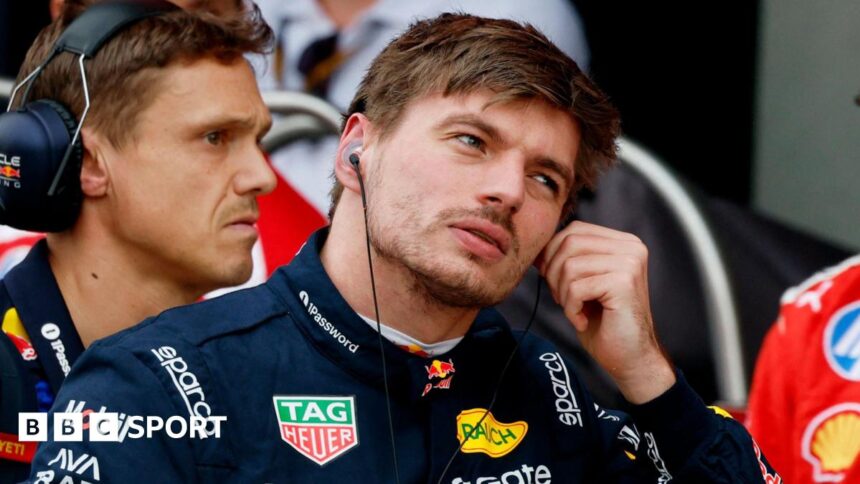
The Suzuka Circuit, a hallowed ground of speed and precision, presented an unfamiliar tableau on Saturday. For the first time since 2019, a Japanese Grand Prix grid will form without Max Verstappen’s Red Bull on pole position. More startling than the P11 qualifying result itself, however, were the cryptic, heavy words from the reigning world champion in its aftermath. A subdued Verstappen spoke not of setup tweaks or lap-time deficits, but of a personal and philosophical quandary, hinting at a profound discontent that stretches far beyond a single disappointing session. His struggle is a microcosm of a simmering tension in Formula 1, where the pursuit of technical parity risks clashing with the essence of what makes a champion.
The Uncharacteristic Crack in the Armor
Verstappen’s qualifying woes were a perfect storm of circumstance and regulation. A strategic misstep in Q1, leaving him vulnerable in the treacherous final sector as rain began to fall, was compounded by a surprising lack of ultimate pace from the hitherto-dominant RB20. The car, which has seemed an extension of Verstappen’s will for two seasons, suddenly looked mortal. Yet, the driver’s reaction was telling. There was no outburst of frustration over the radio, no sharp critique of the team’s call. Instead, a contemplative, almost weary resignation settled in.
When pressed by journalists, Verstappen’s answers were uncharacteristically opaque and laden with subtext. “You know how I think about a lot of stuff, right?” he stated, a clear reference to his longstanding and vocal criticisms of F1’s direction. “I don’t need to mention it again. So a lot of stuff for me to personally figure out.” Asked to clarify, he offered only: “Life. Life here.” This was more than a bad day at the office; it was a window into a champion wrestling with his environment. The “life here” is life under a regulatory framework he has repeatedly argued diminishes driver challenge and engineering innovation.
The Heart of the Discontent: A Champion vs. The Rulebook
Verstappen’s “stuff to figure out” is intrinsically linked to his public disdain for key aspects of modern F1’s DNA. His frustration centers on two pillars:
- Engine Freeze and Homogenization: The current power unit regulations, featuring a freeze on development and strict reliability mandates, mean manufacturers cannot chase significant performance gains. Verstappen has lamented that this removes a key layer of competition and reduces the penalty for mechanical failure, softening a fundamental challenge.
- Prescriptive Technical Regulations: The ground-effect era, while improving wheel-to-wheel racing, has come with a highly restrictive rulebook. The prescriptive aerodynamics and chassis rules limit creative engineering solutions, creating convergent car designs and, in Verstappen’s view, a sanitized competition.
For a driver whose identity is built on extracting the absolute limit, on wrestling with a beast of a machine, these regulations can feel like a straitjacket. The “figure out” may well be a question of motivation: how does a pure racer maintain his edge when he believes the sport is systematically reducing the variables that define greatness? The Suzuka shocker, a circuit that demands total commitment, amplified this internal conflict.
A Wider Grid: The Ripple Effect of Verstappen’s Vulnerability
Verstappen’s qualifying lapse has instantly transformed the narrative of the Japanese GP and perhaps the early season. It proves the RB20, while fast, is not invincible. It immediately creates a cascade of compelling scenarios:
- An Unpredictable Race Day: Starting from P11 at Suzuka, a track where overtaking is difficult but not impossible, sets the stage for a potential masterclass in racecraft and strategy. Can Verstappen slice through the field? Will he take excessive risks?
- Team Dynamics at Red Bull: With Sergio Pérez qualifying a strong P2, the intra-team dynamic faces a sudden stress test. The team orders conversation, dormant for years, could re-emerge depending on race circumstances.
- A Boost for the Chasing Pack: For Ferrari, McLaren, and even a resurgent Mercedes, Verstappen’s absence from the front is a massive psychological and strategic opportunity. A non-Verstappen win could ignite the championship fight earlier than anyone anticipated.
This single qualifying session has done what months of development might not have: it has genuinely opened the door. The 2024 championship battle, which many feared was a foregone conclusion, now has a crucial data point proving vulnerability exists.
The Unanswered Questions for F1’s Future
Verstappen’s muted crisis of confidence is a canary in the coal mine for Formula 1’s rule-makers. The challenge for the FIA and FOM is profound: how to balance cost control, sustainability, and close racing with the raw sporting challenge that attracts and molds drivers like Verstappen. The sport risks alienating its very best if they feel the pinnacle of their profession is being dulled by regulation.
Key questions now loom:
Will the 2026 power unit regulations, with their increased electrical energy and sustainable fuels, strike a better balance between innovation and competition?
Can the technical regulations evolve to allow for more creative engineering diversity without spiraling costs or destroying the racing product?
Most urgently, how does F1 keep its reigning champion—and drivers of his mindset—fully engaged and passionately invested in the “life here”?
As the cars line up on the Suzuka grid, all eyes will be on car number 1, weaving its way from the midfield. But the real story is not where Verstappen finishes on Sunday afternoon. It is the unresolved tension his words have laid bare. His journey to “figure out” his place in modern F1 mirrors the sport’s own struggle to define itself. Is it a hyper-efficient, spec-like show of managed competition, or is it still the ultimate, unpredictable test of man and machine? Verstappen’s search for an answer, played out in real time, may be the most compelling narrative of the season.
Source: Based on news from BBC Sport.