A ‘Perfect’ Start for Carrick: How Manchester United Ran Rivals Ragged
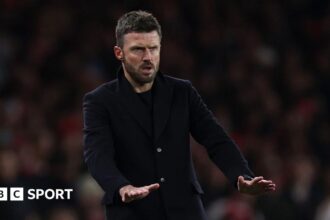
The air at Old Trafford crackled with a peculiar, potent mix of trepidation and defiance. In the wake of Ole Gunnar Solskjaer’s departure, with a daunting Manchester City derby looming, interim manager Michael Carrick had spoken of the stadium being “a magical place.” On this electrifying afternoon, the unassuming coach didn’t just believe in the magic—he became the magician. In a tactical masterclass few saw coming, Carrick’s Manchester United executed a near-flawless game plan to dismantle the champions 2-0, delivering a performance so complete it left Pep Guardiola in rare, bewildered concession.
The Carrick Conundrum: From Steady Hand to Tactical Architect
Many anticipated a cautious, damage-limitation exercise from United. What unfolded was a meticulously orchestrated display of defensive discipline and explosive transition. Carrick, often perceived as Solskjaer’s steady lieutenant, immediately stamped his own authority. He made the bold, decisive call to drop Bruno Fernandes, a move that reverberated around the football world. This wasn’t mere rotation; it was a strategic recalibration.
In Fernandes’ place, the industrious pairing of Fred and Scott McTominay was unleashed, with the pivotal role handed to a rejuvenated Nemanja Matic. This midfield trio formed an impenetrable shield, cutting passing lanes and disrupting City’s rhythmic possession at its source. The system was clear: a compact, mid-block that invited City pressure before springing forward with terrifying speed through Jadon Sancho and the relentless counter-pressing of United’s forwards. Carrick didn’t just set up to defend; he set a trap.
Deconstructing the Derby: Where United Won the Battle
Guardiola’s post-match admission was telling. Even if Diogo Dalot had seen red early on, the City boss mused, United might still have won. This startling confession underscores the totality of United’s dominance. The victory was built on several non-negotiable pillars that had been crumbling in recent weeks:
- Defensive Cohesion and Hunger: For the first time in months, United defended as a unified, furious unit. Harry Maguire and Victor Lindelöf were immense, but it was the collective effort—from Cristiano Ronaldo’s tracking back to the full-backs’ disciplined positioning—that stifled City.
- Winning the Midfield War: By neutralizing Kevin De Bruyne and Bernardo Silva, Fred and McTominay won the crucial battle. They played with a controlled aggression, turning defense into attack in the blink of an eye, which directly led to both goals.
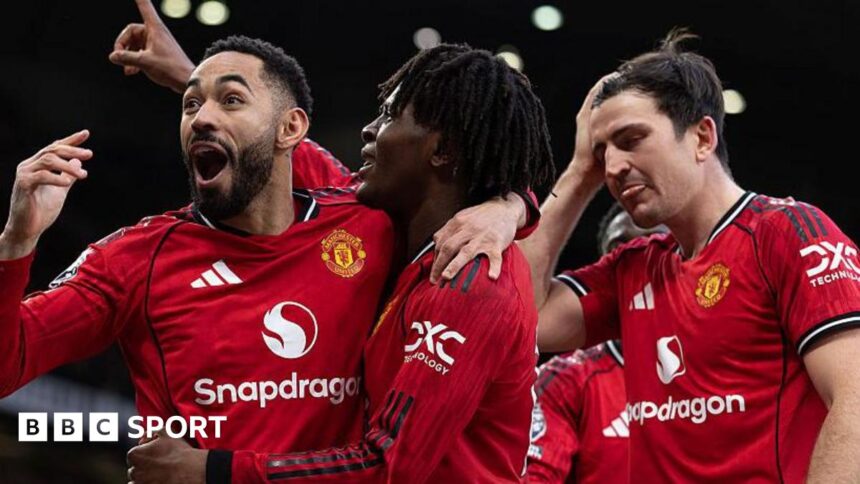
- Clinical Finishing in Transition: United had fewer touches in the opposition box but made them count. The first goal was a textbook rapid counter-attack, finished coolly by Eric Bailly… of all people. The second, a sweeping move finished by Sancho, was the just reward for a perfect game plan.
- Tactical Flexibility: Carrick showed in-game intelligence, adjusting shape and personnel to see out the game. Introducing Raphael Varane to solidify a back five demonstrated a manager in full control of the match’s narrative.
The Carrick Catalogue: Building a Surprising Managerial Résumé
While this was just his first match in sole charge, a glance at Michael Carrick’s fledgling head coaching record reveals a fascinating pattern. His three-game interim stint in 2021, following Solskjaer’s initial sacking, now reads like a curated collection of elite scalps.
He has now masterminded victories over:
- Unai Emery’s Villarreal (a crucial Champions League win)
- Mikel Arteta’s Arsenal (a dominant 3-2 league victory)
- Pep Guardiola’s Manchester City (this seismic 2-0 derby triumph)
Furthermore, he secured a well-earned draw against Thomas Tuchel’s Chelsea. This is not a coincidence. It suggests a latent tactical acumen, particularly in organizing a team for one-off, high-stakes matches against possession-dominant sides. Carrick possesses a deep, cerebral understanding of the game’s geometry, honed under Sir Alex Ferguson and Louis van Gaal, and is now translating it from the dugout.
Looking Ahead: What This Means for United and Carrick
The immediate aftermath of this victory creates a compelling dilemma. The “interim” tag suddenly feels less temporary. While the club pursues a permanent manager, can they afford to overlook the calm authority and tactical clarity Carrick has instantly instilled?
Prediction 1: Carrick’s Interim Tenure Will Be Extended. The search for a permanent manager is complex, but United will now be far less rushed. Carrick has earned the right to steady the ship through a demanding December, proving he can command the dressing room and outthink the best.
Prediction 2: This Blueprint Becomes United’s Foundation. The performance against City must become the non-negotiable standard: the work rate, the tactical discipline, the collective sacrifice. It proves the personnel are capable; it was the structure and motivation that were lacking.
Prediction 3: A Recalibration of Player Roles. Bruno Fernandes will return, but his role may be refined. The success of the midfield balance suggests a need for greater defensive responsibility from all. Sancho’s confidence will be sky-high, and the defensive unit has a template for success.
As the final whistle blew, Michael Carrick walked down the touchline to a familiar, resonant sound: the fans’ chant from his playing days. “Michael Carrick, he wins the ball, he gives it to Scholes…” The lyrics may need a slight update. On this day, Michael Carrick won the ball, orchestrated the play, and outmaneuvered Pep Guardiola. In one fell swoop, he quieted the noise, restored belief, and provided a stunning vision of what Manchester United can be. It was, by any measure, a perfect start. Not a false dawn, but a clear and powerful statement that the magic of Old Trafford is very much alive, with a new, quiet sorcerer at the helm.
Source: Based on news from BBC Sport.