‘A Total Miscue’: How England’s Persistence Finally Broke Travis Head’s Resistance
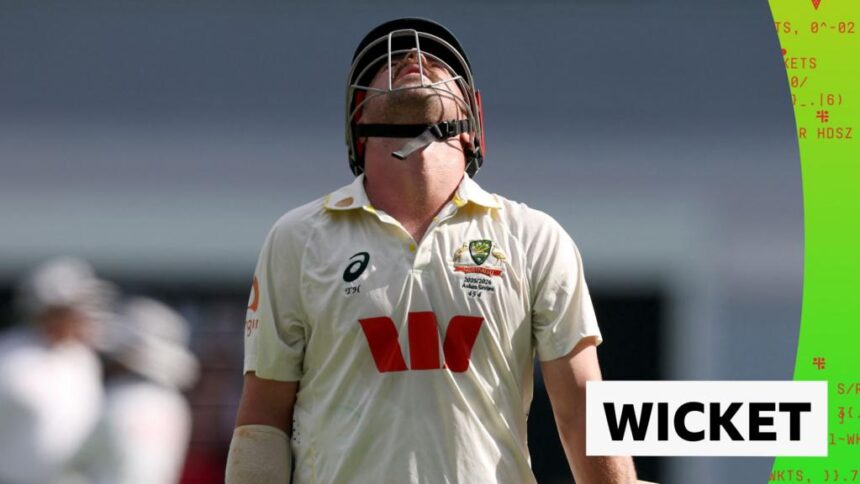
The sound of leather on willow echoed around the Gabba, but this time it was not the crisp, clean crack of authority. It was a dull, off-centre thud—a total miscue. For England, mired in frustration and battling to claw their way back into the second Ashes Test, it was the sweetest noise imaginable. Travis Head, the aggressor-in-chief, was walking back for 33, and the dam of Australian wickets had finally been breached at 77-1. The breakthrough, forged from relentless pressure and a moment of technical failure, has reignited a contest that England simply could not afford to let slip away.
The Gabba Grind: England’s Relentless Build-Up
After a dispiriting first Test defeat, England’s bowlers faced a monumental task on a Brisbane pitch offering less devilry than anticipated. The Australian openers had navigated the early exchanges with relative comfort, and the arrival of Travis Head at the crease signalled the beginning of a familiar, punishing phase. Head, a player who thrives on momentum and seizes initiative, began with characteristic intent. A dropped catch on just three, however, offered him and Australia a life that threatened to become catastrophically expensive for the tourists.
England’s response to this setback defined their day. Instead of shoulders slumping, they doubled down on a philosophy of disciplined relentless pressure. The bowling, led by the tireless Chris Woakes and the probing Stuart Broad, began to constrict the flow of runs. Fields were set to cut off Head’s favoured scoring zones, particularly through the off-side. The run rate, which had been climbing, began to stagnate. This was the essential, unglamorous groundwork that made the eventual wicket possible.
Anatomy of a Breakthrough: Carse, Atkinson, and the Crucial Miscue
The wicket itself was a product of this sustained pressure. Brydon Carse, generating sharp pace and hitting a testing length, delivered a ball that perhaps held in the surface just a fraction. Travis Head, sensing an opportunity to break the shackles and perhaps frustrated by the accumulating dot balls, committed to a forceful pull shot. It was the shot of a man looking to shift momentum, but the execution was fatally flawed.
- The Bowler: Brydon Carse, maintaining a hostile line and length.
- The Shot: Head’s aggressive pull, a high-risk option against the rising ball.
- The Error: A technical misjudgment, resulting in a skewed top-edge.
- The Execution: Gus Atkinson, stationed at a perfectly judged fine leg, held a calm, tumbling catch.
This sequence underscores a modern cricket truth: wickets are rarely isolated incidents. They are the culmination of overs of pressure, forcing the batter into an error. Head’s dismissal was not a jaffa; it was a reward for England’s collective discipline, a critical momentum shift just as Australia threatened to accelerate irretrievably.
Expert Analysis: The Psychological Ripple Effect
Beyond the mere addition of ‘1’ to the wickets column, this dismissal carries profound psychological weight. For England, it is a validation of their method after a period of toil. It proves that patience and persistence can crack even the most in-form and confident of Australian batters. The relief was palpable in the celebrations; this was a team grasping a lifeline.
For Australia, while the scoreboard remains strong, the departure of Head is a significant check. He is the engine room of their middle-order acceleration, the player who can turn a solid 250 into a commanding 400 in a session. His removal exposes a middle order yet to face a significant test this series and brings the prolific Steve Smith to the crease under slightly more pressure than anticipated. The game state management now shifts. England will believe they can attack Smith and Marnus Labuschagne with renewed vigor, with the ball still relatively new and the memory of a hard-earned success fresh in their minds.
Fielding resilience also deserves credit. After the early drop, to hold a more difficult chance under pressure demonstrates a mental fortitude that was often questioned after the first Test.
Predictions: How This Wicket Shapes the Test’s Destiny
The trajectory of this Ashes Test now hinges on the next passage of play. England have their foot in the door; the question is whether they can kick it down.
- If England capitalise: They must attack Smith and Labuschagne with the same disciplined aggression. Another quick wicket, particularly of Smith, could see Australia collapse towards a par score, opening the door for England to build a substantial first-innings lead.
- If Australia stabilise: The home side will back their legendary duo to rebuild. A partnership here would nullify England’s breakthrough and likely see Australia post a total in excess of 400, putting immense scoreboard pressure on an English batting lineup lacking confidence.
- The Key Battle: Watch how England’s bowlers, especially the spinners, approach Smith. Will they dare to attack his stumps, or will they fall into the trap of bowling wide to his trigger movements? Their plan will reveal their confidence level.
The second new ball, due in roughly 20 overs, becomes an even more critical weapon for England. A wicket now would give them a chance to attack the lower order with a fresh, hard seam.
Conclusion: More Than Just a Wicket
The dismissal of Travis Head for 33 was far more than a statistical entry. It was a narrative pivot. From a position of looming dominance, Australia have been reminded of the fine margins in Test cricket. For England, it was a testament to the power of resilience—a lesson that even in the cauldron of the Gabba, persistence can force errors. This was not a wicket gifted; it was a wicket earned through tactical grit. While the scoreboard may still favour the home side, the psychological landscape of this second Test has been irrevocably altered. The “total miscue” has ensured that this Ashes contest is alive, tense, and beautifully poised. England finally have their breakthrough; the next two sessions will determine exactly what they choose to build from it.
Source: Based on news from BBC Sport.
Image: Source – Original Article