The Secret Rose Bowl Trip: How a 1998 Visit Forged Purdue’s 2000 Championship Destiny
The date was September 13, 2025. Under the lights of Ross-Ade Stadium, a poignant full-circle moment unfolded as the Purdue Boilermakers hosted the USC Trojans. For a contingent of special guests—members of Purdue’s 2000 Big Ten Championship team—the sight was layered with profound memory. The two programs hadn’t clashed since a season opener 27 years prior, a 1998 loss in Los Angeles. But for those former players watching from the stands or sideline, the real story of that 1998 trip wasn’t the game. It was the secret field trip the day after, a clandestine visit that would crystalize a vision and ultimately propel them to Pasadena.
- The Setup: A Loss in LA and a Mystery Bus Ride
- Tiller’s Masterstroke: Planting the Seed of Belief
- From Vision to Reality: The 2000 Championship Run
- Legacy and the 2025 Full-Circle Moment
- Expert Analysis: The Psychology of a Proven Winner
- Prediction: The Lasting Blueprint for Program Building
- Conclusion: More Than a Game, A Lasting Lesson
The Setup: A Loss in LA and a Mystery Bus Ride
In 1998, Joe Tiller’s “Basketball on Grass” offense was entering its second season, a thrilling curiosity in the traditionally bruising Big Ten. The season opener at the Los Angeles Memorial Coliseum was a measuring stick against a Trojan powerhouse. Purdue fought but fell, 27-17. The post-game mood was typical of a hard-fought road loss. The next morning, however, Tiller and his staff had an unorthodox plan. Players, expecting a routine travel day home, were told to board the team buses. No itinerary was shared. There was no hint of their destination as the buses navigated the Pasadena freeways.
The mystery ended as the buses turned onto Rose Bowl Drive and the iconic stadium, nestled in the Arroyo Seco, came into view. This was no drive-by. The buses pulled in. Tiller, the architect of this audacious move, had arranged for his team to walk onto the hallowed turf. For many young Midwestern players, the Rose Bowl was a mythical place, seen only on television during New Year’s Day celebrations. Now, they were standing in the end zone, gazing up at the vast, empty stands. The silence was deliberate, allowing the weight of the venue to sink in.
Tiller’s Masterstroke: Planting the Seed of Belief
This was no accidental detour. Joe Tiller, a man of few words but profound psychological insight, was executing a masterclass in vision-casting. He didn’t deliver a fiery speech on the spot. Instead, he let the stadium speak. The message was implicit, powerful, and clear: *This is where we belong.*
“Coach Tiller understood that to achieve something monumental, you first have to see it, to feel it,” said former quarterback Drew Brees, reflecting on the visit years later. “Walking on that field, it transformed the Rose Bowl from a dream into a destination. It became tangible.” For a program whose last Rose Bowl appearance was in 1967, the visit was a radical act of belief. Tiller was connecting the day’s grind—the grueling summer workouts, the complex playbook installs—to the sport’s ultimate prize for a Big Ten team. He was building a blueprint in their minds long before the team had the physical tools to match.
The strategic genius lay in its timing. Doing this *after* a loss was critical. It reframed the entire trip. The narrative was no longer “we lost to USC.” It became “we lost to USC, and then we visited our future.” Tiller redefined the standard in one quiet, unforgettable morning.
The Core Elements of Tiller’s Vision
- Tangibility: He made an abstract goal physically real.
- Timing: The post-loss visit provided motivation, not celebration.
- Subtlety: The lack of a grand speech made the moment personal and powerful for each player.
- Accountability: From that day forward, every drill, every meeting, was implicitly about returning to that field.
From Vision to Reality: The 2000 Championship Run
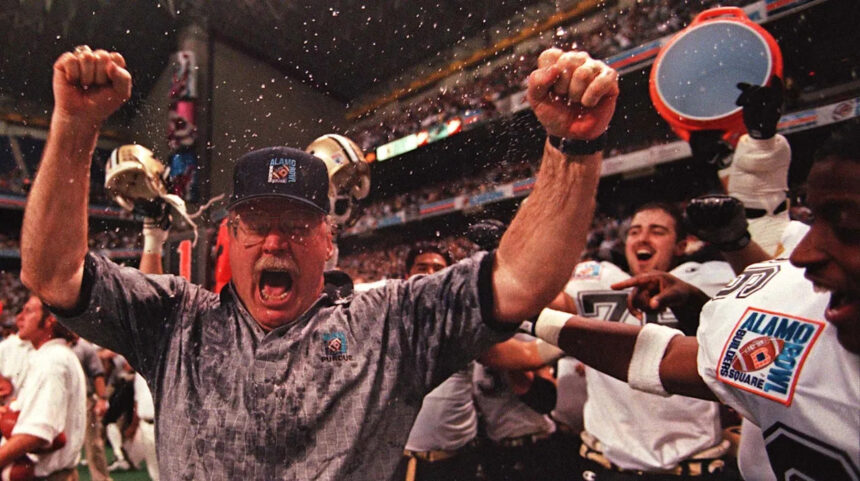
The seeds planted in 1998 took root and grew over two seasons. The 2000 Boilermakers, led by Brees, a dynamic receiving corps, and an opportunistic defense, played with a palpable sense of purpose. The goal wasn’t just to win games; it was to fulfill a prophecy laid out on that Pasadena turf. Close wins, comeback victories, and a relentless offensive attack defined their season. When they clinched the Big Ten Championship and the automatic Rose Bowl berth, the moment was not one of shock, but of validation. The secret was out. The vision was real.
Returning to the Rose Bowl on January 1, 2001, was an emotional crescendo. As the team bus made the now-familiar turn off the freeway, the memory of that empty, silent stadium was replaced by the roaring reality of 94,000 fans. The 34-24 loss to Washington did little to dim the achievement. The journey—from the mystery bus ride to the grand stage—validated Tiller’s entire philosophy. The program had closed the loop on its own ambition.
Legacy and the 2025 Full-Circle Moment
The significance of the 2025 Purdue-USC matchup, therefore, was deeply symbolic for that 2000 team. It wasn’t merely a reunion game. It was a celebration of the catalytic moment that USC program indirectly provided. Watching the current Boilermakers face the Trojans, the alumni saw a program still striving for the heights they reached. The secret Rose Bowl trip has become foundational lore, a story passed down to every recruiting class and a testament to the power of visionary leadership.
For modern programs, the lesson is timeless. In an era of NIL and the transfer portal, Tiller’s stunt reminds us that culture is built on shared vision. It’s about giving a team a “why” that is more compelling than any statistic or ranking. It proves that the most impactful coaching can happen far from a playbook or a practice field.
Expert Analysis: The Psychology of a Proven Winner
Sports psychologists point to Tiller’s move as a perfect example of “goal visualization” and “environmental priming.” By immersing his players in the target environment, he created a powerful cognitive anchor. Every subsequent challenge could be framed against the memory of the Rose Bowl turf. This wasn’t just optimism; it was strategic cognitive conditioning. It gave a young team permission to think big, to align their daily efforts with an elite outcome. In many ways, that 1998 team wasn’t just visiting a stadium; they were visiting their future selves.
Furthermore, it established an unbreakable trust between coach and team. Tiller’s unconventional move showed he was thinking differently, that he believed in a destiny his players hadn’t yet dared to imagine. That trust became the bedrock of the 2000 team’s resilience.
Prediction: The Lasting Blueprint for Program Building
The legacy of that secret trip extends beyond a single championship. It provides a blueprint for transformative leadership applicable to any program in a rebuild. We will see its echoes whenever a coach takes a team to visit a conference championship site during a bye week, or walks a recruiting class through an empty stadium, painting a picture of future sold-out crowds. The method is replicable: make the goal real, make it sensory, and connect it directly to the work.
For Purdue and programs of its profile, the lesson is that competing for championships requires first winning the battle of imagination. Before you can out-scheme or out-play an opponent, you must out-vision them. The 2025 reunion was a living testament to that truth—a gathering of men who, because of a quiet morning in Pasadena 27 years prior, knew exactly what it felt like to see a vision become reality.
Conclusion: More Than a Game, A Lasting Lesson
The final score of the 1998 game against USC is a footnote. The secret trip the next day is the headline, a story that has grown into legend. It underscores that the most pivotal plays in a program’s history can happen without a football. Joe Tiller’s genius was understanding that championships are won in the mind long before they are won on the field. The 2000 Big Ten title was secured not in November of that year, but on a silent, sun-drenched field in September 1998. As the 2000 alumni watched a new generation of Boilermakers face the Trojans in 2025, they weren’t just reminiscing. They were bearing witness to the enduring power of a vision clearly seen, and a destination once secretly visited, then gloriously reached.
Source: Based on news from Yahoo Sports.