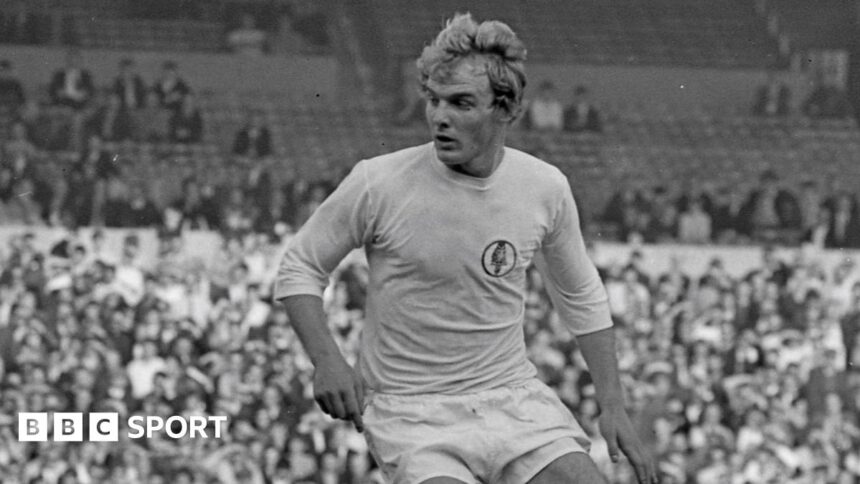
Terry Yorath: The Warrior Whose Legacy Was Forged in Triumph and Tragedy
The story of Terry Yorath is not a simple chronicle of a footballer’s career. It is a profoundly human narrative, etched with the soaring highs of sporting glory and the devastating lows of personal tragedy. A warrior on the pitch for club and country, Yorath’s life off it was marked by a resilience that defined him as much as his tough-tackling midfield displays. His passing at 75 closes the chapter on a figure who was integral to the greatest era of one of England’s most formidable clubs, who captained and managed his nation with fierce pride, and whose family name became synonymous with both sporting excellence and profound heartache.
A Leeds United Titan in the Age of Giants
To understand Terry Yorath’s footballing pedigree, one must journey back to the bruising, brilliant landscape of 1970s English football. At its epicentre stood Don Revie’s Leeds United, a machine of relentless efficiency and iron will. Yorath, a tenacious and intelligent midfielder, was not merely a squad player in this dynasty; he was a trusted component. Signed in 1967, he matured within a squad featuring legends like Billy Bremner, Johnny Giles, and Norman Hunter.
His time at Elland Road coincided with the club’s peak. While he missed the 1972 FA Cup final triumph through injury, his contributions were vital in a period where Leeds challenged for every honour. Most significantly, in 1975, he achieved a historic first: becoming the first Welshman to play in a European Cup final. Though Leeds fell to Bayern Munich in a controversial match, Yorath’s place in Welsh and club history was secured. His career at the top level included spells at Coventry City and Tottenham Hotspur, but it was the Leeds United ethos—unyielding, professional, collective—that forever stamped his football identity.
- Key Leeds United Era: Part of Don Revie’s legendary squad during its most dominant period.
- Historic Feat: First Welshman to play in a European Cup final (1975).
- Playing Style: A tough, disciplined midfielder forged in the intense environment of 1970s Leeds.
Captain and Manager: A Lifetime of Welsh Devotion
If Leeds United forged the footballer, Wales owned the heart. Terry Yorath’s international service was exemplary. He earned 59 caps, captaining his country in 42 of those appearances, a testament to his leadership and character. He led not with fanfare, but with the gritty, committed example that defined his play.
This devotion naturally evolved into management. Yorath took the helm of the Welsh national team in 1988, assembling a gifted generation featuring Ian Rush, Mark Hughes, and Neville Southall. His tenure culminated in the 1994 World Cup qualifying campaign, a journey that would define his managerial legacy. Wales came agonisingly close to a first World Cup finals since 1958, needing only a draw against Romania at Cardiff Arms Park. The subsequent 2-1 defeat, sealed by a late penalty, remains one of Welsh sport’s most piercing moments of what might have been. Yorath, who had poured his soul into the mission, felt the blow as deeply as any fan. He later managed Swansea City, Bradford City, Cardiff City and Sheffield Wednesday, but the image of him on the touchline that night in 1993 is indelible.
The Unthinkable Tragedies: A Father’s Fortitude
While the near-miss on the pitch was a public sporting agony, Yorath’s private life was struck by two tragedies of unimaginable scale. In 1992, his 15-month-old son, Daniel, died following a viral infection. Then, just a year after the Romania heartbreak, his elder brother, David, also a professional footballer, took his own life. The cumulative weight of these losses would have broken a lesser man.
Yorath’s resilience in the face of such grief was extraordinary. He continued his work in football, a sanctuary of routine and passion, while anchoring his family. This period highlighted a central truth about the man: the toughness displayed on the football field was not an act. It was the outer manifestation of a deep, enduring inner strength that would be called upon in the most cruel of circumstances. His ability to continue leading, first as Wales manager and later at club level, while processing such profound personal loss, commands a respect that transcends sport.
The Yorath Legacy: A Family in the Public Eye
Terry Yorath’s story extends powerfully into the next generation. He is survived by three children who have each carved their own notable paths, ensuring the Yorath name remains prominent in British sporting and media life. His son, Jordan, followed his father into professional football as a midfielder. His daughter, Louise, has maintained a private life away from the spotlight.
Most publicly, his daughter Gabby Yorath became a pioneering figure in sports broadcasting. As Gabby Logan, she emerged as one of the BBC’s leading sports presenters, a role in which she has excelled for decades. Her marriage to Scotland rugby union international Kenny Logan in 2001 created a high-profile sporting union. Gabby has often spoken with moving candour about the impact of her brother Daniel’s death on the family, using her platform to discuss grief and mental health. In doing so, she has extended her father’s legacy of quiet strength in the face of adversity into a vital public conversation.
An Enduring Image: More Than a Football Man
So how will Terry Yorath be remembered? The obituaries will rightly list his clubs, his caps, his historic European final, and his managerial near-miss. But the true measure of the man lies in the synthesis of these facts with his personal trials. He was the Leeds United warrior, the proud Welsh captain, the manager who came within a whisker of history. Yet he was also the father who endured every parent’s worst nightmare, the brother who mourned a profound loss, and the patriarch of a family that has contributed significantly to our sporting culture.
In an era where the term “legend” is often bestowed too lightly, Yorath’s legacy is one of substance and soul. He represented a type of footballer and a type of man increasingly rare: undemonstrative, reliable, tough, and deeply loyal. His life reminds us that the stories we celebrate in sport are not just about trophies won or lost, but about the human spirit’s capacity to compete, to lead, to grieve, and to endure. Terry Yorath, the warrior touched by tragedy, did all of that with a quiet dignity that commands our lasting respect and remembrance.
Source: Based on news from BBC Sport.