Aaron Rodgers Blasts Media Circus, Defends Mike Tomlin’s Legacy After Steelers Exit
The NFL’s coaching carousel is a spectacle of speculation, a whirlwind of hot takes and instant analysis that often consumes nuance and legacy in its path. This week, that machine turned its full force on Mike Tomlin, the Pittsburgh Steelers’ iconic head coach for the past 19 seasons, following the announcement of his departure. While many debated the timing and the merits of the move, one prominent voice cut through the noise with blistering clarity. New York Jets quarterback Aaron Rodgers, a long-time admirer and contemporary, didn’t just defend Tomlin; he launched a full-throated indictment of the modern media ecosystem that fueled the speculation, calling the entire discourse “an absolute joke.”
- The End of an Era in Pittsburgh and Rodgers’ Immediate Reaction
- Rodgers vs. The Noise: A Veteran’s Critique of Modern NFL Coverage
- Understanding the Steelers’ Decision: A Necessary Turn of the Page
- Legacy and Future: What’s Next for Tomlin and the NFL Media?
- Conclusion: A Joke That Reveals a Deeper Truth
The End of an Era in Pittsburgh and Rodgers’ Immediate Reaction
The Steelers’ 2024 season ended with a thud—a 30-6 home playoff loss to the Houston Texans that felt like a breaking point. While the official announcement came days later, whispers about Mike Tomlin’s future had been a low hum throughout the season, crescendoing into a roar after the playoff defeat. Tomlin, who never suffered a losing season in Pittsburgh, a streak spanning nearly two decades, was suddenly the subject of intense scrutiny about his job security.
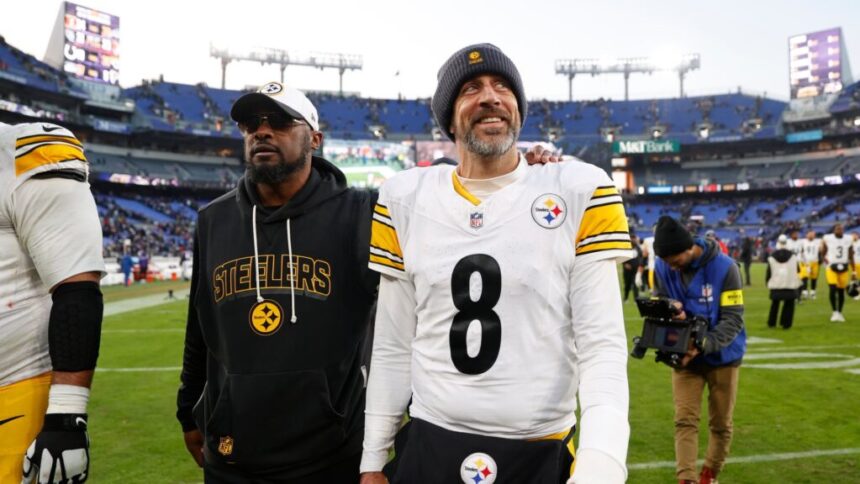
In the post-game media scrum, Aaron Rodgers, whose own season ended weeks prior, was asked about the mounting pressure on Tomlin. His response was immediate and unfiltered. “The way that the league is covered now and the way that there’s snap decisions and the validity given to the Twitter experts and all the experts on TV now who make it seem like they know what the hell they’re talking about, to me that’s an absolute joke,” Rodgers stated. He made a clear distinction between the front office’s decision, which he said he understood from a business perspective, and the external noise that painted Tomlin as a coach on the brink of failure.
Rodgers vs. The Noise: A Veteran’s Critique of Modern NFL Coverage
Rodgers’ comments weren’t merely a defense of a friend; they were a veteran’s manifesto against a changed media landscape. His critique hinges on several key points that resonate with players who have lived through the transition from legacy media to the 24/7 digital news cycle.
- The Tyranny of the “Snap Judgment”: In the age of social media and instantaneous reaction shows, complex seasons are reduced to single-game verdicts. A bad loss, especially in the playoffs, instantly invalidates years of success.
- The False Authority of “Experts”: Rodgers took aim at the proliferation of voices—both on television and online—who present opinion as insider knowledge, creating narratives that often lack the context of locker room dynamics, injury impacts, and organizational philosophy.
- The Erosion of Context: The discussion around Tomlin, in Rodgers’ view, ignored the monumental context of his career: the sustained excellence, the cultural stability, and the Super Bowl title. The narrative became solely about “what have you done lately?”
“Any notion that Tomlin should have been on the hot seat is ridiculous from my point of view,” Rodgers asserted. For a player like Rodgers, who has battled his own media narratives for years, Tomlin’s situation exemplified a system quick to build legends but even quicker to suggest their demise.
Understanding the Steelers’ Decision: A Necessary Turn of the Page
While Rodgers vehemently defended Tomlin from external criticism, he was careful not to condemn the Steelers’ organization. “I understand how the front office came to the decision,” he noted, acknowledging the complex calculus NFL teams face. From Pittsburgh’s perspective, the move, while painful, can be seen as a strategic reset.
Mike Tomlin’s legacy in Pittsburgh is untouchable: a Super Bowl champion, a perennial contender, and a master motivator. However, the recent years revealed a plateau. The team consistently found a way to be good, but not great enough to seriously challenge the AFC’s elite. The playoff victory drought and occasional regular-season struggles against inferior opponents suggested a formula that had grown stale. The front office likely saw a crossroads: continue with unparalleled stability but potentially diminishing returns, or initiate a painful rebuild with a new voice. They chose the latter.
This decision doesn’t tarnish Tomlin’s accomplishments; it simply acknowledges that even the most successful partnerships can run their course. For the Steelers, the goal is always championships, and after nearly a decade and a half without a Super Bowl appearance, a change, however monumental, became a justifiable risk.
Legacy and Future: What’s Next for Tomlin and the NFL Media?
Mike Tomlin will not be a free agent for long. He immediately becomes the most coveted head coaching candidate in a generation—a proven winner, a leader of men, and a cultural architect. His next stop will command massive attention and likely instant credibility. Teams with talented rosters in need of discipline and direction, such as the Los Angeles Chargers or the Dallas Cowboys, should be considered potential suitors. Tomlin’s next chapter will be one of the defining stories of the 2025 NFL season.
Aaron Rodgers’ broader critique, however, points to a lingering issue. The media coverage of the NFL is unlikely to slow down or become more nuanced. The demand for content and hot takes is insatiable. Yet, his outburst serves as a crucial reminder from inside the locker room: the narratives spun on television and social media are often disconnected from the reality of the sport. They shape public perception, influence fan sentiment, and can even create pressure within organizations, but they rarely capture the full truth.
In defending Mike Tomlin, Rodgers was defending the idea of legacy, the respect for sustained achievement, and the complexity of NFL success against a wave of simplistic, reactionary judgment.
Conclusion: A Joke That Reveals a Deeper Truth
Aaron Rodgers calling the Tomlin discourse “an absolute joke” was more than a soundbite; it was a moment of clarity. It highlighted the vast chasm between how NFL decisions are made in quiet front offices and how they are sensationalized in the public square. Mike Tomlin leaves Pittsburgh not as a coach who failed, but as a legend whose time had simply come to an end with one franchise. His record, his consistency, and his impact are bulletproof.
The Steelers move forward into an uncertain future, betting that a new direction will revive their championship aspirations. And the media machine will inevitably turn to the next subject, the next coach or quarterback in the crosshairs, ready to deliver the next snap judgment. But for a moment, Rodgers’ words forced a pause, a reminder that behind every headline and trending topic are human beings with legacies that deserve more than a joke.
Source: Based on news from Yahoo Sports.