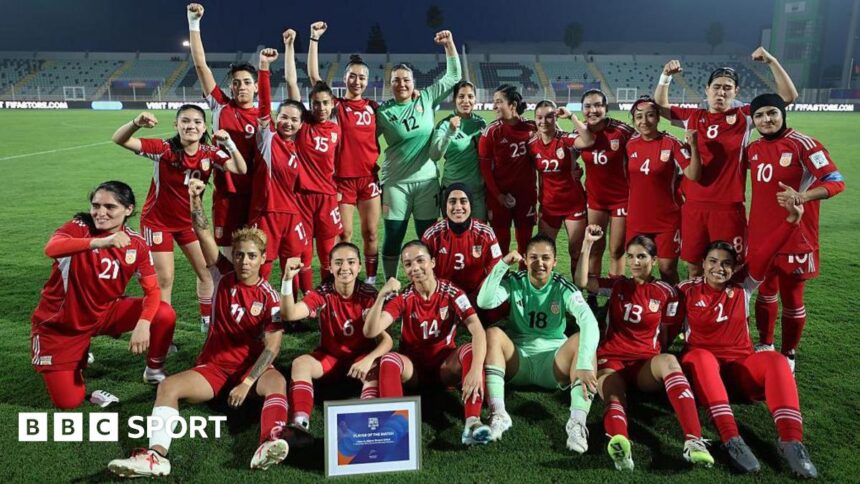
Afghanistan Women’s Football Returns: A Triumph of Resilience After Eight Years in Exile
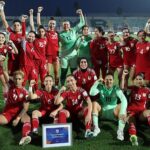
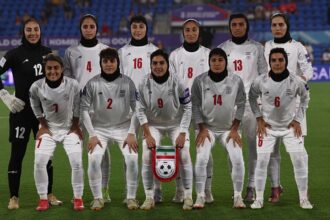
After nearly a decade of silence, the roar of the crowd returns. In a landmark moment for global sport, the Afghanistan women’s national football team has officially returned to international competition, ending an eight-year hiatus that began in December 2018. The team, now rebranded as Afghan Women United, took to the pitch in Morocco during October and November 2025, facing Chad, Tunisia, and Libya in a series of historic friendlies. This is not merely a series of matches. It is a statement of defiance, a testament to survival, and a beacon of hope for millions of women denied their basic rights under the Taliban regime.
The journey back to the field has been anything but straightforward. Since the Taliban’s return to power in August 2021, women’s sports in Afghanistan were effectively outlawed. Players were forced into hiding, many fleeing the country to seek asylum in Australia, the United Kingdom, and the United States. The team that now represents Afghanistan on the international stage is composed largely of these diaspora players—women who risked everything to keep the dream of football alive. Former captain Khalida Popal, a vocal advocate for women’s rights and a key figure in the team’s evacuation in 2021, has described this moment as the birth of a “symbol of resilience.”
“This is not just about football,” Popal declared in a recent interview. “This is about showing the world that the spirit of Afghan women cannot be broken. For eight years, we were invisible. Now, we are back, and we are stronger than ever.” Her words capture the profound emotional and political weight of the team’s return.
The Long Road Back: From Exile to FIFA Approval
The technical and bureaucratic hurdles to this return were immense. For years, FIFA’s governance regulations prevented the global body from officially recognizing a national team unless it was formally sanctioned by the member association—in this case, the Afghanistan Football Federation (AFF). The AFF, however, remained under the control of officials appointed under the Taliban regime, which had no intention of supporting women’s football. This created a catch-22: the team could not play officially because the federation would not recognize them, and the federation would not recognize them because the players were women.
The breakthrough came after a sustained global advocacy campaign led by Popal, the Afghan Women’s Football Team (AWFT) collective, and human rights organizations. Pressure mounted on FIFA to find a legal pathway. In early 2025, the world governing body amended its interpretation of the regulations, allowing for a “special dispensation” for teams that could prove they were the legitimate representatives of the nation’s footballing community, even without the formal backing of the federation. This legal innovation paved the way for Afghan Women United to be officially recognized.
The matches in Morocco were the first competitive fixtures for an Afghan women’s side since December 2018, when they played in the South Asian Football Federation (SAFF) Championship. The eight-year gap is the longest enforced hiatus for any national women’s team in modern football history.
On the Pitch: A New Identity and a New Era
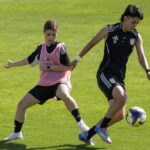
The three matches in Morocco were more than just friendlies—they were a test of survival. Playing under the banner of Afghan Women United, the team faced a steep learning curve. Many of the players had not trained together in a structured environment for years. Some had not touched a football in over four years, their lives disrupted by displacement, asylum processes, and the trauma of exile.
Despite the challenges, the team showed flashes of the technical skill and tactical discipline that once made them a rising force in Asian football. The results were mixed—a narrow loss to Tunisia, a hard-fought draw with Libya, and a spirited performance against Chad—but the scoreline was secondary. The true victory was the sight of Afghan women wearing the national crest, competing under the same flag that the Taliban had tried to strip of its meaning for half the population.
Key takeaways from the Morocco tour:
- Defensive organization: The team conceded only three goals across the three matches, a testament to the work of the coaching staff in building a compact, disciplined defensive block.
- Midfield creativity: The midfield unit, anchored by players who previously competed in the Australian NPL and English lower leagues, showed excellent ball retention and vision.
- Set-piece threat: Afghanistan created several dangerous opportunities from corners and free kicks, indicating a strong tactical focus on set-piece routines.
- Fatigue factor: The lack of consistent match fitness was evident in the final 20 minutes of each game, with players visibly tiring. This is expected to improve with a regular training schedule.
The team’s captain for the tour, a former refugee who now plays semi-professionally in Germany, stated after the final match: “We are not just footballers. We are the voice of every girl in Afghanistan who is told she cannot play. Every pass we make is a protest. Every goal we score is a victory for freedom.”
Expert Analysis: What This Means for Women’s Football and Human Rights
This is not a story that can be confined to the sports pages. The return of the Afghanistan women’s team is a geopolitical statement. It directly challenges the Taliban’s narrative that women’s participation in public life is a foreign imposition. By fielding a team that is recognized by FIFA, the international community is sending a clear signal: the rights of Afghan women are not negotiable.
Dr. Leila Hussaini, a sports sociologist at the University of London who has studied the intersection of gender and conflict in South Asian football, provides expert context: “The FIFA recognition of Afghan Women United is a watershed moment. It creates a legal precedent that could be used in other conflict zones. If a federation is complicit in human rights abuses, the international body now has a framework to bypass that federation and support the legitimate players. This is a powerful tool for future advocacy.”
From a purely sporting perspective, the team faces an uphill battle. They are currently unranked by FIFA and will need to play a minimum of five competitive matches to earn a world ranking. The immediate goal is to secure funding for a permanent training base—likely in Australia or Europe—and to integrate more players from the diaspora who are currently scattered across the globe.
Predictions for the next 12 months:
- Ranking entry: Expect Afghan Women United to enter the FIFA World Rankings by early 2027, likely in the bottom 30, but with rapid upward potential as they gain match experience.
- Qualification push: The team will target the 2026 AFC Women’s Asian Cup qualifiers. While qualification is a long shot, the experience will be invaluable.
- Sponsorship surge: Major brands are already circling. This team carries a powerful narrative that resonates with global audiences. Expect a major kit sponsorship deal within six months.
- Legal battles: The Taliban-controlled AFF is expected to challenge FIFA’s decision in the Court of Arbitration for Sport (CAS). The outcome will shape the future of sport in politically contested regions.
Stronger Than the Silence: A Conclusion That Echoes
The return of the Afghanistan women’s national team is a story of extraordinary courage in the face of systematic oppression. It is a reminder that football is never just a game. It is a platform for justice, a mirror of society, and sometimes, a weapon of resistance. For the players of Afghan Women United, every minute on the pitch is a reclamation of their identity. They are not playing for a medal or a trophy. They are playing for the right to exist.
Khalida Popal put it best: “When the world sees us play, they see the face of a nation that refuses to die. The Taliban took our stadiums. They took our fields. But they could not take our spirit. We are back. And we will never stop.”
The whistle has blown. The eight-year silence is over. The women of Afghanistan are no longer waiting for permission. They are playing. And the world is watching.
Source: Based on news from BBC Sport.