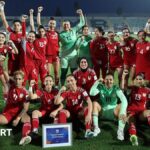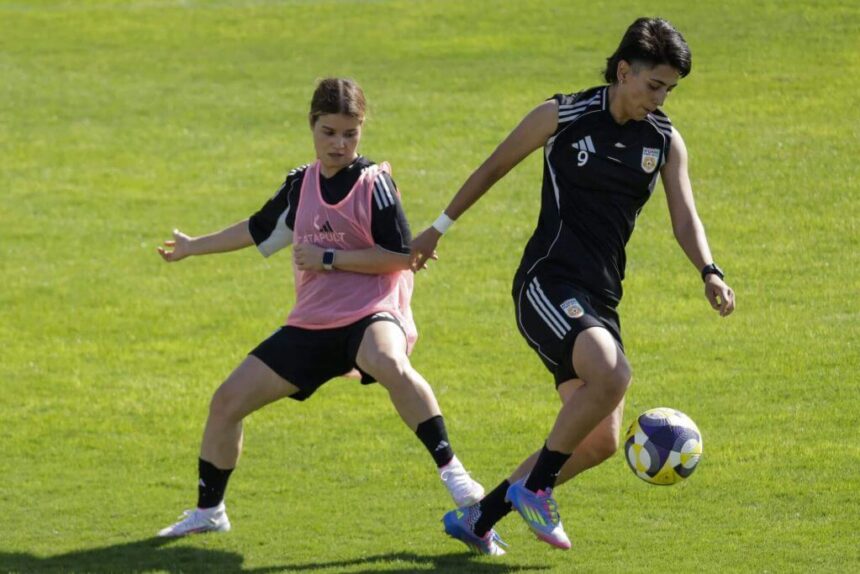
FIFA’s Historic Decision: Afghan Women’s Refugee Team to Compete as an Official National Side
In a landmark ruling that reshapes the intersection of geopolitics and sport, the Afghan women’s refugee football team, known as Afghan Women United, has been granted the unprecedented right to compete as an official national side. The decision, ratified by the FIFA Council on Tuesday, bypasses traditional federation recognition protocols and signals a seismic shift in how global football bodies handle refugee athletes. For a team forged in the chaos of evacuation and the silence of a banned women’s game, this is not just a victory on paper—it is a reclamation of national identity.
The ruling directly challenges the Taliban-controlled Afghan Football Federation (AFF), which has refused to acknowledge women’s football since the regime’s takeover in August 2021. While the AFF remains FIFA’s recognized member for Afghanistan, its policies have left hundreds of female players stateless in football terms. This new FIFA ruling creates a parallel structure: a sanctioned, official national team that exists outside the federation’s jurisdiction, representing Afghan women who now call countries like Australia, the United Kingdom, and Germany home.
From Evacuation to Emancipation: The Birth of Afghan Women United
The story of Afghan Women United begins in the harrowing final days of the U.S. withdrawal from Kabul. As the Taliban swept through the capital, female footballers—already targets of threats and violence—fled for their lives. Many were former members of the Afghanistan women’s national team, a squad that had only begun to compete internationally in 2010. By September 2021, a coordinated international effort involving FIFA, the Australian government, and human rights groups evacuated dozens of players and their families.
These athletes, scattered across refugee camps and temporary housing in Qatar, Australia, and Europe, refused to let their sport die. They regrouped under the banner of Afghan Women United, a name that carries both defiance and solidarity. Initially, they played friendly matches and exhibition games, but their legal status was murky. Without a recognized federation, they could not enter FIFA-sanctioned tournaments. They were a team without a country—a ghost squad in the eyes of the sport’s governing body.
That changed on Tuesday. FIFA’s council voted to circumvent its own Rule 7, which requires national team recognition from a member federation. The new ruling allows Afghan Women United to register as an official representative team for FIFA competitions, effectively granting them the same status as any other national side. FIFA President Gianni Infantino framed the decision as a “beautiful journey,” adding that it creates a template for other member associations “that may not be able to register a national or representative team.”
Breaking Down the FIFA Ruling: What It Means for the Team
This is not a symbolic gesture. The ruling carries concrete competitive and administrative weight. Here are the key implications:
- Competition Eligibility: Afghan Women United can now apply to enter FIFA-sanctioned tournaments, including the Women’s World Cup qualifiers and regional championships. Previously, they were barred from all official pathways.
- Player Registration: Players will be registered under a special FIFA category for refugee athletes, allowing them to represent the team without jeopardizing their refugee status or dual-citizenship applications.
- Funding and Support: As an official national side, the team becomes eligible for FIFA’s financial assistance programs, including the FIFA Forward development fund, which covers travel, equipment, and coaching.
- Political Autonomy: The team operates independently of the Taliban-controlled AFF. FIFA has stated that the AFF’s refusal to recognize women’s football does not block this new entity’s path to competition.
The decision also sets a dangerous precedent for the Taliban’s grip on Afghan sport. By creating a parallel national team, FIFA effectively declares that the AFF’s legitimacy is conditional. “This is a clear message that human rights and gender equality are non-negotiable in modern football,” says Dr. Laila Haidari, a sports governance expert at the University of London. “FIFA is saying: ‘If you won’t represent your women, we will create a mechanism that does.’”
Expert Analysis: The Geopolitical and Sporting Fallout
The ruling is a double-edged sword. On one hand, it offers a lifeline to athletes who have been erased from their own national narrative. On the other, it risks deepening the divide between FIFA and the Taliban regime, which still controls the AFF. The Taliban has not issued an official statement, but its sports ministry has previously labeled women’s participation in sports as “un-Islamic.”
What happens next? Analysts predict a three-phase trajectory:
Phase 1: Immediate Integration (2024–2025)
Afghan Women United will likely enter regional tournaments like the SAFF Women’s Championship (South Asian Football Federation). The team’s core strength lies in its diaspora talent—players who have been training in high-performance environments in Australia and Europe. However, they lack competitive match fitness as a unit. Their first official match could come within six months, pending FIFA’s calendar approvals.
Phase 2: Identity and Legacy (2025–2027)
The team will need to build a distinct identity. Will they wear the traditional red, green, and black of Afghanistan? Or will they adopt a new crest that symbolizes exile and resilience? FIFA has left these decisions to the team’s leadership. “We are Afghan, and we will always be Afghan,” says team captain Zahra Mahmoodi (a pseudonym used for safety), speaking from Melbourne. “But we are also refugees. Our flag is the courage of those who left.”
Phase 3: The Taliban Response (2027 onward)
The most volatile variable is the reaction from Kabul. The Taliban could attempt to block the team’s participation by lobbying other FIFA member associations, or they could simply ignore it. More likely, they will use the decision as propaganda—accusing FIFA of “dividing” Afghanistan. However, the ruling is legally bulletproof: FIFA’s statutes allow it to sanction teams outside of member associations in “exceptional humanitarian circumstances.”
“This is a test case for FIFA’s willingness to prioritize human rights over political expediency,” notes James Montague, a journalist who covers football in conflict zones. “If Afghan Women United succeeds, you could see similar teams for Ukrainian refugees, Syrian women, or even Rohingya athletes.”
Predictions: A New Era for Refugee Football
The most immediate impact will be on the 2027 FIFA Women’s World Cup qualification cycle. Afghan Women United will likely enter the AFC (Asian Football Confederation) qualifiers, where they will face established teams like Japan, Australia, and China. Realistically, they are years away from competing at the top tier. But their presence alone changes the conversation.
Here are three bold predictions:
- Global Sponsorship Surge: Major brands like Nike and Adidas will line up to sponsor the team. The narrative—women defying a theocracy through sport—is marketing gold. Expect a documentary deal within 12 months.
- Legal Challenges: The Taliban-controlled AFF will likely sue FIFA in the Court of Arbitration for Sport (CAS), arguing that the ruling violates FIFA’s own statutes on member autonomy. The case will be weak, but it will drag on for years.
- Copycat Movements: At least three other refugee groups—including a team of Syrian women in Turkey and a Congolese squad in Uganda—are already exploring similar FIFA recognition. This ruling opens the floodgates.
For the players themselves, the ruling is deeply personal. Many have not seen their families in three years. Some still receive threats via social media from Taliban supporters. “When I put on that jersey, I am not just playing for myself,” says one midfielder who asked to remain anonymous. “I am playing for every girl in Kabul who is told she cannot kick a ball. I am playing for my mother, who cried when I left. This is our victory.”
Conclusion: A Goal Scored for Humanity
FIFA’s decision to allow the Afghan women’s refugee team to compete as an official national side is more than a rule change—it is a moral declaration. In a world where sport is often accused of turning a blind eye to injustice, this move proves that football can still be a force for liberation. The Taliban may control the stadiums in Kabul, but they cannot control the dreams of Afghan women scattered across the globe.
The team’s journey is only beginning. They face a grueling road to qualification, internal struggles with trauma and displacement, and the constant weight of representing a nation that has rejected them. Yet, for the first time since 2021, they have a flag. They have a federation. They have a future. As Gianni Infantino noted, this is a “beautiful journey.” And for the women of Afghan Women United, the final whistle has not yet blown.
The ball is now in their court—and the world is watching.
Source: Based on news from Yahoo Sports.