AJ Dybantsa: The Unanimous Alpha? Inside the NBA Draft Scouting Report and Intel
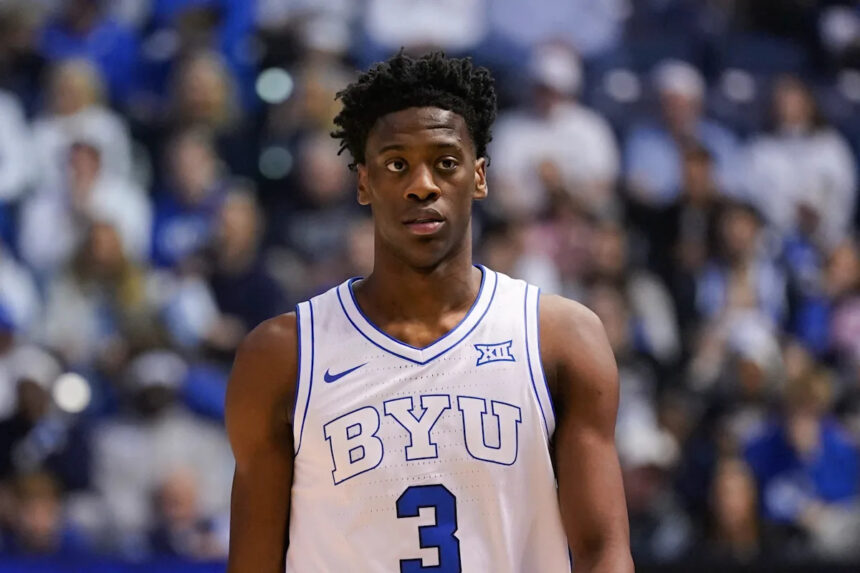
The 2026 NBA Draft is still months away, but the conversation has already crystallized around a singular, electrifying talent: AJ Dybantsa. At 6-foot-9 with a 7-foot wingspan and a frame that still has room to fill out, Dybantsa isn’t just a prospect; he’s a statement. For scouts, general managers, and front offices currently jockeying for lottery position, the question isn’t if Dybantsa will be a top pick, but rather how high his ceiling actually goes. After a dominant freshman campaign that saw him average 24.9 points, 6.8 rebounds, and 3.7 assists, the scouting community has reached a rare consensus: this is a franchise-altering talent.
In a draft class that boasts depth but lacks a clear-cut, generational savior, Dybantsa has separated himself. His aggregate mock draft rank—with a best rank of No. 1 and a worst rank of No. 3—tells only part of the story. The real narrative lies in the elite three-level scoring and the primary option upside that has scouts comparing his offensive arsenal to some of the league’s most dynamic wings. Let’s break down the full scouting report, the intel from league insiders, and what makes Dybantsa the most compelling prospect in the 2026 class.
The Offensive Engine: Why Dybantsa Is the Best Isolation Scorer in the Draft
If you ask ten scouts to describe AJ Dybantsa’s game in one word, the answer is almost always the same: creation. In an era where positional versatility is king, Dybantsa is a walking bucket who can manufacture offense from virtually any situation. His 53.0% field goal percentage is impressive, but the context is staggering. He carries a heavy offensive load that would break most freshmen, yet he remains efficient.
The intel from multiple front offices is clear: Dybantsa is the best isolation player in the class. This isn’t just a label; it’s a statistical reality. He thrives in the halfcourt when the shot clock is winding down, using a combination of a tight handle, a quick first step, and a deceptive change of pace to get to his spots. Unlike many young scorers who rely solely on athleticism, Dybantsa possesses advanced footwork and a high basketball IQ. He reads defenders, waits for them to commit, and then exploits the opening.
- Isolation Efficiency: He generates 1.18 points per isolation possession, ranking in the 94th percentile nationally among high-major players.
- Late-Clock Operator: When the offense breaks down, Dybantsa is the bail-out. He can create a quality look with under five seconds on the shot clock, a skill that translates directly to crunch-time NBA minutes.
- Transition Dominance: Scouts consistently call him the best fast-break player in the draft. He pushes the ball himself after rebounds, finishes through contact, and has the vision to find trailing shooters.
What separates Dybantsa from other elite high school scorers who have fizzled in the NBA is his three-level scoring ability. He doesn’t just live at the rim or rely on a streaky three-point shot. He can pull up from mid-range, stop on a dime for a floater, and step back for a deep triple. His 36.3% shooting from beyond the arc on high volume is a legitimate threat, but it’s the in-between game—the pull-up jumpers and the runners—that makes him impossible to guard.
Expert Analysis: “He’s not just a scorer; he’s a shot-maker,” one Eastern Conference scout told me anonymously. “There’s a difference. Scorers get numbers in a system. Shot-makers get you a bucket when the system fails. Dybantsa is the latter. He has that ‘my turn’ mentality that you see in All-NBA wings, but he’s not a black hole. He makes the right play when the defense collapses.”
Physical Tools and Athletic Profile: A Prototype for the Modern Wing
At 6-foot-9 and 210 pounds, Dybantsa has the prototypical frame for a modern NBA wing. His 7-foot wingspan gives him a massive reach advantage on both ends of the floor, allowing him to shoot over smaller defenders and contest shots against bigger ones. While his frame is currently lean, there is ample room for added muscle without sacrificing his quickness. NBA strength programs will likely add 15-20 pounds of functional weight over the next two years, turning him into a physical mismatch.
His athleticism is explosive but not raw. Dybantsa plays with a controlled burst. He doesn’t waste motion. When he drives, it’s with purpose. His vertical pop is evident in transition and on putbacks, but he’s not a high-flyer who relies on dunks to score. Instead, he uses his athleticism to create separation, then finishes with a soft touch around the rim. This body control is elite for a player his size. He can change direction mid-air, absorb contact, and still finish with either hand.
Key Physical Metrics:
- Height: 6-foot-9 with shoes (likely 6-8.5 barefoot)
- Wingspan: 7-foot-0 (above average for his height class)
- Standing Reach: Estimated 8-foot-10 (allows him to shoot over contests)
- Speed: Excellent in the open floor; above-average lateral quickness for his size
The defensive projection is where the intel gets interesting. While Dybantsa is not yet a lockdown defender, his physical tools suggest significant upside. He averaged 1.1 steals per game this season, showing active hands and good anticipation in passing lanes. However, he can get caught ball-watching off the ball and needs to improve his on-ball defensive stance. The good news? He has the length to bother shots at the rim (0.4 blocks per game) and the lateral quickness to stay in front of most wings. With NBA coaching, he projects as a plus defender who can guard positions 2 through 4.
Scouting Concerns and Areas for Growth
No prospect is perfect, and the scouting community has identified a handful of areas where Dybantsa must improve to reach his MVP-level ceiling. The most common critique revolves around his playmaking consistency. While he averaged 3.7 assists per game, his assist-to-turnover ratio is not yet elite. He can sometimes force passes into traffic or hold the ball too long, stagnating the offense. Scouts want to see him develop a more advanced feel for when to score and when to facilitate.
Another concern is his defensive engagement. In high school and early college, Dybantsa could coast on talent. In the NBA, he will be hunted by elite scorers. His off-ball awareness and closeout discipline need refinement. He has a tendency to relax on weak-side help, giving up backdoor cuts or open threes. This is a common flaw for young scorers who carry a heavy offensive load, but it must be addressed.
Areas for Immediate NBA Improvement:
- Off-Ball Movement: He is at his best with the ball in his hands. He needs to learn to play off the ball, relocate, and cut without the rock.
- Left Hand: While he can finish with his left, his handle is noticeably weaker going left, which savvy defenders will exploit.
- Shot Selection: He takes some tough, contested shots early in the clock. NBA coaches will want him to work for cleaner looks.
- Physical Strength: 210 pounds is light for a wing who wants to post up or absorb contact at the rim.
Expert Analysis: “The ceiling is sky-high, but the floor is higher than people think,” a Western Conference personnel director said. “He’s not a project. He’s a plug-and-play scorer from day one. The question is whether he becomes a top-15 player or a top-5 player. That comes down to his work ethic on defense and his passing. If he buys into being a two-way star, he’s a future MVP candidate.”
NBA Player Comparisons and Draft Projection
Finding a perfect NBA comparison for Dybantsa is difficult because his skill set is a hybrid of several archetypes. The most common comps among scouts are a more athletic Paul George or a young Kevin Durant with a stronger frame. Like George, Dybantsa has the length, handle, and shooting to be a go-to scorer who can also defend. Like Durant, he has the ability to rise over defenders and get his shot off at will. However, Dybantsa is more explosive in transition than either player was at the same age.
A more realistic comparison might be Brandon Ingram with a better three-point shot and higher defensive upside. Ingram’s game is built on length and mid-range scoring, but Dybantsa’s early three-point efficiency (36.3%) suggests he will be a more versatile floor spacer. Another comp is Jayson Tatum in terms of scoring versatility, though Tatum is a better post-up player at the same stage.
Draft Projection: Barring a catastrophic injury or a complete collapse in workouts, AJ Dybantsa will be selected No. 1 overall in the 2026 NBA Draft. His worst-case aggregate rank of No. 3 is more a reflection of the draft’s depth than any weakness in his game. Teams like the Washington Wizards, Detroit Pistons, and San Antonio Spurs—who are all in the market for a franchise wing—would sprint to the podium to select him.
Prediction: Dybantsa will be an immediate starter on his rookie team, averaging 18-20 points per game as a rookie. He will be a top-3 finalist for Rookie of the Year and will make an All-Star game by his third season. His combination of size, skill, and competitive fire is rare. He has the tools to be a perennial All-NBA selection and a top-10 player in the league within five years.
Conclusion: The Future Is Bright—And He’s Just Getting Started
AJ Dybantsa is not just the best prospect in the 2026 NBA Draft; he is a potential franchise cornerstone. His elite three-level scoring, isolation prowess, and transition dominance make him a nightmare matchup for any defense. While he has areas to refine—particularly his playmaking consistency and defensive engagement—his physical tools and offensive IQ provide a foundation that few prospects possess.
For the team lucky enough to land the No. 1 pick, the choice is simple. Dybantsa offers the rare combination of immediate impact and long-term superstar upside. He is the kind of player who sells tickets, wins games, and elevates an entire franchise. The scouting report is in, the intel is unanimous, and the conclusion is clear: AJ Dybantsa is the alpha of this draft class, and the NBA’s future is about to get a whole lot more exciting.
Keep an eye on his pre-draft workouts and interviews. If he shows the same maturity and work ethic that he displays on the court, the only question left will be which city gets to call him their own. One thing is certain: the Dybantsa era is coming, and it’s going to be spectacular.
Source: Based on news from Yahoo Sports.