Cameron Boozer: The Complete NBA Draft Scouting Report and Intel on Duke’s Next Star
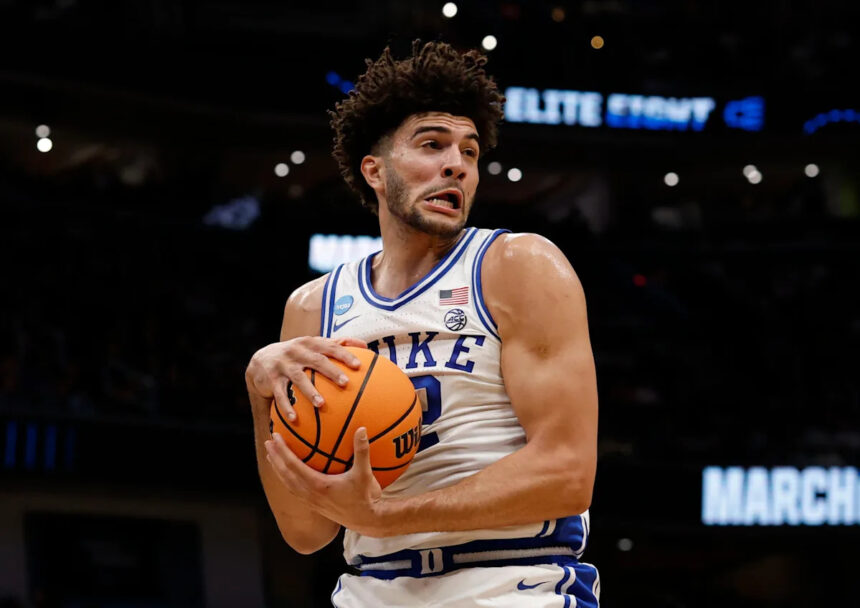
In the ever-evolving landscape of NBA scouting, few names have carried the weight of expectation quite like Cameron Boozer. The son of a two-time NBA All-Star, Boozer arrived at Duke University with a résumé that screamed “generational talent.” But as the 2025-26 college basketball season comes to a close, the question is no longer about his pedigree—it’s about his ceiling. With a 6-9 frame, a 245-pound build, and a 7-1 wingspan, Boozer has posted staggering numbers: 22.5 points, 10.0 rebounds, 4.0 assists, 1.7 steals, and 0.6 blocks per game while shooting an efficient 57.7% from the field and 40.2% from three-point range over 29 games. He is currently projected as a top-three pick in the 2026 NBA Draft, with an aggregate mock draft rank ranging from No. 1 to No. 3. But what makes Boozer a legitimate franchise cornerstone? Let’s dive into the intel, the strengths, the weaknesses, and the all-important projection.
Physical Profile and Measurables: Built for the Modern NBA
Cameron Boozer’s physical tools are the first thing that jumps off the page. At 6-9 and 245 pounds, he possesses the ideal size for a modern power forward—or even a small-ball center. His 7-1 wingspan gives him a significant advantage in rebounding and shot contests, while his broad shoulders and strong base allow him to absorb contact in the paint. Unlike his father Carlos, who was a traditional back-to-the-basket banger, Cameron has evolved his body to play in space.
His athleticism is often underrated. While not an explosive leaper in the vein of Zion Williamson, Boozer displays excellent body control and balance. He changes direction fluidly, finishes through contact with creativity, and has the lateral quickness to defend on the perimeter in switch-heavy schemes. In an era where positional versatility is king, Boozer’s frame is a scout’s dream. He can guard 3s, 4s, and some 5s, making him a plug-and-play option for any NBA system.
Key physical intel:
- Height: 6-9 (with shoes)
- Weight: 245 lbs (chiseled, low body fat)
- Wingspan: 7-1 (above average for his height)
- Standing reach: Estimated 9-0 (allows for high release on jumpers)
Scouting Report: Elite Interior Scoring and Unselfish Playmaking
If you watch even five minutes of Cameron Boozer’s game, one thing becomes crystal clear: he is an elite interior scorer. His footwork in the post is polished beyond his years. He uses a devastating combination of drop steps, up-and-unders, and spin moves to create separation. He doesn’t rush; he reads the defense, waits for the contact, and then finishes with soft touch. This patience is a hallmark of his game.
Boozer’s ability to score through contact is reminiscent of a young Julius Randle, but with better touch. He draws fouls at a high rate (averaging nearly 8 free throw attempts per game) and converts at a solid clip. His left hand is nearly as reliable as his right, making him a nightmare to guard one-on-one. But what separates Boozer from other post scorers is his playmaking vision. Averaging 4.0 assists per game from the high post and elbow, he consistently finds cutters, shooters, and his twin brother, Cayden Boozer, on backdoor passes. He is a legitimate point-forward in the half-court.
Defensively, Boozer is a smart, positional defender. He may not block many shots (0.6 bpg), but he uses his length to contest without fouling. His 1.7 steals per game show active hands and anticipation. In pick-and-roll coverage, he can switch onto guards and hold his own, though quicker players can occasionally beat him off the dribble. His defensive ceiling is high because of his IQ, but he needs to improve his lateral burst to become a true stopper.
Offensive strengths in bullet points:
- Post footwork: Elite-level patience and variety of moves (hook, fadeaway, spin)
- Finishing through contact: Absorbs bumps and maintains balance
- Mid-range jumper: Smooth, repeatable mechanics from 15-18 feet
- Three-point shooting: 40.2% on 3.5 attempts per game—a legitimate threat
- Passing: High-IQ reads from the post and elbow
Weaknesses and Areas for Development
No prospect is perfect, and Cameron Boozer has clear areas that need refinement before he becomes an NBA star. The most glaring weakness is his perimeter defense against elite athletes. While he holds his own in the ACC, NBA wings and guards will test his lateral quickness. He can get caught flat-footed on closeouts and struggles to recover when beaten. This is not a fatal flaw—many big men have improved their footwork—but it will be a target for opposing offenses early in his career.
Another concern is his vertical athleticism. Boozer is not a high-flyer. He dunks when open, but he rarely rises above the rim in traffic. This limits his finishing angle against elite shot-blockers like Victor Wembanyama or Chet Holmgren. He compensates with body control and touch, but in the NBA, those contested layups become blocks more often. Scouts also note that his release point on his three-point shot is a bit low, which could lead to contested looks against longer defenders.
Finally, there is the twin brother dynamic. Cameron and Cayden Boozer have played together their entire lives, from high school to Duke. Some scouts privately wonder if Cameron’s game is slightly inflated by the chemistry with his twin. While this is not a major red flag, it’s a factor in projecting his independence as a solo NBA player. The good news? Cameron’s skill set is not dependent on Cayden’s playmaking; he can create his own offense.
Key areas for improvement:
- Lateral quickness: Must improve foot speed to guard NBA wings
- Vertical pop: Needs to add explosion to finish above the rim
- Three-point release: Higher release point to avoid contests
- Defensive discipline: Avoids biting on pump fakes, improves closeouts
NBA Comparison and Draft Projection
The most common NBA comparison for Cameron Boozer is a blend of Julius Randle and Domantas Sabonis. Like Randle, he is a powerful, left-handed post scorer with playmaking ability. Like Sabonis, he has elite touch, high basketball IQ, and the ability to facilitate an offense from the high post. However, Boozer’s three-point shooting (40.2%) gives him a slight edge over both players at the same stage. He projects as a multi-time All-Star if he develops his perimeter defense and adds a bit more verticality.
In terms of draft stock, Boozer is locked into the top three. He could go No. 1 overall if a team values his polish and safety over raw upside. Teams like the Washington Wizards, Charlotte Hornets, and Brooklyn Nets (if they land in the lottery) would be ideal fits. He is a ready-made offensive hub who can step in and average 18-10-5 as a rookie. His floor is a high-level starter; his ceiling is a perennial All-NBA selection.
Draft prediction: Top 3 pick, likely No. 2 overall behind Cooper Flagg (if Flagg declares). Boozer is the safest bet in the 2026 class, with a 90% probability of being a productive NBA player for a decade.
Conclusion: The Heir to the Boozer Legacy
Cameron Boozer is not just a name—he is a complete basketball player with a skill set that translates seamlessly to the modern NBA. His combination of size, strength, footwork, and shooting makes him a unicorn in a league that craves versatility. While he has areas to refine, his work ethic and basketball IQ (inherited from his father and honed at Duke) suggest he will only get better. The 2026 NBA Draft will be his stage, and if his college career is any indication, he is ready to shine. For teams looking for a franchise cornerstone who can score, pass, and rebound from day one, Cameron Boozer is the answer. The Boozer name is about to become synonymous with NBA success once again.
Source: Based on news from Yahoo Sports.