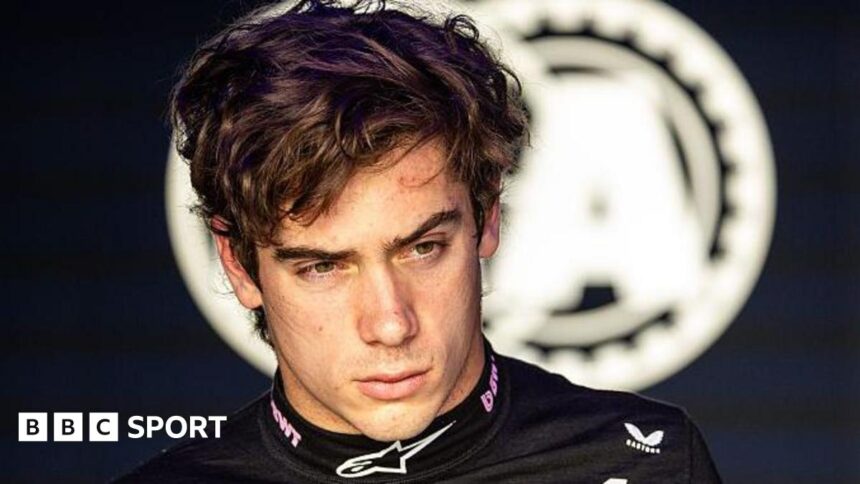
Alpine Issues Stark Condemnation of Colapinto Abuse, Denies Team “Sabotage” Claims
In a rare and forceful public intervention, the Alpine Formula 1 team has taken the extraordinary step of publishing an open letter to its fans and the wider F1 community. The statement serves a dual purpose: to condemn in the strongest terms the torrent of social media abuse directed at rookie driver Franco Colapinto and to categorically deny what it calls “completely unfounded” allegations of internal sabotage and preferential treatment for his teammate, Pierre Gasly. This move highlights the increasingly toxic underbelly of online F1 fandom and the immense pressure on young drivers navigating their debut seasons in the sport’s most cutthroat environment.
A Crash, A Storm, and A Team’s Public Defense
The controversy erupted following the Japanese Grand Prix, where a terrifying high-speed incident involving Colapinto and Haas driver Oliver Bearman brought the inherent dangers of F1 back into sharp focus. The accident was attributed to a significant speed differential—nearly 30mph—as Colapinto’s Alpine entered a critical energy harvesting mode on the approach to the daunting Spoon Curve, while Bearman behind him activated a boost of hybrid power. The result was a violent collision, thankfully without serious injury, but one that placed the young Argentine driver squarely in the crosshairs of online vitriol.
Compounding this was the stark points disparity between the Alpine teammates after the first three rounds of the 2025 season. While the experienced Pierre Gasly has secured 15 points, demonstrating the A526 car’s potential, Colapinto has managed just a single point. This statistical gap, a common reality for any rookie adjusting to F1, became fodder for a damaging narrative. A vocal minority began propagating a theory that Alpine was deliberately undermining Colapinto—a driver who only joined the team as their 2025 reserve and race driver after signing from the Williams academy—to benefit Gasly.
Alpine’s letter left no room for ambiguity. “We condemn the hateful messages aimed at Franco Colapinto,” the team stated, directly addressing the abuse. It continued, firmly dismissing “the completely unfounded speculation that we are in any way favouring one driver over the other, or that we would ever deliberately compromise the performance of one of our cars.”
Expert Analysis: The Reality of a Rookie Season vs. Online Conspiracies
From a professional sporting perspective, the notion of a team “sabotaging” one of its own two cars is not only illogical but fundamentally self-destructive. In the hyper-competitive world of Formula 1, where hundreds of millions of dollars and hundreds of jobs are on the line, every single point in the Constructors’ Championship is financially and prestigiously critical.
- Constructors’ Championship Focus: Teams are awarded prize money based on their final standing. Deliberately hindering one car would directly cost the team millions, a nonsensical strategy for any organization.
- Data Correlation: Having two cars running at full potential is essential for gathering comparative data to develop the car. A compromised car provides useless information, stunting technical progress.
- The Rookie Learning Curve: Colapinto’s points deficit to Gasly, a proven race winner with over 130 Grand Prix starts, is a textbook example of a rookie acclimatization period. Mastering complex modern F1 cars, with their intricate hybrid systems and team-specific procedures, takes time.
The Japan incident itself was a brutal lesson in the split-second energy management required. “The driver has to manage a complex battery system, and entering a high-speed corner like Spoon in harvest mode is a standard strategic move to recharge for later attack,” explains a former F1 race engineer. “The catastrophic outcome was a racing incident born from a steep closing speed, not malice or incompetence. It’s a harsh lesson Colapinto will learn from.”
The Ugly Spectre of Social Media Abuse in Modern F1
Alpine’s public stance is a significant moment in the sport’s ongoing battle against online harassment. Drivers, teams, and even officials are routinely subjected to vicious, often anonymous, abuse following on-track incidents or perceived failures. This environment is particularly toxic for newcomers like Colapinto, who are still building their confidence and reputation.
Teams have traditionally handled such matters privately, but Alpine’s decision to issue an open letter signals a potential shift in strategy. It serves as a direct rebuke to the perpetrators and a public show of support for their driver, aiming to shield him from the psychological toll. The letter implicitly calls for a more respectful and knowledgeable fan culture, one that understands the immense complexity and pressure of Formula 1, rather than resorting to baseless conspiracy theories at the first sign of adversity.
Mental resilience is now as crucial as physical skill for a driver, and teams are increasingly aware that protecting their assets extends to their digital well-being. By confronting the issue head-on, Alpine is attempting to draw a line in the sand for its own operations and set an example for the paddock.
Predictions: Pressure, Performance, and the Path Forward for Alpine
The immediate fallout from this episode will create a pressurized but potentially unifying atmosphere within the Alpine garage. The team has publicly staked its reputation on fair treatment, putting immense onus on its operational side to deliver equal machinery and support to both sides of the garage. For Colapinto, the public backing could be a double-edged sword—a welcome shield from abuse, but also an added weight of expectation to now steadily improve his performances.
Looking ahead, we can anticipate:
- A Focused Colapinto Rebound: With the team’s support unequivocal, the focus for Colapinto will shift entirely to extracting performance. Upcoming circuits with fewer extreme energy management zones may play to his evolving strengths.
- Scrutiny on Alpine’s Operations: Every strategic call, especially in close intra-team battles, will be microscopically analyzed by observers. Alpine must be transparent and consistent in its dealings to quash any residual speculation.
- A Potential Paddock-Wide Precedent: Other teams may follow Alpine’s lead in publicly condemning abuse, leading to a more coordinated, sport-wide effort to protect personnel from online harassment.
Conclusion: A Line in the Digital Sand
Alpine’s open letter is more than a defense of one driver; it is a statement of principle in the digital age. By condemning the abuse of Franco Colapinto and dismantling the sabotage myths with cold, hard sporting logic, the Enstone-based team has taken a stand for sanity and respect in Formula 1’s often-feverish fan ecosystem. The incident underscores the brutal reality of a rookie season, where mistakes are magnified and learning is conducted in the global spotlight. The true test now lies not in conspiratorial whispers, but on the track. Alpine has committed to providing both Gasly and Colapinto with the tools to succeed. It is now incumbent upon the drivers, especially the talented Argentine rookie, to repay that faith with pace and points, letting his driving, not online noise, write the next chapter of his promising career.
Source: Based on news from BBC Sport.