Amorim’s Toxic Exit: The Latest Chaotic Chapter in Ratcliffe’s Reign at Manchester United
The grand vision sold to the Manchester United faithful was one of calm, competent restoration. Sir Jim Ratcliffe, the British billionaire and lifelong fan, arrived not merely as an investor but as a saviour, his Ineos group promising to apply cold, hard business logic to the club’s footballing fever dream. Yet, just months into his sporting control, the project is not defined by meticulous planning but by relentless turbulence. The unceremonious, toxic departure of manager Ruben Amorim is not an isolated incident; it is the emblematic, undignified latest chapter in a reign already drowning in chaos.
The Illusion of Stability Shattered at Elland Road
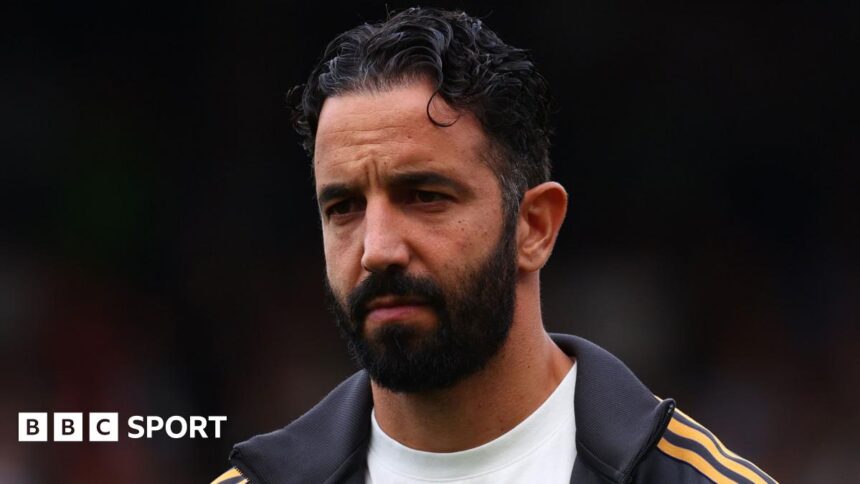
Sunday’s 1-1 draw at Leeds United was a poor result, but it was the post-match explosion that truly defined the day. Ruben Amorim’s ill-judged, combustible outburst was not a passionate defence of his players. It was a direct, calculated broadside aimed at the hierarchy above him—a high-risk strategy that became the final, self-detonating blow in a battle he was never going to win. The cracks in his relationship with the Ineos braintrust, led by Sir Dave Brailsford and soon-to-be-appointed CEO Omar Berrada, had been widening for weeks. As he spoke, those fractures became canyons. His fighting talk was not a rallying cry, but a resignation letter delivered via incendiary device.
This was not a manager simply feeling the heat. This was a man on shifting sands, aware his project was crumbling, choosing a scorched-earth exit. The toxic exit left United’s leadership with no option but to sack him, an act that underscores a profound lack of control at the very top. Ratcliffe was meant to end the cycle of managerial carnage, not accelerate it with such unseemly haste.
From Saviours to Instigators: The Ineos Methodology Questioned
The portrayal of Ratcliffe as United’s white knight is now under severe strain. The promised “root-and-branch” review has manifested as public indecision and private conflict. The Amorim episode exposes critical flaws in the new regime’s approach:
- Flawed Appointment: Amorim, while a highly-rated young coach, was always a stylistic and temperamental gamble. The due diligence on his combustible personality appears either non-existent or ignored.
- Unclear Football Structure: With a new technical director yet to be installed and John Murtough’s shadow still lingering, who was Amorim’s direct line of support? The ambiguity created a power vacuum ripe for conflict.
- Communication Breakdown: Reports of fractured relationships point to a fundamental disconnect between the manager’s expectations and the board’s vision, a basic failure in football governance.
This chaos and instability is the antithesis of the Manchester City or Liverpool models Ratcliffe claimed to admire. Ineos, for all its industrial might, is presiding over a football operation that feels more reactive than strategic, more volatile than visionary.
The Fallout: A Squad Adrift and a Summer of Peril
The immediate consequences of Amorim’s toxic departure are severe. The squad, already low on confidence, is now utterly leaderless, playing out a season with a caretaker manager after a permanent boss was publicly immolated. Key players like Bruno Fernandes and Marcus Rashford, who need clarity and world-class coaching, are instead subjected to yet another cycle of reset and uncertainty.
Looking ahead, the summer presents a monumental peril for Ratcliffe’s reign:
- Damaged Brand: Top managerial targets will have watched this saga with horror. United’s job now looks like a poisoned chalice, with a trigger-happy, disjointed board.
- Transfer Chaos: Without a permanent manager, how can United possibly execute a coherent transfer strategy? The club risks falling further behind rivals in the critical summer window.
- Fan Revolt: The patience of the match-going support, worn thin by the Glazers, is not infinite. Ratcliffe’s goodwill capital is being rapidly depleted by self-inflicted crises.
The Elland Road outburst was not just the end of Amorim; it was a catalyst that has accelerated United’s internal crisis, exposing the fragility of the new regime’s foundations.
Predictions: Can Ratcliffe Steer Out of the Storm?
The path forward is fraught, but not yet irredeemable. Ratcliffe’s response to this debacle will define his ownership. Expect a period of intense, and hopefully silent, behind-the-scenes action. The appointment of a technical director, like Dan Ashworth, is now more urgent than ever. The subsequent managerial search must be exhaustive, unified, and focused on a candidate with not just tactical acumen, but the diplomatic fortitude to navigate a rebuild under a watchful and now-scrutinised board.
The likely shift will be towards a less volatile, more communicative figure—a manager who can collaborate within a structure, not rail against it. Names like Thomas Tuchel (though himself no stranger to conflict) or a Roberto De Zerbi may rise, but the criteria must change. The prediction here is a cautious, PR-heavy appointment aimed at projecting stability, even if the football fit is not perfect.
However, the instability has a cost. A top-four finish is now a distant dream, and attracting elite talent without Champions League football and amidst this chaos will require monumental persuasion and financial power. The rebuild has been set back by at least 12 months.
Conclusion: A Reign Defined by Its First Crisis
Sir Jim Ratcliffe arrived at Old Trafford promising a revolution of professionalism. What he has delivered, in these early months, is a startling continuation of the theatre of the absurd. The toxic exit of Ruben Amorim is a symbolic moment—a stark, public revelation that the new king may be as naked as the old ones.
The chaotic chapter at Elland Road was not just about a manager losing his cool. It was about a leadership group failing to create an environment where such an explosion was impossible. Ratcliffe’s reign will not be judged by his wealth or his intentions, but by his ability to instil a winning culture. Thus far, the culture is one of leaks, power struggles, and undignified exits. The saviour narrative is broken. Only a swift, competent, and humble correction can prevent Ratcliffe’s legacy from being one of expensive, chaotic failure. The clock is ticking, and the world is watching.
Source: Based on news from BBC Sport.