An Appalling Weekend: Arokodare & Mundle Latest Victims in Football’s Enduring Scourge of Racism
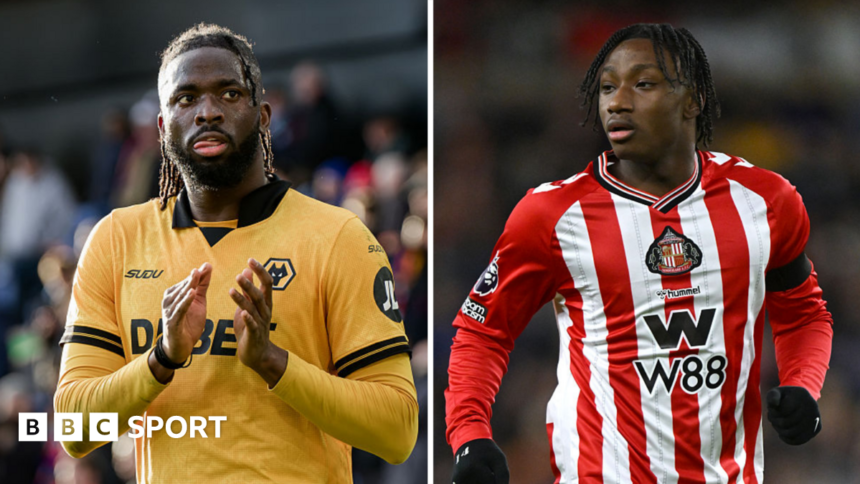
Another matchday, another grim, predictable cycle. As the final whistles blew across the Premier League this weekend, the focus should have remained on the drama on the pitch. Instead, the conversation has been violently hijacked, forced once more onto the vile underbelly of social media where racism continues to fester. Wolverhampton Wanderers striker Tolu Arokodare and Sunderland winger Romaine Mundle are the latest names added to a sickeningly long list, targeted with racist abuse online following Sunday’s fixtures. Their ordeal came barely 24 hours after Burnley’s Hannibal Mejbri and Chelsea’s Wesley Fofana suffered identical attacks. In a damning indictment of the current state of affairs, anti-discrimination charity Kick It Out was compelled to label it an “appalling weekend”—a stark, four-victim snapshot of a crisis that shows no sign of abating.
The Unending Cycle: A Weekend Timeline of Abuse
This was not an isolated incident but a concentrated burst of hatred, highlighting the systematic nature of the problem. The timeline is as disheartening as it is clear.
On Saturday, the 1-1 draw between Chelsea and Burnley at Stamford Bridge was a compelling contest. Yet, for two players, the post-match analysis was poisoned. Chelsea defender Wesley Fofana and Burnley midfielder Hannibal Mejbri, both of whom had engaged in a fiercely competitive battle, found themselves united in a far more sinister way: each was bombarded with racist messages on Instagram. The abuse, often cowardly hidden behind anonymous accounts, was a brutal reminder that for some, a player’s performance is merely a pretext for prejudice.
If there was any hope that this would be the extent of it, Sunday swiftly extinguished that notion. As fans digested the day’s results, Wolves’ Tolu Arokodare and Sunderland’s Romaine Mundle were subjected to the same vile treatment. The pattern is chillingly consistent: high-profile platforms, anonymous accounts, and abuse rooted in nothing but skin color. Four players, across four different clubs, in the space of 48 hours. Kick It Out’s statement cut to the core: “the sad fact is, we know it happens regularly.” This weekend was not an anomaly; it was simply a more visible eruption of a constant, toxic leak.
Beyond Condemnation: Why Platforms and Punishments Are Failing
Public statements from clubs, governing bodies, and fellow players condemning the abuse are now a standard, almost ritualistic, part of this cycle. While important in showing solidarity, they are clearly not a deterrent. The central failure lies in two areas: the impotence of social media platform enforcement and the near-total lack of real-world consequences for perpetrators.
Social media companies, for all their advanced algorithms and AI, continue to treat racist abuse as a content moderation issue rather than a societal emergency. The process is reactive, not preventive. Players are expected to report abuse, after the psychological harm has been inflicted, and then wait for often-sluggish action. The anonymous account loophole remains widely exploited, allowing cowards to spew hatred without accountability.
Furthermore, football’s own disciplinary mechanisms feel disconnected from these digital crimes. While on-pitch racism can lead to stadium bans and fines, the online world exists in a nebulous space. Law enforcement agencies are often under-resourced to pursue these cases effectively. This creates a dangerous perception of impunity. Until there is a credible threat of identification, prosecution, and meaningful punishment—such as nationwide football banning orders linked to online abuse—the cycle will continue. The question must be asked: if an individual can be banned for life from a stadium for shouting racist abuse, why can’t they be banned from engaging with the sport online?
A Path Forward: Demanding Tangible Action Now
Ending this scourge requires moving beyond performative outrage to implement hard, tangible solutions. The blueprint has been discussed for years; it is now a matter of will and enforcement. Key actions must include:
- Mandatory, Verifiable ID for Sports-Related Accounts: Social media platforms must work with football authorities to create a system where accounts engaging with official club and league content require verified identification. This would not apply to all users, but specifically to those entering football-centric digital spaces.
- Real-Time Proactive Moderation: Using keyword filters and AI to proactively block racist abuse before it reaches a player’s inbox. Clubs and leagues must pressure platforms to dedicate specific, elevated resources to protect athletes.
- Unified Cross-Border Law Enforcement Task Forces: Racist abuse often crosses international jurisdictions. Football’s global governing bodies, like FIFA and UEFA, must fund and collaborate with Interpol and national police to create specialized units to track and prosecute offenders.
- Education Embedded in the Game: Sanctions must be paired with mandatory education programs in academies, for fans, and even as part of referee training, to continually reinforce the human impact of this abuse.
The technology and the frameworks exist. What has been lacking is the collective, uncompromising pressure from football’s most powerful institutions—the Premier League, the FA, FIFA—to force social media giants to the table and treat this with the severity it demands.
A Grim Prediction: The Stakes for Football’s Soul
If the current trajectory continues, the predictions are grim. We risk normalizing this abuse as a “part of the game,” an unacceptable cost of fame that players are expected to silently endure. This will inevitably lead to:
First, a mental health crisis among players, particularly young, rising stars who are most vulnerable. The constant barrage of hatred can erode confidence, passion, and well-being, directly impacting performance and career longevity.
Second, a deepening disillusionment among fans of color. When the heroes they identify with are repeatedly attacked with no decisive resolution, it sends a message about whose safety and belonging the sport truly values.
Finally, and most damningly, football will lose its moral authority. It cannot champion “Rainbow Laces,” support anti-racist campaigns, and speak about unity while failing to protect its own employees from relentless, coordinated hate speech on a weekly basis. The sport’s credibility is on the line.
The abuse of Tolu Arokodare, Romaine Mundle, Hannibal Mejbri, and Wesley Fofana this weekend is a deafening alarm bell. It is a reminder that for all football’s progress, the poison of racism remains embedded in its ecosystem. The solutions are no longer a mystery; they are a test of courage. Will the game’s stakeholders finally wield their immense influence and financial power to enact real change, or will next weekend simply bring a new set of names to mourn? The beautiful game is in a fierce battle for its very soul, and currently, it is losing. The time for action was yesterday. For the sake of every player who takes the field, it must begin today.
Source: Based on news from BBC Sport.