Arch Manning’s 2026 Return to Texas Slams Door on Rams’ Draft Dream
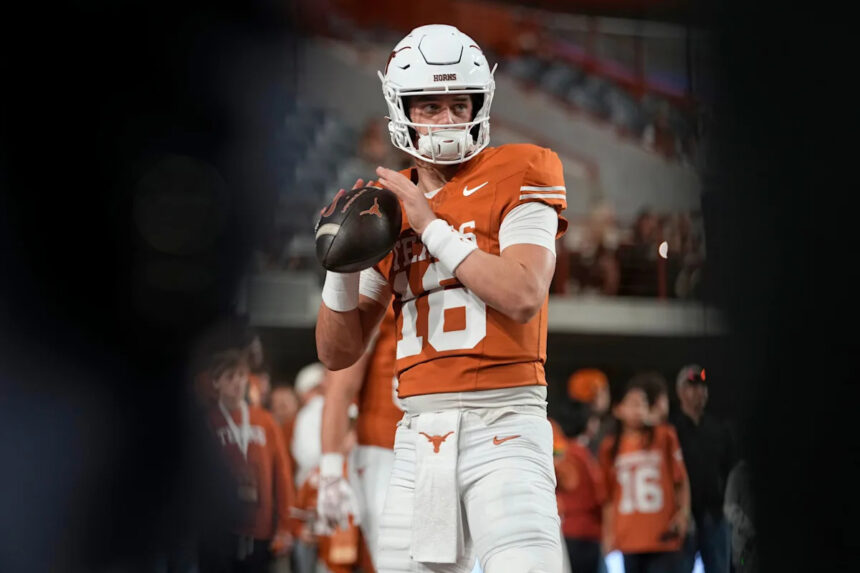
In the high-stakes chess game of NFL roster construction, the Los Angeles Rams just saw a king-sized piece removed from the board. Texas quarterback Arch Manning, the heir to football’s royal family and a player long whispered about in Rams’ war rooms, has officially informed the NFL he will not be a pawn in the 2026 draft. The decision, confirmed by his father Cooper Manning to ESPN, sends a seismic ripple through future draft planning, particularly for a Rams franchise that had been identified as a fervent admirer. For General Manager Les Snead and Head Coach Sean McVay, the path to finding Matthew Stafford’s successor just became more complicated.
The Rams’ Coveted Prospect Takes a Different Path
For months, the connection between Arch Manning and the Los Angeles Rams existed as one of the NFL’s worst-kept secrets. Back in July, a report from Yahoo Sports’ Charles Robinson sent shockwaves through the league, detailing that the Rams organization held Manning in exceptionally high regard. The internal comparison was not to his legendary uncles, Peyton or Eli, but to a modern-day physical marvel: Buffalo Bills superstar Josh Allen.
Robinson reported, “The comparison for Manning inside the franchise is that his ceiling… could be a Josh Allen-type of prospect who is actually stronger physically and a faster running athlete than Allen was when he entered the draft in 2018.” This was not about pedigree, but about projectable, elite tools—the cannon arm combined with formidable size and athleticism that McVay could theoretically mold into a franchise cornerstone. With Stafford’s career, however brilliant, inevitably winding down, Manning represented a potential perfect-project successor. That dream scenario is now on hold for at least a year, if not permanently.
Dissecting the Decision: Why Manning Stays in Austin
Manning’s choice to return for the 2026 college season is a calculated move born of both self-awareness and the modern draft landscape. While hailed as the potential top overall prospect before the 2025 season, his first year as the Longhorns’ full-time starter revealed the typical growing pains of a young quarterback.
- Statistical Reality Check: Manning’s 2025 line—61% completion, 2,942 yards, 24 TDs, 7 INTs, plus 244 rushing yards and 8 scores—is solid but not spectacular by today’s elite college standards.
- Draft Stock Volatility: In a quarterback class that could feature established stars like Georgia’s Carson Beck or others, a “down” year can see a prospect slip from potential #1 to the middle of the first round. For Manning, another season of development offers the chance to solidify his status.
- The Value of Polished Tape: Scouts undoubtedly noted areas for improvement: consistency in progressions, pocket presence under duress, and refining his touch on intermediate throws. Another year as “the guy” at Texas provides the tape to answer those questions definitively.
“This was always viewed as a possible outcome,” the Manning family understood. In an era where NIL opportunities mitigate financial pressure, the incentive to leave school early is less compelling unless a player is a guaranteed top-five pick. Manning’s decision signals a commitment to mastering his craft before cashing in on his famous name.
Rams’ Quarterback Blueprint: Navigating a Manning-Less 2026 Draft
Arch Manning’s absence forces a strategic pivot for the Rams’ front office. Their quarterback search, always multi-faceted, must now aggressively explore alternative avenues. The 2026 draft, while potentially missing its headline act, will still feature high-end talent. The Rams must now intensify their scouting on other projected first-rounders, assessing who might fit the McVay system—a system that demands intelligence, pre-snap command, and precision.
More importantly, this news amplifies the significance of every decision between now and April 2026. It increases the pressure to:
- Maximize Stafford’s Window: The urgency to win now, while Stafford is still playing at a Pro Bowl level, becomes even more pronounced. Every resource must be leveraged to contend for championships in 2025 and 2026.
- Explore All Avenues: The trade market for a veteran (should one become available) or a bold move up in a future draft for a different prospect becomes a more likely scenario.
- Develop In-House Options: The evaluation of Stetson Bennett and any other quarterback on the roster takes on new weight. Finding a competent bridge or surprise solution internally is the most cost-effective path.
The Rams’ reported infatuation with Manning’s ceiling suggests they are looking for a specific, high-upside archetype. Without that specific option, their entire quarterback succession timeline may require recalibration.
What’s Next for Arch and the Rams’ Future?
For Arch Manning, the 2026 season at Texas is now a mission to transform potential into polished product. The goal is to exit college not as a famous name with flashes of brilliance, but as a complete, pro-ready quarterback who leaves no doubt about his readiness. The pressure in Austin will be immense, but it pales in comparison to the scrutiny he would have faced as a top-five NFL pick after an uneven season.
For the Los Angeles Rams, the future at the sport’s most important position just got foggier. The clearest, most exciting path to a franchise quarterback—drafting a Josh Allen-esque talent with the Manning DNA—has been blocked. This doesn’t mean the mission is failed; it means the playbook must be rewritten.
The Rams’ quarterback quest was never going to be simple, but losing a primary target a full year in advance is a stark reminder of the volatility of draft planning. It underscores that in the NFL, you can covet a player, you can project his fit, and you can dream on his ceiling, but until the card is submitted on draft night, nothing is guaranteed. The Rams’ search for the heir to Matthew Stafford continues, but the dream of it being Arch Manning in horns has, for now, been deferred.
Source: Based on news from Yahoo Sports.