Arsenal ‘Legend’ Beth Mead to Leave at End of Season: The End of an Era in North London
In a move that has sent shockwaves through the Women’s Super League (WSL), Arsenal have officially confirmed that forward Beth Mead will leave the club at the end of the season. The 31-year-old England international, described by the club as a “legend,” is set to end a nine-year spell that has defined the modern era of Arsenal Women. With 86 goals in 263 appearances since joining from Sunderland in 2017, Mead’s departure marks the close of a glittering chapter—but also opens a new, uncertain one for both player and club.
Arsenal’s director of women’s football, Clare Wheatley, did not mince words when announcing the news. “Beth has made a huge contribution to our football club over nine years, and will go down in history as one of our best forwards and a legend of the club,” Wheatley said in a statement. For a club that has produced icons like Kelly Smith and Rachel Yankey, that is no small praise. But as the dust settles, the question on every fan’s mind is: what comes next?
The Legacy of a Ballon d’Or Runner-Up
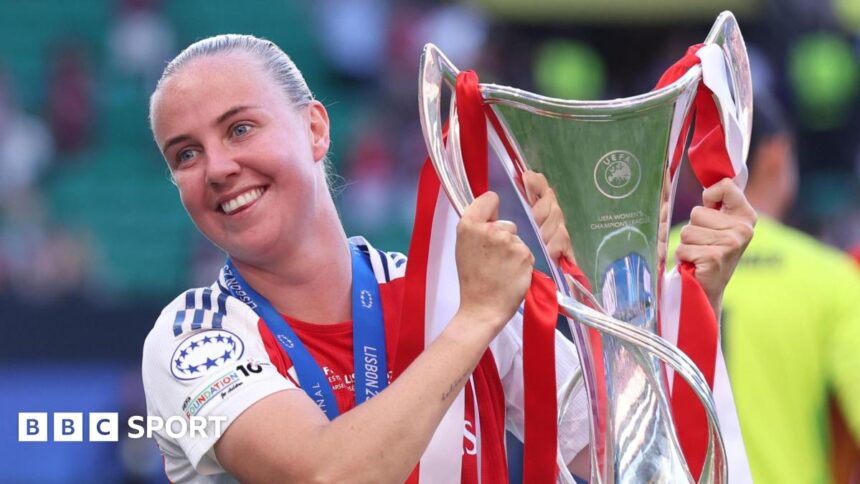
To understand the magnitude of Mead’s exit, one must first appreciate the heights she reached in an Arsenal shirt. The 2021-22 season was her zenith. Not only did she fire Arsenal to the Women’s Champions League and Women’s Super League double, but she was also named the WSL Player of the Season and finished as the runner-up in the Ballon d’Or Féminin—the highest individual accolade for a female player. Only Alexia Putellas stood above her that year.
Mead’s numbers at Arsenal are staggering: 86 goals in 263 games, a strike rate that places her among the club’s all-time elite. But her impact went beyond the scoresheet. She was the heartbeat of the attack, a relentless presser, and a leader by example. Her trophy cabinet—featuring the FIFA Champions Cup and three League Cups alongside the Champions League and WSL titles—tells only part of the story. The full picture includes the 2022 UEFA European Championship victory with England, where she was the tournament’s top scorer and MVP.
Yet, for all her success, the final season has been a mixed bag. Injuries have slowed her, and competition from emerging talents like Alessia Russo and Lina Hurtig has reduced her minutes. Still, when called upon, Mead has delivered—most notably with a vintage performance against Tottenham in the North London Derby earlier this season. Her departure feels like a loss of institutional memory, but Arsenal’s statement makes clear they view her as more than a player: she is a foundation stone of the club’s modern identity.
Why Now? The Strategic Reasons Behind the Split
The timing of the announcement—mid-season, with Arsenal still fighting for the WSL title and a Champions League spot—raises eyebrows. But in the high-stakes world of women’s football, these decisions are rarely emotional. Sources close to the club suggest that contract negotiations stalled over playing time and salary structure. Arsenal are investing heavily in their new training facility and youth academy, and Mead, at 31, may not fit the long-term financial blueprint.
There is also the tactical dimension. Manager Jonas Eidevall has shifted towards a more fluid, high-pressing system that prioritizes pace and versatility. While Mead is a world-class finisher and creator, her game relies on service from the flanks—something that has become less consistent as Arsenal’s midfield has evolved. The emergence of Katie McCabe as a wing-back and Cloe Lacasse as a dynamic forward has created a logjam in wide areas. Letting Mead go frees up wages for a potential marquee signing—perhaps a younger, more direct striker to complement Russo.
From Mead’s perspective, the decision is equally logical. At 31, she has perhaps two or three elite seasons left. A move to a top European club—Lyon, Barcelona, or Chelsea—could offer her a fresh challenge and a chance to win another Champions League. The WSL’s growing financial power also means a lucrative contract in the United States, with clubs like Orlando Pride or Angel City reportedly monitoring her situation. Mead has always been ambitious; leaving Arsenal on her own terms, as a legend, gives her control over her legacy.
Expert Analysis: What Mead’s Exit Means for Arsenal’s Title Hopes
Let’s be blunt: losing a player of Mead’s caliber mid-season is a massive blow. Arsenal are currently in a three-horse race for the WSL title with Chelsea and Manchester City. Mead’s experience in high-pressure games—she scored in the 2023 League Cup final—is irreplaceable. The Gunners have depth, but not in the clutch moments where Mead often thrived.
Here is the key tactical impact:
- Loss of direct goal threat: Mead’s 86 goals came from all angles—headers, volleys, long-range strikes. No current Arsenal forward has that variety.
- Set-piece decline: Mead was a primary corner-taker and free-kick option. Her departure leaves a void in dead-ball situations.
- Leadership vacuum: As one of the senior players, Mead helped mentor younger stars like Kyra Cooney-Cross and Katherine Kuhl. That mentorship is now gone.
However, there is a silver lining. Arsenal’s attack is already adapting. Alessia Russo has found her form, scoring six goals in her last seven games. Frida Maanum is thriving in a more advanced role. And the return of Vivianne Miedema from injury—though she herself is out of contract this summer—could soften the blow. Eidevall may also shift to a 4-4-2 formation, using two strikers to compensate for the loss of a wide forward.
Prediction: Arsenal will finish second in the WSL this season, three points behind Chelsea. Mead’s absence will be felt most in the Champions League quarter-finals, where her composure in front of goal is irreplaceable. But the club’s long-term project is sound—provided they reinvest the wages wisely.
Where Next for Beth Mead? A Global Transfer Market Analysis
The speculation around Mead’s next destination is already intense. Let’s break down the most realistic options:
1. Lyon (France): The perennial Champions League winners need a striker after losing Ada Hegerberg to injury. Mead’s link-up play with Delphine Cascarino would be devastating. Lyon can offer a Champions League title push and a new league challenge. Odds: High.
2. Chelsea (England): A controversial move, but Emma Hayes has always admired Mead. Chelsea are losing Sam Kerr to long-term injury and may need a proven goalscorer. A move across London would be a PR nightmare, but in football, loyalty is often secondary to ambition. Odds: Medium.
3. Barcelona (Spain): The Blaugrana are the best team in the world, but their attack is already stacked with Aitana Bonmatí, Caroline Graham Hansen, and Salma Paralluelo. Mead would be a rotation option at best. Odds: Low.
4. NWSL (United States): A move to the National Women’s Soccer League would offer Mead a new lifestyle and a chance to be a franchise player. Clubs like San Diego Wave or Racing Louisville have the salary cap space. However, the level of competition is lower than the WSL, and the travel schedule is grueling. Odds: Medium.
My expert take: Mead will join Lyon on a two-year deal. The French club’s project, combined with her desire to win another Champions League, makes it the perfect fit. She will be the focal point of their attack, and her experience in big games will be invaluable.
Conclusion: A Legend Departs, But the Legacy Endures
Beth Mead’s departure from Arsenal is not just a transfer—it is a symbolic passing of the torch. She arrived as a raw talent from Sunderland and leaves as a Ballon d’Or runner-up, a European champion, and a club legend. Her 86 goals and 263 appearances will be etched into the club’s history, but the true measure of her impact is the standard she set. She proved that a player from the north-east could become the face of Arsenal Women, inspiring a generation of young girls to pick up a football.
For Arsenal, the challenge is now to build a future that honors her legacy while embracing change. The club’s youth academy is producing talent like Michelle Agyemang and Laila Harbert, and the investment in infrastructure signals a long-term vision. But the short-term pain is real. Fans will mourn the loss of a player who scored in derbies, won trophies, and wore the badge with pride.
As for Mead, she leaves with her head held high. In a sport where loyalty is often fleeting, she gave Arsenal nine years of excellence. The next chapter—whether in Lyon, London, or Los Angeles—will be watched closely by the football world. One thing is certain: wherever she goes, she will be a legend. And for Arsenal, that legend will never fade.
Source: Based on news from BBC Sport.