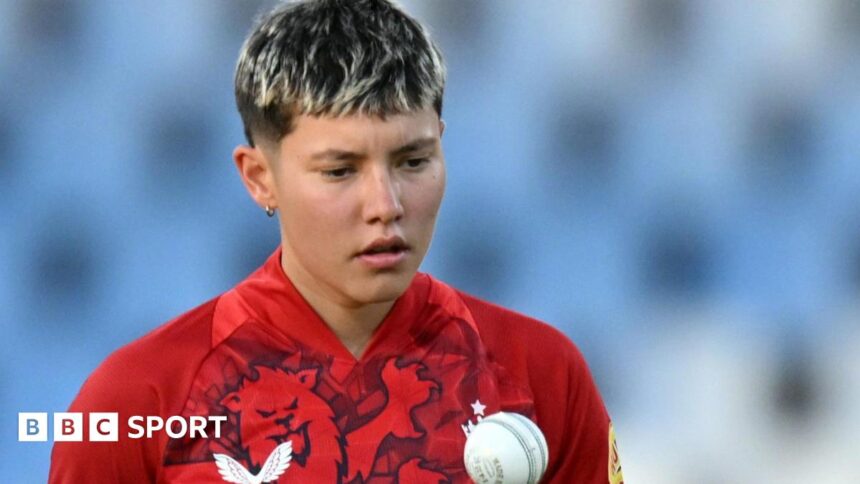
Issy Wong Injury Scare: England Star to Undergo Hamstring Scan Ahead of T20 World Cup
England women’s cricket has been hit with a dose of late-summer anxiety as pace bowler Issy Wong faces a nervous wait over a hamstring injury that threatens her participation in next month’s T20 World Cup. The 23-year-old, who has played 22 times for England, was a late withdrawal from Sunday’s first ODI against New Zealand at Chester-le-Street after reporting tightness during the warm-up. Now, with the clock ticking towards the global tournament, the England camp is holding its breath.
Wong, one of the most exciting fast-bowling talents in the women’s game, is scheduled to undergo a scan to determine the full extent of the issue. While England officials are optimistic that the problem is not severe, the decision to pull her from the opening match of the series underscores the caution being exercised with a player who could be pivotal to England’s hopes in the UAE.
The Sudden Setback: What Happened at Chester-le-Street?
The first ODI at the Riverside Ground was meant to be a straightforward start to England’s 50-over series against New Zealand. Instead, it became a source of concern. Issy Wong, known for her raw pace and aggressive style, was named in the playing XI but felt a familiar tightness in her hamstring during the pre-match warm-up. The team’s medical staff acted immediately, withdrawing her from the fixture as a precaution.
“She felt some tightness, and we didn’t want to take any risks,” a team spokesperson confirmed. “We’re hopeful it’s minor, but we need the scan to give us the full picture.” Wong was replaced in the XI by Lauren Filer, another quick bowler, as England went on to win the match comfortably. But the focus has now shifted from the result to the rehabilitation room.
This is not the first time Wong has dealt with soft-tissue concerns. Her explosive bowling action—characterised by a high leap and a slingy arm—places significant stress on her lower body. For a player who relies on generating bounce and pace, even a minor hamstring tweak can be a red flag. The scan results will dictate whether she can return for the remainder of the ODI series or if a more cautious approach is needed.
Why Issy Wong Is So Crucial to England’s World Cup Plans
To understand the gravity of this situation, you have to look at the T20 World Cup landscape. England are in a group with South Africa, West Indies, Bangladesh, and Scotland. The pitches in the UAE are expected to be slow and low, which plays into the hands of spinners and medium-pacers. But Wong offers something different: raw, hostile pace.
Since her international debut in 2022, Wong has played 22 matches for England, taking 27 wickets across formats. Her standout moment came in the 2023 Women’s Premier League (WPL), where she took a hat-trick for Mumbai Indians, showcasing her ability to unsettle batters with sheer speed. In the T20I format, she has a strike rate of 16.6, which is elite for a fast bowler.
Here’s why her absence would be a major blow:
- X-Factor with the new ball: Wong can swing the ball at 75 mph, making her a genuine wicket-taking threat in the powerplay.
- Death bowling versatility: Her yorker and bouncer are weapons that England need in the final overs.
- Psychological edge: Opponents fear pace, and Wong brings that intimidation factor.
- Big-match temperament: She has played in WPL finals and Ashes series without looking overawed.
If the scan reveals even a Grade 1 strain, England will have to make a tough call. The T20 World Cup begins on October 3, and while that gives roughly three weeks for recovery, hamstring injuries are notoriously fickle. Rushing a bowler back risks a more serious tear during the tournament.
Expert Analysis: What the Scan Could Reveal and the Road Ahead
From a sports medicine perspective, hamstring tightness in a fast bowler is a red flag that should never be ignored. The action of delivering a cricket ball involves a rapid eccentric contraction of the hamstring during the front-foot landing. If Wong felt tightness during warm-up—before any explosive bowling—it suggests either a minor strain or a muscular imbalance that needs addressing.
England’s medical team will be looking for three things in the scan:
- No tear: If the scan is clear, Wong could be back for the second ODI on Wednesday in Northampton, though she might be managed carefully.
- Grade 1 strain: A minor tear would mean 7–10 days of rest, which would rule her out of the ODI series but leave her available for World Cup warm-ups.
- Grade 2 or higher: This would be a disaster, likely sidelining her for 3–6 weeks and putting her World Cup in serious jeopardy.
England’s head coach, Jon Lewis, has already hinted at a cautious approach. “We’d rather lose Issy for a game or two now than lose her for the World Cup,” he said in a press conference. This pragmatic stance is wise. The ODI series against New Zealand—which continues on Wednesday in Northampton and concludes on Sunday—is important for momentum, but the T20 World Cup is the priority.
My prediction? Based on the fact that Wong was pulled from the match before bowling a single ball, I suspect the issue is a low-grade strain. England will likely rest her for the second ODI, use the scan results to design a rehab program, and aim to have her bowl in a net session by the end of the week. If she passes that test, she could play the third ODI on Sunday as a fitness gauge.
However, if the scan shows any structural damage, England must consider a replacement. The likes of Lauren Filer and Kate Cross are capable, but neither offers the same raw pace as Wong. The selectors will also be monitoring the fitness of Nat Sciver-Brunt, who has her own injury history, and Sophie Ecclestone, who is indispensable as a spinner.
What This Means for the New Zealand Series and England’s Depth
The second ODI in Northampton on Wednesday will now carry extra scrutiny. England will likely stick with Filer as Wong’s replacement, but the batting order could also be tweaked. The series is a vital tune-up for the World Cup, and England will want to test their depth in Wong’s potential absence.
New Zealand, meanwhile, will see this as an opportunity. The White Ferns have struggled in recent months, but they have dangerous players like Sophie Devine and Amelia Kerr. Without Wong’s pace, England’s bowling attack becomes more predictable, relying on swing and spin rather than outright speed.
For Wong, the next 48 hours are critical. She will undergo the scan on Monday or Tuesday, and the results will be shared with the team’s medical staff and coaching panel. If the news is positive, she could be back in the nets by Thursday. If not, a race against time begins.
One thing is certain: England cannot afford to be without her in the UAE. The T20 World Cup is a tournament where fine margins decide knockout games, and having a genuine fast bowler in your arsenal is a luxury few teams possess. Wong’s hamstring is now the most talked-about body part in English women’s cricket.
Conclusion: Patience Now, Pace Later
Issy Wong’s hamstring scan is a moment of truth for England’s World Cup preparation. The team is hopeful, but hope is not a strategy. The medical staff must be ruthless in their assessment. If there is any doubt, Wong should be rested for the remainder of the New Zealand series and given every chance to be fully fit for the T20 World Cup.
At 23, Wong has her best years ahead of her. She is not just a player for this World Cup; she is a cornerstone of England’s future in all three formats. Sacrificing a few ODIs now is a small price to pay for securing her availability for the global stage.
For the fans, the waiting game begins. The scan results will either bring relief or force a rethink of England’s plans. But if there is one thing we know about Issy Wong, it’s that she thrives under pressure. Whether she is bowling a hat-trick ball in the WPL or charging in at a World Cup, she has the temperament to rise to the occasion. First, though, she needs her body to cooperate.
England’s T20 World Cup hopes may just hang in the balance of a single scan. And for a bowler who has already delivered so many memorable moments, the cricketing world will be hoping for a clean report.
Source: Based on news from BBC Sport.