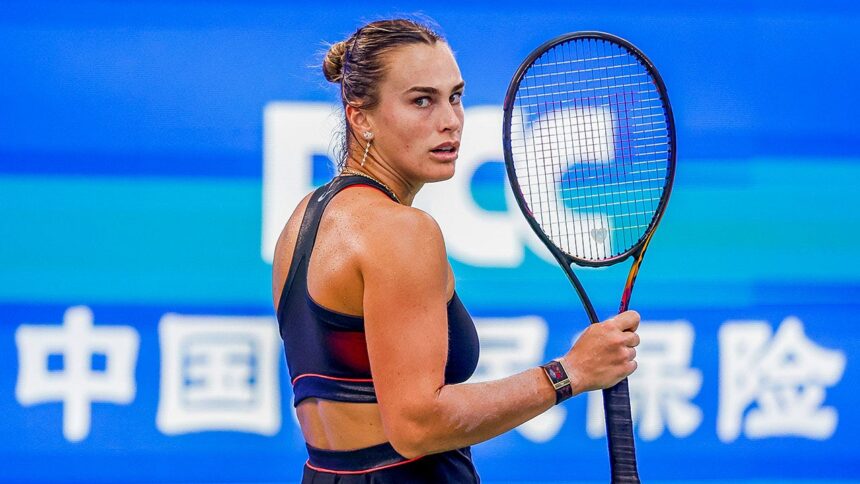
Aryna Sabalenka Drops Bombshell: Grand Slam Boycott Threat Over Revenue Split Ignites Tennis World
The tennis world is bracing for a potential seismic shift after world No. 1 Aryna Sabalenka issued a stark ultimatum: if Grand Slam tournaments refuse to increase the players’ share of revenue, the stars may simply stop showing up. The Belarusian powerhouse made the explosive comments on Tuesday at the Italian Open in Rome, sending shockwaves through the sport’s establishment. Speaking with characteristic bluntness, Sabalenka argued that the athletes—the primary draw for the billions of dollars in broadcast rights, ticket sales, and sponsorship deals—are being systematically underpaid.
“Without us there wouldn’t be a tournament and there wouldn’t be that entertainment. I feel like definitely we deserve to be paid more percentage,” Sabalenka declared. The statement, backed by men’s world No. 1 Jannik Sinner and other top-ranked players, signals a growing frustration that has been simmering beneath the surface for years. This is not just a casual complaint; it is a coordinated push for a fundamental restructuring of tennis economics. As Fox News Flash top sports headlines highlight, this could be the most significant labor dispute in the sport since the formation of the ATP and WTA tours.
The core issue is stark: Grand Slams—the Australian Open, French Open, Wimbledon, and US Open—generate enormous wealth. Yet players, particularly those who lose in early rounds, often struggle to cover travel, coaching, and medical costs. Sabalenka’s call for a boycott is a radical escalation, but it reflects a cold, calculated reading of the leverage players hold. Without them, the product is worthless. This article provides an exclusive, expert breakdown of the conflict, the economics behind it, and the likely fallout for the sport.
The Revenue Gap: Why Players Feel Cheated by Grand Slam Economics
To understand the fury behind Sabalenka’s words, one must examine the financial anatomy of a Grand Slam. The four majors are the most lucrative events in tennis, collectively generating over $1 billion annually in revenue from broadcast rights, corporate partnerships, hospitality, and ticket sales. The French Open alone, which recently sparked the current statement from players, is a cash cow for the French Tennis Federation (FFT).
Yet, the percentage of that revenue flowing back to the players is a point of bitter contention. While prize money has increased nominally over the past decade, players argue it has not kept pace with the explosive growth in tournament revenue. Consider these key facts:
- Revenue vs. Prize Money Percentage: Estimates suggest Grand Slams allocate roughly 15-18% of total revenue to player prize money. In comparison, major U.S. professional sports leagues (NBA, NFL, MLB) typically split 48-50% of revenue with players under collective bargaining agreements.
- Early-Round Hardship: While champions earn millions, a first-round loser at a Grand Slam takes home a sum that, after taxes and expenses for a small team, can leave them in the red. The gap between the top 50 and the rest of the tour is widening dangerously.
- Broadcast Windfalls: The rights fees for the four Slams have skyrocketed. The US Open’s current nine-year, $825 million deal with ESPN is a prime example. Players see these numbers and ask: where is our share?
Sabalenka’s call is not about greed at the top. As the No. 1 player, she is financially secure. Her argument is about structural fairness and the long-term health of the sport. She is speaking for the hundreds of players ranked outside the top 100 who are the lifeblood of the early rounds. “It’s not just about the top guys,” a source close to the player council told Fox News Digital. “It’s about creating a sustainable career path. The Slams are the only ones who can fix this, and they choose not to.”
Expert Analysis: This is a classic labor vs. capital dispute. The Grand Slams are independent fiefdoms, each run by a national federation (FFT, USTA, Tennis Australia, LTA). They are not a single league, which makes unified negotiation difficult. However, Sabalenka and Sinner’s joint statement signals a rare moment of unity between the men’s and women’s tours. If the top 20 players from both tours stand together, the Slams have a genuine crisis on their hands.
The Boycott Threat: Could It Actually Happen? A Reality Check
Sabalenka’s suggestion of a player boycott is the most aggressive weapon in the arsenal. But is it a realistic threat, or is it posturing designed to force the Slams to the bargaining table? History provides a mixed verdict. Tennis has seen isolated boycotts—such as the 1973 Wimbledon boycott over Nikola Pilić’s suspension—but never a unified, multi-Slam strike over revenue.
Arguments for a Boycott Being Possible:
- Unprecedented Unity: The current generation of stars, led by Sabalenka, Sinner, and others like Iga Świątek and Carlos Alcaraz, are more socially and financially conscious. They have seen the success of collective action in other sports.
- Leverage at the Peak: If the top 10 men and top 10 women all agreed to skip, say, the French Open, the tournament would be a shell of itself. Broadcasters would demand renegotiation. Sponsors would pull out. The financial damage would be immediate and severe.
- Public Support: Fans often side with the players when the issue is framed as fairness versus greedy federations. A well-orchestrated campaign could turn public opinion against the Slams.
Arguments Against a Boycott:
- Individualism: Tennis is an individual sport. Players are competitors first. Convincing someone like Novak Djokovic or Coco Gauff to sacrifice a chance at a major title—and the ranking points and prize money that come with it—for a collective good is a monumental task.
- Legal and Contractual Hurdles: Grand Slams have contracts with players. A boycott could lead to lawsuits, fines, and even bans. The legal framework is not on the players’ side.
- Loss of Income: For lower-ranked players, a Grand Slam paycheck is often the largest of the year. Asking them to forfeit that to support a revenue share demand is a heavy ask.
Prediction: A full-scale boycott is unlikely in the immediate future. However, Sabalenka’s threat is a powerful negotiating tool. It forces the Slams to take the revenue share issue seriously. More likely, we will see a coordinated “work-to-rule” action—such as refusing to do mandatory media appearances or skipping official functions—to apply pressure without sacrificing matches. The 2025 Australian Open is the most likely battleground, as it is the first Slam where the player council can organize fully. The Slams will be forced to either increase the revenue percentage or face a public relations disaster.
Expert Analysis: The Long-Term Impact on the Tennis Ecosystem
Sabalenka’s call is not just a flash in the pan; it is a symptom of a deeper systemic issue in tennis. The sport’s governance is fragmented. The ATP and WTA run the weekly tours, but the Grand Slams operate independently. This creates a power vacuum where players have no single entity to negotiate with. The result is a broken economic model where the top 1% earn millions while the rest struggle to break even.
Here is the expert take on what this means for the future:
1. The Rise of a Players’ Union: This dispute will accelerate calls for a formal, unified players’ union with real bargaining power. Currently, the ATP and WTA player councils are advisory. A true union could strike, negotiate collective contracts, and demand a fixed percentage of Grand Slam revenue. Sabalenka and Sinner are likely laying the groundwork for this.
2. Grand Slam Revenue Transparency: The Slams have historically been opaque about their finances. The players are demanding full disclosure of broadcast rights, sponsorship, and hospitality revenues. Once those numbers are public, the argument for a higher percentage becomes mathematically irrefutable. Expect the Slams to resist this fiercely, but the pressure will mount.
3. A Two-Tier System: If the Slams concede to a higher revenue share, it could create a two-tier system where the Grand Slams become even richer compared to the ATP/WTA Masters 1000 and 500 events. This might actually weaken the overall tour structure, as players prioritize the Slams even more. The tours themselves may need to renegotiate their own revenue models to keep up.
4. Fan Experience Changes: If players get a larger slice of the pie, the Slams will need to find new revenue streams. This could mean higher ticket prices, more aggressive corporate hospitality packages, or even the introduction of on-court advertising during changeovers—a move that purists will hate. The cost of watching tennis could rise.
5. The Role of the Next Generation: Young stars like Carlos Alcaraz and Coco Gauff are watching this closely. They are the future of the sport. If they align with Sabalenka and Sinner, the movement becomes unstoppable. If they stay neutral, the boycott threat loses teeth. Early signs suggest the younger generation is sympathetic to the cause, as they see the financial precarity of their peers.
Conclusion: The Clock is Ticking on Grand Slam Dominance
Aryna Sabalenka has thrown down the gauntlet. Her call for a player boycott of Grand Slams is a watershed moment for professional tennis. It transforms a quiet grumble about prize money into a full-blown existential threat to the sport’s most prestigious events. The message is clear: the players are no longer willing to be the silent partners in a billion-dollar industry. They want a seat at the table—and a fair share of the profits.
The coming months will be critical. Will the French Open, Wimbledon, the US Open, and the Australian Open respond with a meaningful increase in the revenue share? Or will they double down, risking the wrath of the world’s best players? The ball is now in the Grand Slams’ court. If they ignore Sabalenka’s warning, they may find that the biggest stars are not just speaking out—they are staying home. For tennis fans, the drama off the court is now just as compelling as the action on it. The era of player empowerment has arrived, and it is swinging for the fences.
For more sports coverage, including the latest on this developing story, check out the Fox News sports section. The headlines are changing fast, and this is one story that will define the next decade of tennis.
Source: Based on news from Fox Sports.