Aryna Sabalenka Questions Australian Open Rule: The Wearable Tech Ban That Baffled the Champion
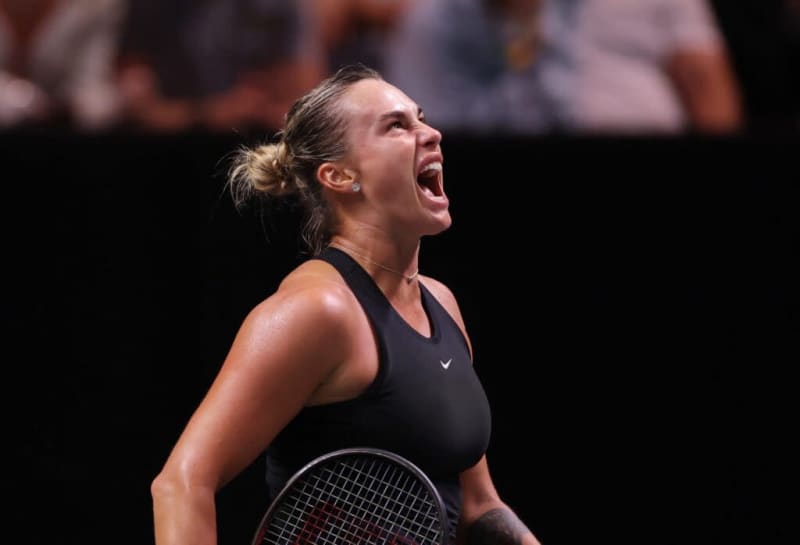
MELBOURNE, Australia – Aryna Sabalenka is bulldozing her way through the Australian Open draw with the terrifying efficiency of a reigning champion. Yet, amidst the thunderous aces and dominant baseline rallies, a curious off-court detail has given the world No. 2 pause. As she powers toward a potential title defense, dropping zero sets and barely breaking a sweat against a pair of teenage challengers, Sabalenka revealed a tournament regulation that left her genuinely puzzled: the ban on wearable technology during matches.
Dominance Down Under: Sabalenka’s Unstoppable March
Aryna Sabalenka’s 2024 Australian Open campaign is a masterclass in focused power. Fresh off titles in Brisbane and at the previous year’s Melbourne crown, she has transformed Rod Laver Arena into her personal fortress. Her recent straightforward win over Iva Jovic in the fourth round was emblematic of her form—controlled, aggressive, and terminally decisive.
This victory followed an equally commanding performance against 16-year-old Victoria Mboko, marking the first time Sabalenka has faced two teenagers in back-to-back matches at a major. Neither could muster a set against her. The statistics are stark: Sabalenka has not dropped a set on her way to the semi-finals, cementing her status as the favourite to lift the trophy again. Her game is a perfectly tuned engine of destruction, making her puzzlement over a specific rule all the more intriguing.
The Puzzling Prohibition: Inside the Wearable Tech Ban
In a post-match revelation, Sabalenka admitted her confusion about the Australian Open’s stance on wearable technology. “I was trying to get my WHOOP (a fitness tracker) approved, but they said no wearable technology on court,” she explained. “I was like, ‘Why? I’m not checking it during matches.’ But the rule is the rule.”
This regulation, enforced by the Grand Slam rulebook, prohibits devices that can receive communication or data during play. The intent is to preserve the integrity of the sport, preventing any potential for real-time coaching via data streams or external interference. However, for athletes like Sabalenka, who use such devices for holistic training and recovery metrics—not in-match tactics—the blanket ban feels anachronistic.
Key aspects of the wearable tech rule include:
- Real-Time Data Prevention: The core concern is stopping the live transmission of performance data (like heart rate, stroke velocity) to a coach in the stands.
- Consistency Across Slams: The rule is standard at major tournaments, though enforcement and athlete pushback are growing topics.
- Player Health Monitoring: Athletes argue devices like WHOOP or heart rate monitors are crucial for tracking workload and preventing injury, with data reviewed only after matches.
“It’s just for myself, to see my heart rate and load,” Sabalenka clarified, highlighting the disconnect between the rule’s intent and its impact on athlete-centric biometrics.
Expert Analysis: The Clash Between Tradition and Technology
This incident opens a wider debate in professional tennis. As sports science becomes increasingly sophisticated, governing bodies grapple with integrating new technology while safeguarding the game’s traditional, solitary nature.
“Sabalenka’s confusion is understandable and shared by many on tour,” says Dr. Elisa Martinez, a sports technologist. “Modern wearables are primarily health and recovery tools. The rule treats a biometric monitor like a communication device, which is a fundamental misunderstanding of its purpose. The sport needs to differentiate between performance-enhancing tech and health-preserving tech.”
From a competitive standpoint, Sabalenka’s dominance is unaffected. Her power game is intuitive, not data-driven mid-point. However, the psychological component cannot be ignored. For an athlete, routine is sacred. The inability to wear a familiar device, part of her daily training ecosystem, represents an unnecessary mental hurdle—a small puzzle to solve amid the high-stakes pressure of a Grand Slam.
Furthermore, this rule puts tennis at odds with other elite sports. Cycling, marathon running, and even some team sports allow extensive biometric monitoring during competition, using the data for post-event analysis without accusations of integrity breaches. Tennis’s strict isolation of the player, a cherished hallmark, may need nuanced updating for the modern athletic era.
Predictions: Will Rules Evolve as Sabalenka Aims for Glory?
As Sabalenka advances, the question remains: will the rules eventually catch up to athlete needs? Predictions point to a gradual shift.
Short-term (Next 2-3 years): Expect increased lobbying from the Player Councils and WTA/ATP for a formal review. We may see pilot programs allowing “read-only” wearables that cannot transmit data externally, only storing it for later access.
Long-term: A revised certification process for devices is likely. Brands could work with the ITF to create approved “tournament mode” wearables that satisfy integrity concerns while serving athletes. The conversation Sabalenka inadvertently spotlighted is just beginning.
On the court, however, Sabalenka’s trajectory seems clear. Her strong form at this year’s Australian Open makes her the undeniable frontrunner. The wearable tech rule is a minor bafflement, not a barrier. Her semi-final path is a test of nerve and power, but her game suggests she is more than ready to solve any puzzle an opponent presents, even if a tournament regulation momentarily gave her pause.
Conclusion: Focused Power Meets Future-Proofing the Game
Aryna Sabalenka’s Australian Open journey is a tale of two narratives. The primary story is one of sheer sporting supremacy—a champion in peak form, dismissing challengers with intimidating ease. The secondary, subtler narrative is about the sport’s evolving relationship with technology. Her genuine puzzlement over the wearable tech ban at the Australian Open is a signal flare from the athletes to the rule-makers.
As she prepares for the final stages of her title defense, Sabalenka’s focus will remain on the tangible: her serve, her groundstrokes, and the trophy. But by voicing her confusion, she has highlighted an important dialogue. In the relentless pursuit of greatness, athletes are leveraging every tool available for optimization and health. The rules must be robust enough to ensure fairness, but smart enough to not stifle progress. For now, Sabalenka will play on, her powerful game unencumbered by data streams, but the question she raised will linger long after the final ball is struck in Melbourne.
Source: Based on news from Yahoo Sports.