


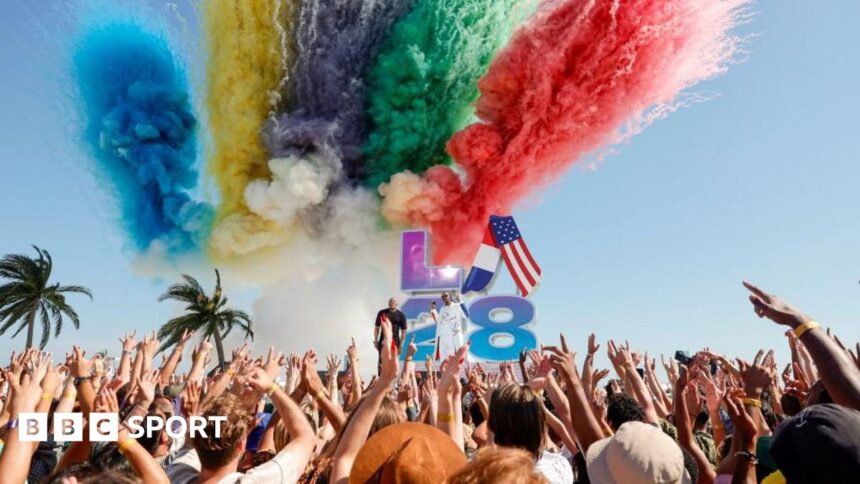
LA28 Makes Historic $28 Ticket Pledge: A Million Olympic Dreams Within Reach
The Olympic Games are returning to Los Angeles for the first time in four decades, and the organizers are making a statement that echoes the spirit of the famed 1984 Games: accessibility. In a bold move that directly addresses modern concerns about the commercialization of mega-events, LA28 has announced that at least one million tickets for the 2028 Olympics will be priced at just $28. This strategic pricing isn’t just a nod to the year; it’s a foundational philosophy aimed at reshaping who gets to experience the Games live. As registration opens for fan interest, this initiative sets a dramatic new precedent in the often-exclusive world of global sports spectacles.
A Deliberate Echo: Learning from 1984 and Confronting 2026
The shadow—and the lesson—of the 1984 Los Angeles Olympics looms large over this decision. Those Games, remembered for their financial success and popular appeal, also featured accessible pricing that helped fill venues with passionate, local crowds. LA28 Chairperson Casey Wasserman has explicitly cited the desire to avoid the “empty seat” phenomenon that has plagued recent Olympics, where soaring costs priced out everyday fans. More pointedly, this announcement arrives amidst significant criticism of ticket pricing structures for the 2026 FIFA World Cup, set to be hosted across the U.S., Mexico, and Canada. Reports of exorbitant costs for even preliminary matches have sparked a public conversation about equity in sports fandom. LA28’s $28 ticket pledge is a pre-emptive strike, positioning the Olympics not as an elitist luxury, but as a celebration for the entire city and beyond.
The mechanics of securing these tickets are designed for fairness. Starting January 14th, fans can enter a random draw for the chance to purchase tickets across all sports. This lottery system aims to prevent bots and scalpers from dominating the initial sale. Those selected will receive a time slot in April to make their purchases. This process, while potentially lengthy for eager fans, is a critical component of ensuring the low-cost tickets reach real people.
The $28 Strategy: More Than Just a Price Tag
On the surface, one million tickets at $28 is a staggering consumer promise. But beneath that, it’s a complex business and legacy strategy with multiple layers.
- Venue Legacy Utilization: Los Angeles is uniquely positioned with a wealth of existing world-class venues, from SoFi Stadium to the UCLA and USC campuses. This reduces the need for costly, white-elephant infrastructure projects. The savings are being partially passed directly to the fan in the form of these accessible tickets.
- Atmosphere as a Product: Organizers understand that a full, roaring stadium is not just a better experience for attendees; it’s a better product for television broadcasters and digital partners. The energy of a diverse, passionate crowd is irreplaceable and drives the global narrative of the Games.
- Building a New Generation of Fans: Priced at $28, a family of four can attend an Olympic session for just over $100—unthinkable for most major sporting events today. This cultivates lifelong fans and creates indelible memories tied to the Olympic movement, securing its relevance for the future.
- Economic Ripple Effect: A spectator with a $28 ticket may still spend on transportation, food, merchandise, and local tourism. Getting people through the gate is the first step in driving the broader economic engine of the Games.
However, experts caution that the devil will be in the details. Which sports and sessions will these tickets apply to? Will they be for preliminary heats in lesser-known sports, or will a significant portion be available for high-demand events like gymnastics finals or swimming? The distribution will be the ultimate test of the pledge’s integrity.
Predictions: The Ripple Effects of the Accessibility Model
The LA28 $28 ticket initiative is likely to create waves far beyond the Los Angeles Memorial Coliseum. We can anticipate several key outcomes:
First, pressure on future host cities will intensify. Paris 2024 and Brisbane 2032 will now face public and media scrutiny to justify their own pricing tiers. LA has reset expectations, making high-cost-only models politically and publicly untenable. The “Los Angeles Model” of utilizing existing infrastructure to subsidize fan access could become a new benchmark in host city bids.
Second, this move could trigger a broader re-evaluation in live sports. If the Olympics, the pinnacle event, can prioritize accessible pricing, can major professional leagues continue to justify their ever-increasing costs? While the economics are different, the public relations pressure will mount.
Finally, for the 2028 Games themselves, this should guarantee a vibrant, authentic Southern California atmosphere. The venues will be filled with teachers, students, families, and community groups—not just corporate clients. This democratization of the experience will define the on-the-ground story of LA28, creating a powerful contrast to the often-sanitized feel of recent Games.
A Defining Legacy Within Reach
The true legacy of an Olympic Games is measured decades later. While sporting achievements are etched in record books, the cultural and communal impact lingers. LA28’s $28 ticket pledge is a daring attempt to anchor its legacy in inclusivity before a single athlete has stepped on the track. It is a direct response to the corporatization of sport, a challenge to future hosts, and an invitation to the world.
By ensuring at least one million moments of Olympic wonder are available for less than the price of a concert ticket, LA28 is betting that the value of a packed, electric stadium outweighs the short-term revenue of premium pricing. It is a bet on people over profit, on atmosphere over exclusivity. As the registration draws open, the message is clear: these Games aim to belong to Los Angeles and to anyone, anywhere, who dreams of witnessing sport’s greatest spectacle. The success of this bold pledge will ultimately be written in the cheers of a million fans who thought the Olympic dream was out of reach, only to find it waiting for them, proudly, for just $28.
Source: Based on news from BBC Sport.


