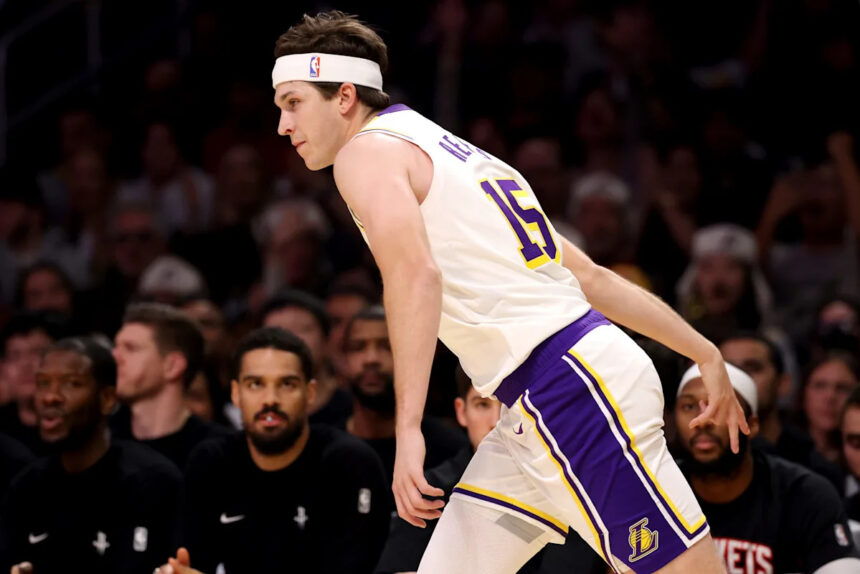
Austin Reaves Injury Update: Lakers Guard’s Calf Soreness Casts Shadow Over Crucial Stretch
The Los Angeles Lakers’ Christmas Day hopes took a familiar and frustrating turn. In a season already marred by inconsistent play and key absences, the Lakers saw guard Austin Reaves exit early against the Houston Rockets, ruled out for the remainder of the game with left calf soreness. This latest setback is a concerning echo of a previous injury and raises significant questions about the team’s stability and Reaves’ availability as they navigate a pivotal point in their schedule.
A Recurring Nightmare: From Strain to Soreness
For Austin Reaves and the Lakers, this is a case of déjà vu with a worrying edge. The narrative is not one of a new, catastrophic injury, but of a lingering issue that refuses to fully release its grip. Reaves had already missed three consecutive games from December 14-20 due to a diagnosed left calf strain. His return on December 23 against the Oklahoma City Thunder was a cautious one, limited to 22 minutes off the bench—a clear sign the medical staff was managing his workload.
The Christmas Day game marked his return to the starting lineup, a move that signaled confidence in his recovery. For 15 minutes, Reaves looked effective, scoring 12 points on an efficient 5-for-8 shooting. Then, the calf issue resurfaced. The shift in terminology from a “strain” to “soreness” is a clinical distinction, but in practice, it represents a significant setback. It suggests the underlying tissue has not fully healed or strengthened enough to withstand starter’s minutes, turning a simple recovery timeline into a complex management puzzle.
Expert Analysis: The Physiology of a Lingering Calf Injury
Calf injuries, particularly strains, are notoriously finicky for basketball players. The explosive movements—jumping, cutting, accelerating—place immense stress on the gastrocnemius and soleus muscles. According to sports medicine specialists, the greatest risk with a return from a calf strain is re-injury due to premature or overzealous activity.
The Lakers’ medical staff now faces a delicate balancing act. The initial plan to reintegrate Reaves via a bench role was sound. However, promoting him to a starting role just two days later may have been too aggressive a ramp-up. The “soreness” indicates inflammation and irritation, a sign that the muscle was overloaded.
This situation is less about a single misstep and more about the cumulative load. Key factors at play include:
- Compensatory Mechanics: After an injury, players often subconsciously alter their gait or landing patterns, placing stress on other areas, which can circle back to strain the original site.
- Fatigue as a Catalyst: As minutes increase, muscle fatigue sets in. A fatigued muscle is far more susceptible to re-injury, even from routine movements.
- The Schedule Factor: The NBA’s relentless calendar offers little time for restorative practice or targeted rehab between games, forcing players to recover on the fly.
The Lakers must now decide if this is a minor flare-up or a sign that Reaves needs a more extended period of rest to achieve full resolution.
Ripple Effect: What Reaves’ Absence Means for the Lakers
Austin Reaves is not just a starter; he is an essential connective tissue for the Lakers’ offense. His absence creates a cascade of challenges for Head Coach Darvin Ham:
Playmaking Void: With Reaves out, the burden on LeBron James to orchestrate the offense skyrockets. While James is more than capable, it reduces his effectiveness as a cutter and spot-up threat and increases his physical toll. The team’s half-court execution often stagnates without Reaves’ secondary ball-handling and intuitive passing.
Rotation Instability: The Lakers have struggled to find a consistent rotation all season. Just as they seemed to be settling on a starting five, this injury forces another reshuffle. Players like D’Angelo Russell, Cam Reddish, and Max Christie will see expanded roles, but the synergy Reaves has with both James and Anthony Davis is unique and difficult to replicate.
Clutch Performance: Reaves has built a reputation as a fearless performer in high-leverage moments. His ability to create his own shot, draw fouls, and hit big baskets is a dimension the Lakers sorely lack when he’s in street clothes. His Christmas Day game exit is a stark reminder of how quickly a game’s momentum can shift with a key player’s departure.
Predictions and the Path Forward for Reaves and the Lakers
Given the recurrent nature of this calf issue, the smart money is on the Lakers taking an extremely cautious approach. The prediction here is that Reaves will miss at least the next handful of games, if not more. The goal will shift from “game-to-game” management to achieving a state of complete, pain-free recovery before he steps on the court again.
Look for the Lakers to provide vague, non-committal updates (“day-to-day,” “re-evaluated in one week”) as they buy time for proper healing. The organization understands the long game is more important than a few regular-season wins in December, even as pressure mounts.
In the interim, the onus falls on the rest of the roster to step up. This period could be a critical audition for role players to prove they can be trusted in the playoffs. The Lakers’ front office will also be watching closely; a prolonged absence from Reaves could accelerate their search for backcourt depth ahead of the trade deadline.
For Reaves personally, this is a test of patience. His blue-collar, team-first mentality will clash with the frustration of not being able to compete. A comprehensive rehab plan, likely including load management upon his return and potentially even minutes restrictions into the new year, will be non-negotiable.
Conclusion: A Season at a Crossroads
The Austin Reaves injury update is more than a standard medical report; it is a microcosm of the Lakers’ entire season. It speaks to the fragility of their aspirations, the fine line between health and chaos, and the immense pressure on a top-heavy roster. His left calf soreness is a small muscle group causing a very large problem.
As the Lakers head into the grueling second half of their schedule, the management of Reaves’ health will be a defining subplot. Rushing him back risks a more severe, season-altering injury. An overly cautious approach could see the Lakers lose critical ground in a packed Western Conference standings. Navigating this dilemma successfully will require wisdom from the medical staff, discipline from the player, and resilience from the team. The hope in Lakerland is that this Christmas Day scare serves as a wake-up call, not a prophecy for the months to come.
Source: Based on news from Yahoo Sports.