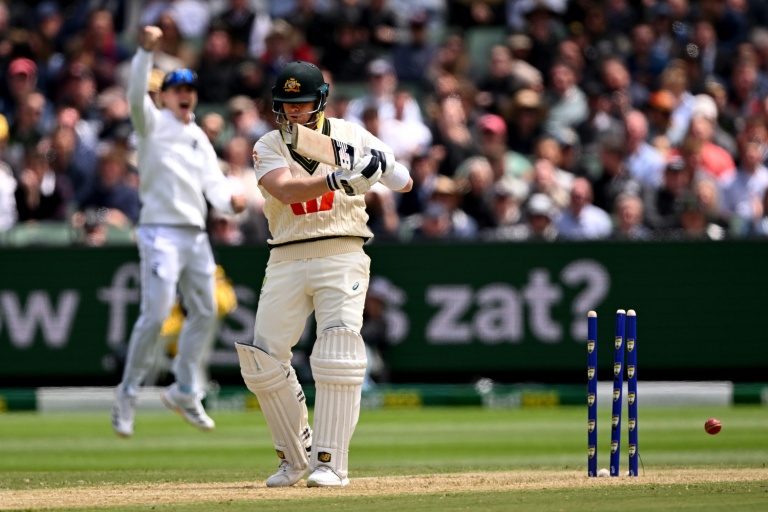
MCG Mayhem: 20 Wickets in a Day as Ashes Battle Descends into Chaos
The hallowed turf of the Melbourne Cricket Ground has witnessed over a century of cricketing history, but rarely a day of such unadulterated, jaw-dropping pandemonium. On a breathless Friday that defied all convention, the fourth Ashes Test was turned on its head not once, but twice, as an astonishing 20 wickets tumbled in a single day of pure, unscriptable drama. When the dust settled on a crowd of 94,199—a new world record for a cricket match—Australia, bowled out for a paltry 152, had somehow scrambled to a lead of 46 runs, leaving the entire series on a razor’s edge.
A Toss of Gold and a Green-Top Feast
Under heavy Melbourne skies and on a verdant, juice-filled pitch, England skipper Ben Stokes called correctly at the toss. His decision to bowl first was as automatic as it was audacious, a calculated gamble to unleash his revamped attack on a vulnerable Australian top order. The sea of fans, a record-breaking attendance that surpassed the 2015 World Cup final, buzzed with anticipation. They did not have to wait long for fireworks.
England’s quicks, led superbly by the resurgent Josh Tongue, feasted. Tongue, extracting steep bounce and movement, carved through the home batting with a career-best 5-45. His was a masterclass in persistent, nagging seam bowling. Australia’s innings was a procession of poor shots and excellent deliveries, lurching to 152 all out. At that moment, with the Barmy Army in full voice, England held the Ashes initiative, seemingly for the first time this tour. The collapse was comprehensive:
- David Warner fell cheaply, his technical woes against the moving ball resurfacing.
- Steve Smith played on, a rare lapse from the master.
- The middle order offered only fleeting resistance before capitulating to Tongue and the relentless support cast.
As the teams walked off for lunch, England, at 94,199 strong, believed. The momentum was theirs. Cricket, however, is a fickle beast.
The Unthinkable Collapse: England’s Horrorshow
If Australia’s batting was frail, England’s reply was cataclysmic. Any notion of building a commanding first-innings lead evaporated in a dizzying 45-minute spell of carnage. Pat Cummins, stung by his side’s performance, led a ferocious counter-attack with the ball. The scoreboard told a story of utter ruin: 16-4. Zak Crawley, Ben Duckett, Ollie Pope, and Joe Root—England’s engine room—were back in the pavilion, victims of impeccable Australian bowling and perhaps their own adrenaline.
Mitchell Starc was lethal, Cummins unplayable, and the recalled Scott Boland, in front of his home crowd, a model of metronomic menace. The MCG, now a cauldron of noise, watched in disbelief as England’s batters failed to learn from Australia’s mistakes. Wickets continued to fall in clusters, the innings never finding a pulse. From the depths of 16-4, a recovery was impossible. They were bundled out for a meagre 110, handing Australia a priceless, if modest, lead. The psychological blow of surrendering such a dominant position was immeasurable.
Expert Analysis: Pitch, Pressure, and Psychological Warfare
This was not merely a day of bad batting; it was a day where the conditions and the occasion magnified every error. The green-tinged pitch offered consistent seam movement and occasional uneven bounce, but it was not a 20-wicket monster. The analysis points to two key factors: relentless scoreboard pressure and the immense weight of the Ashes spotlight.
Australia batted with the tension of a side trying to seal the series; England replied with the reckless abandon of a team desperate to save it. The pressure of the record crowd, a tangible, roaring entity, seemed to short-circuit decision-making. Josh Tongue’s five-for was a triumph of line and length, while Pat Cummins’s inspirational spell with the new ball was a captain leading from the front when his side needed it most. The day proved that in modern Test cricket, momentum is a physical force, and it can swing violently within a session.
Knife-Edge Predictions: Who Wins from Here?
With Australia 4-0 in their second innings, leading by 46, the Test is astonishingly poised. This is now a one-innings shootout on a pitch that remains challenging. Predicting a winner is a fool’s errand, but the advantages have subtly shifted.
- Australia’s Edge: They have runs on the board and have landed a devastating psychological punch. In Travis Head, they have a counter-attacker capable of changing the game in a session. Every run from here feels like gold.
- England’s Hope: Their first-innings bowling performance proves they can take 10 Australian wickets quickly. If they can strike early on day two and restrict the lead to under 150, a tense chase is possible. The pitch may slowly improve for batting.
- The Key Battle: The first hour on day two is monumental. If England can remove Head and the nightwatchman Boland quickly, they are back in the game. If Australia’s lead stretches beyond 200, it will be exceedingly difficult.
Conclusion: An Ashes Day for the Ages
December 26, 2023, at the MCG will be etched into Ashes folklore. It was a day that laughed at logic, a brutal reminder of Test cricket’s glorious unpredictability. From a record-breaking crowd to a record-equalling clatter of wickets, the drama was unrelenting. England seized the day, then threw it away with breathtaking haste. Australia, staring down the barrel, responded with the champion’s grit that has defined their hold on the urn.
As Scott Boland safely negotiated that final over under the lights, the message was clear: this fight is far from over. The Ashes, much like the 20 wickets that fell today, are still up for grabs. The MCG, having staged one of the most chaotic days in its storied history, now awaits a sequel. One thing is certain: after this madness, nothing can be ruled out.
Source: Based on news from Yahoo Sports.