


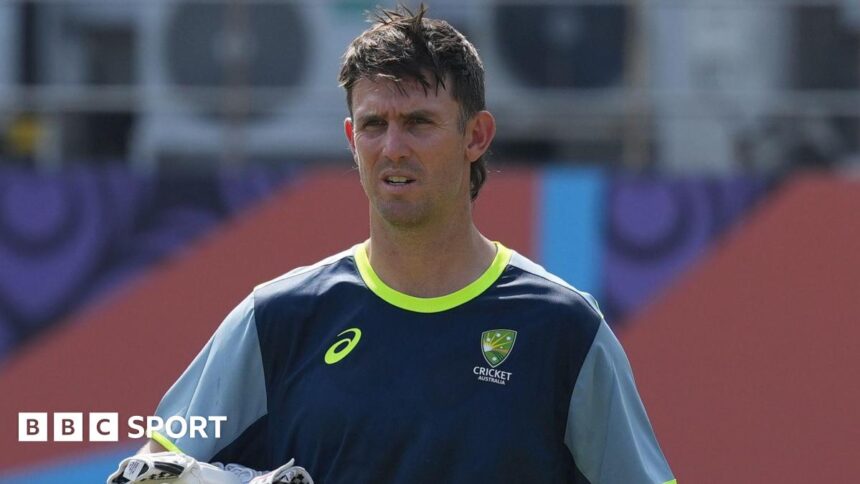
Australia’s T20 World Cup Campaign Jolted as Captain Mitchell Marsh Ruled Out with Rare Injury
The unpredictable nature of sport often delivers its drama on the field of play, but sometimes, the most significant blows are struck far from the public eye. Australia’s T20 World Cup campaign has been dealt a bizarre and painful setback before a ball has been bowled in their title defense, with captain Mitchell Marsh ruled out of their opening match against Ireland due to a highly unusual injury: testicular bleeding. The 34-year-old all-rounder, a pivotal figure in Australia’s recent white-ball success, suffered the freak incident during a routine training session in Colombo, casting an immediate shadow over the team’s preparations and raising urgent questions about leadership and squad depth.
A Freak Accident with Major Consequences
The details, as released by Cricket Australia, are enough to make any athlete wince. During a standard fielding drill involving throw downs—a common practice where coaches or teammates simulate batting deliveries—Marsh was struck with significant force in the groin area. While such impacts are an occasional hazard of the game, the aftermath was severe. Marsh experienced “ongoing pain and discomfort” so intense it restricted his movement. Subsequent medical scans revealed the specific and serious diagnosis: internal testicular bleeding.
This type of injury, while rare in professional cricket, is a serious medical concern that requires immediate and careful management. The Cricket Australia statement was unequivocal: “He will require a period of rest and rehabilitation.” For a global tournament played on a relentless schedule, “rest” is the one commodity a captain and key player cannot afford. The immediate consequence is Marsh’s absence from the Ireland fixture, with the experienced Steve Smith hastily called into the squad as cover. The longer-term prognosis, however, remains a source of significant anxiety for the Australian camp.
Leadership Void and Tactical Reshuffle
Mitchell Marsh’s evolution from a talented but inconsistent prospect to the Australia captain and middle-order lynchpin is one of modern cricket’s great redemption stories. His absence creates a multi-layered crisis for the team. Firstly, it leaves a gaping hole in the leadership structure. Marsh’s calm, positive demeanor and recent success as skipper provided stability. Stepping into the breach will likely be either Matthew Wade or Pat Cummins, both capable leaders but without Marsh’s specific recent tenure in the T20 role during a World Cup.
From a pure playing perspective, the loss is equally damaging. Marsh provides a critical balance to the side as a powerful top-order batsman and a more-than-handy medium-pace bowler. His role is not easily replicated. The call-up of Steve Smith as cover is intriguing and speaks to the selectors’ desire for experience. However, Smith’s inclusion necessitates a potential tactical overhaul. His genius lies in construction and anchoring an innings, a style that contrasts with the brute-force power-hitting typically associated with the T20 format. His insertion into the lineup could prompt a reshuffle of the entire batting order.
- Batting Order Instability: Who moves up to fill Marsh’s crucial No. 3 role? Will it be Smith, or will a like-for-like power hitter like Tim David be promoted?
- Bowling Balance: Marsh’s two or three overs of seam were a reliable option. His absence puts more pressure on the front-line bowlers and all-rounders like Marcus Stoinis.
- Team Morale: Losing a popular captain to such a jarring injury just days before a major tournament is an undeniable psychological blow.
Medical Perspective: Understanding a Rare Sporting Injury
To the average fan, the term “testicular bleeding” is both shocking and unfamiliar in a sporting context. Sports physicians note that while direct trauma to the groin is common in ball sports, the diagnosis of internal bleeding (hematoma) is less so and indicates a significant impact. The primary treatment is conservative: strict rest, ice, compression, and close monitoring to ensure the bleeding subsides and to prevent complications like infection or prolonged swelling.
The rehabilitation timeline is the great unknown. It is not simply about pain tolerance; it’s about healing. The area must withstand the immense physical demands of professional cricket—explosive running, twisting, diving, and batting. A premature return could risk re-injury or exacerbate the problem. Cricket Australia’s medical team will be ultra-cautious, knowing that mismanagement could have long-term consequences for the player. This injury places Marsh in a race against time not just for this World Cup, but for his immediate future in the sport.
World Cup Predictions: Can Australia Overcome the Setback?
The true mark of a champion team is its ability to absorb adversity. Australia’s squad is dripping with experience and world-class talent. Players like David Warner, Pat Cummins, and Glenn Maxwell have seen it all. This incident, however, presents a unique early tournament challenge. Their opening match against Ireland, already a potential banana skin, becomes a far trickier proposition without their captain and a defined game plan.
Looking ahead, Australia’s campaign now hinges on two key factors:
1. The Marsh Timeline: If Marsh can return within the first week of the tournament, the disruption could be minimized. A longer absence, however, would force the team to permanently reconfigure their strategy and leadership, a suboptimal scenario in a short, sharp tournament.
2. The “Next Man Up” Mentality: This is the moment for Steve Smith, or whoever fills the vacancy, to redefine their role. It is also a moment for the collective to tighten. The bowling attack, led by Cummins, Josh Hazlewood, and Adam Zampa, will need to be even more dominant to compensate for any batting instability.
While Australia remains one of the pre-tournament favorites, this injury has undoubtedly shifted the calculus. It has introduced a major element of uncertainty into their campaign before it has even begun. Rivals like England, India, and the West Indies will see an Australian side momentarily knocked off its axis.
A Harsh Reminder of Sport’s Fragility
Mitchell Marsh’s unfortunate injury is a stark and uncomfortable reminder of the fine margins in elite sport. Years of preparation for a T20 World Cup can be jeopardized not in a fiery spell of fast bowling, but in a quiet moment of training ground repetition. It underscores the vulnerability of the athlete and the omnipresent risk of freak accidents.
For Australia, the path to retaining their title has become exponentially harder. The focus now shifts from meticulous planning to crisis management, from settled roles to urgent problem-solving. For Mitchell Marsh, the personal battle is one of painful recovery and frustrating patience. His team’s ability to weather this storm without him in the initial stages will define their character and set the tone for their entire tournament. The World Cup is a test of skill, nerve, and strategy. For Australia, the first and most unexpected test is one of resilience.
Source: Based on news from BBC Sport.


