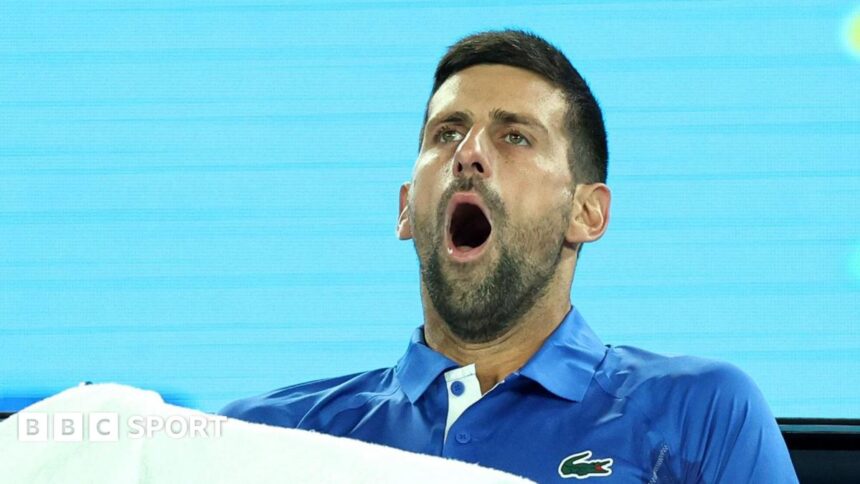
Chasing Grand Slams and Sunrise: How Tennis Stars Battle the Invisible Opponent of Jet Lag
As Novak Djokovic lands in Melbourne, his quest for a historic, standalone 25th Grand Slam title begins not on the blue plexicushion of Rod Laver Arena, but in the silent, disorienting hours of a new Australian night. The tennis world’s annual convergence for the Australian Open brings with it a familiar, groggy chorus. Before a single forehand is struck in anger, players, coaches, and journalists alike compare notes on the most universal and devilish of foes: jet lag. For the elite athlete, this isn’t mere travel fatigue; it’s an invisible opponent that must be defeated before the draw even begins. Their coping mechanisms, a blend of cutting-edge science and primal ritual, offer a masterclass in adaptation under extreme pressure.
The Body’s Rebellion: Why Tennis Players Feel It More
Anyone who has ever stumbled through a day after a long-haul flight knows the feeling—the brain fog, the untimely hunger pangs, the overwhelming desire to sleep at 3 p.m. For a tennis professional, these symptoms aren’t just inconvenient; they are performance-killers. The difference is scale and consequence. A player flying from a European winter to an Australian summer may cross ten time zones. Their internal circadian rhythm, which governs sleep, hormone release, and core temperature, remains stubbornly anchored to home.
This biological rebellion manifests in ways uniquely detrimental to an athlete. Reaction time slows by crucial milliseconds. Fine motor skills, the bedrock of touch volleys and precise serves, deteriorate. The body’s ability to regulate temperature and metabolize energy is thrown into chaos, impacting recovery and endurance. Crucially, sleep architecture is shattered. Deep, restorative sleep is replaced by fragmented, light dozing, robbing muscles of their prime repair period. When your job requires explosive movement for up to five hours in 30-degree heat, jet lag isn’t a nuisance—it’s a direct threat to your livelihood.
From Superstition to Science: The Player’s Anti-Jet Lag Arsenal
Gone are the days of simply hoping for the best. Today’s players employ a multi-front war strategy against circadian disruption, turning preparation into a critical part of their training block.
- Pre-Travel Chrono-Shifting: Top players begin adjusting their body clocks days before departure. If heading east to Australia, they might go to bed and wake an hour earlier each day, gradually syncing with Melbourne time while still at their training base.
- Strategic Light Exposure: This is the most powerful tool. Upon landing, players seek or avoid specific light to reset their internal clock. Morning sunlight exposure is gold standard, triggering cortisol production and signaling the body that the day has begun. Many players, wide awake at 4 or 5 a.m., will deliberately go outside to watch the sunrise, using nature’s cue to accelerate adaptation.
- The Hydration Imperative: The dry, recycled air of airplane cabins is brutally dehydrating. Players prioritize aggressive fluid intake with electrolytes, not just water, to combat fatigue, aid cognitive function, and prepare their bodies for the intense sweat loss to come on court.
Interestingly, one common civilian distraction is often avoided: the Fantasy Premier League (FPL). “You see guys on tour scrolling endlessly at crazy hours,” one fitness coach noted anonymously. “That blue light from phones is a major sleep disruptor. The smart ones avoid that and all social media during the acclimatization phase. It’s about signal control.”
When the Schedule Offers No Mercy: Playing Through the Fog
Despite the best preparations, the brutal reality of the tour is that sometimes players must compete while still in the jet lag fog. A player reaching the final of a warm-up tournament in, say, Hong Kong, may have less than 48 hours to travel and adjust before a first-round match in Melbourne. This is where experience and routine become paramount.
Veterans like Djokovic or Caroline Wozniacki rely on meticulous, time-tested routines that function as autopilot for the body and mind. Every detail—from the timing of their pre-match meal to the specific dynamic warm-up—is executed precisely, bypassing a fatigued brain’s decision-making. They understand that while their cardiovascular system may be ready, their neuromuscular coordination might lag. Their practice sessions in the first days focus less on power and more on rhythm, feel, and re-establishing timing.
Nutritionists also play a key role here, manipulating meal timing and content to promote alertness or encourage sleep. A carefully timed dose of caffeine, or a carbohydrate-heavy meal to promote serotonin production before bed, can be the fine margin between a restless night and restorative sleep.
The Champion’s Edge: Why Adaptation is a Non-Negotiable
In the hyper-competitive landscape of modern tennis, where physical margins are vanishingly small, mastering jet lag is no longer an advantage—it’s a prerequisite. This is where the true champions separate themselves. Novak Djokovic’s legendary dedication to his body extends to his travel protocols. His ability to win the Australian Open, a tournament that demands immediate adaptation more than any other, a record ten times is a testament to treating jet lag as seriously as a backhand.
As we look at the 2024 field, the players who navigate the first week most smoothly will likely be those who invested in the “invisible” work before hitting a ball. Young contenders like Carlos Alcaraz or Jannik Sinner have entire teams dedicated to optimizing travel logistics and recovery. The prediction is clear: in the era of a global tennis calendar, resilience to travel stress is becoming a core athletic skill, as important as a powerful serve. The player who can step onto the court feeling like it’s 3 p.m. in Melbourne, and not 5 a.m. in Madrid, has already won the first, silent match of the tournament.
Conclusion: The Unseen Grand Slam
The Australian Open champion will lift the Norman Brookes Challenge Cup after two weeks of spectacular, physical combat. But a significant part of their victory will have been secured in the quiet, solitary moments after landing: in the discipline to seek the morning sun while craving sleep, in the willpower to avoid one more screen scroll, and in the strategic patience to let the body catch up with the ambition. For the tennis stars who descend on Melbourne each January, the first opponent is never across the net. It is the disorienting twist of time itself, a foe conquered not with a thunderous ace, but with sunlight, routine, and an profound understanding of their own human biology. Their battle with jet lag is a powerful reminder that even superhumans must first listen to the fundamental needs of the body to perform feats that defy belief.
Source: Based on news from BBC Sport.