Barmy Army Erupts as England Finally Survives the First Over Onslaught
The sound that greeted the final ball of the first over at Lord’s was not the familiar, agonising groan that has echoed around England this series. It was a roar. A visceral, beer-fuelled, flag-waving roar of pure, unadulterated relief. From the heart of the Nursery Ground, the Barmy Army, England’s indefatigable travelling faithful, went absolutely wild. The reason? For the first time in the 2023 Ashes, an English opening batsman had managed to walk back to his mark at the end of an over, rather than trudge back to the pavilion. In a series defined by Australian pace, precision, and early carnage, this was a minor victory that felt monumentally significant.
The Ghost of First Overs Past: A Pattern of Pain
To understand the sheer euphoria of that moment, one must revisit the trauma that preceded it. The opening exchanges of this Ashes series had been less a contest and more a public dissection by the Australian seam attack, particularly the peerless Pat Cummins and the metronomic Josh Hazlewood. The first over had become a theatre of dread for English fans.
- Edgbaston, First Test: Zak Crawley, fourth ball, nicks off to Cummins. England 0/1.
- Edgbaston, Second Innings: Ben Duckett, fifth ball, trapped LBW by Hazlewood. England 0/1.
- Lord’s, First Innings: Duckett again, third ball, caught behind off Hazlewood. England 2/1.
This was more than a trend; it was a psychological stranglehold. Each time, the Australian bowling attack had executed their plan with chilling efficiency, exploiting the slope at Lord’s, the swing at Edgbaston, and the palpable tension in the English top order. The early wicket had become a given, an accepted prelude to the day’s play, sucking the belief from the home side and its supporters before the scoreboard had even ticked over.
The Moment of Resistance: More Than Just a Dot Ball
As Zak Crawley took guard for England’s second innings at Lord’s, facing a daunting deficit, the air was thick with inevitability. Pat Cummins, with the famous slope aiding his away movement, held the ball. The Barmy Army’s songs were laced with hope, not expectation. What followed was six balls of high-class, nerve-shredding Test match cricket.
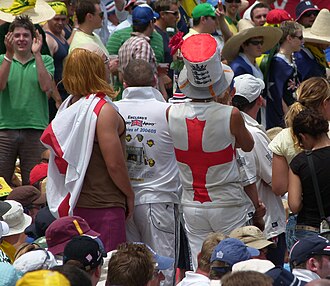
Cummins probed, finding a hint of swing. Crawley played with soft hands, his bat angled with intent to leave. A play and miss here, a solid forward defensive there. Each dot ball drew a growing murmur of approval. The sixth and final delivery, on a good length, was defended stoutly back down the pitch. As Crawley tapped the pitch and looked to his partner, the dam of tension burst. The Barmy Army, a sea of red and white in the stands, erupted as if a century had been scored. They were not celebrating runs; they were celebrating resilience. They were celebrating a break in the pattern. In the context of the series, it was a statement: “We are still here.”
Expert Analysis: The Psychological Tipping Point
While the scoreboard read 0/0, the impact of that single over cannot be overstated from a tactical and psychological perspective. For the England batting lineup, perpetually tasked with chasing the game, it provided a crucial foothold. The “Bazball” philosophy, built on proactive aggression, requires a platform. You cannot launch from zero wickets down if you are, in fact, one wicket down. This small act of survival recalibrated the innings.
For Australia, it was the first tiny crack in their aura of impregnability with the new ball. Their strategy of immediate incision had been flawless until that point. England’s openers, notably Crawley, showed a disciplined side to their game often overshadowed by the relentless attacking rhetoric. It proved they could adapt, could absorb pressure, and could earn the right to attack later. This shift in momentum, however slight, is often what turns Test matches. The first over survival became the foundation upon which a crucial partnership was built, changing the entire complexion of the day’s play and, ultimately, the Test match.
What This Means for the Ashes Battle Ahead
This moment, immortalized in the reaction of the fans, signals a potential shift in the Ashes narrative. England demonstrated they could blunt the world’s best opening attack. Looking forward, this has key implications:
- Renewed Confidence at the Top: Crawley and Duckett will take mental fortitude from this. Knowing you have seen off the best the opposition has to offer is a powerful weapon.
- Australian Adjustment: Cummins and Hazlewood will now have to ponder a Plan B for the first over, adding a new tactical layer to the opening skirmishes.
- The Barmy Army as a Weapon: The visceral connection between on-field action and fan reaction was never clearer. That roar was a tangible energy boost for the players, a reminder they are in a fight, not a foregone conclusion.
The remainder of the series will be a war of attrition, but England’s first-over stand at Lord’s was a vital battle won. It proved that Australian dominance is not a law of nature, but a challenge to be overcome.
Conclusion: A Roar That Echoes Beyond Lord’s
In the grand ledger of the Ashes, surviving a single over will not be highlighted in bold. The centuries, the five-wicket hauls, the dramatic collapses will claim the headlines. But those who witnessed it understand its true weight. The Barmy Army’s wild celebration was not just about one maiden over; it was the release of three Tests worth of frustration, the defiant shout of a fanbase that saw its team finally stare down the Goliath in the opening exchange. It was a celebration of hope restored. In the relentless, psychological grind of an Ashes series, these small victories forge the resilience needed for great escapes and historic wins. England did not just avoid losing a wicket in that first over; they won back a piece of their belief, and their fans, in that moment, roared it back to them for all the world to hear. The fightback, announced not with a boundary but with a block, was well and truly on.
Source: Based on news from BBC Sport.
Image: CC licensed via commons.wikimedia.org