Billion-Dollar Ball: Inside the Monumental Bids to Launch NBA Europe
The National Basketball Association’s global ambitions are entering a stratospheric new phase. For over a decade, the league has planted its flag on European soil through preseason and regular-season games, captivating audiences from London to Paris. Now, sources indicate these overtures are evolving into a seismic power play: the creation of a permanent, standalone ‘NBA Europe’ league. And the financial commitment is staggering, with the NBA reportedly fielding multiple bids for franchises reaching and exceeding the billion-dollar mark. This isn’t just expansion; it’s a tectonic shift in the architecture of professional sports, signaling the dawn of a transatlantic basketball empire.
From Exhibition Games to a Continental Conquest
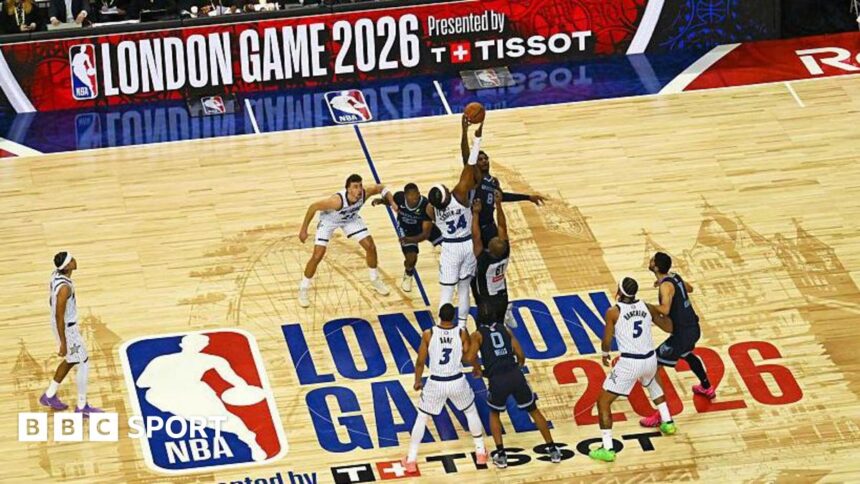
The NBA’s courtship of Europe has been a masterclass in long-term strategy. Since 2011, when the New Jersey Nets and Toronto Raptors tipped off in London, the league has meticulously built its brand overseas. These annual games were more than just events; they were auditions, market research, and fan-acquisition drives rolled into one. They proved that European audiences would pack iconic arenas for authentic NBA regular-season intensity. The success of these games laid the critical groundwork, demonstrating commercial viability and fan appetite. Now, the league appears ready to move from a touring model to establishing permanent residency. Initial plans, as understood, envision a cohesive league of 10 to 12 franchises that would compete annually, creating the kind of deep-rooted narratives and rivalries that fuel sports culture. This represents a monumental leap from being a beloved import to becoming a domestic institution.
The Staggering Economics of a Transatlantic League
The most eye-opening aspect of the NBA Europe proposal is the sheer scale of the investment. According to reports, the NBA has received several billion-dollar bids for teams, with a wide range of offers between $500 million and $1 billion, and several soaring above that benchmark. To contextualize this:
- An expansion team in Las Vegas is estimated to cost around $4-5 billion. While European bids are lower, they are firmly in the realm of major U.S. professional sports franchise valuations.
- These figures suggest investors see NBA Europe not as a minor league subsidiary, but as a premier, top-flight competition capable of generating massive revenue from media rights, sponsorship, and gate receipts.
- The billion-dollar threshold indicates confidence in a model that leverages the NBA’s global marketing machine while tailoring the product to the European sports landscape.
This influx of capital would instantly make NBA Europe one of the wealthiest sports leagues on the continent, capable of competing for top global talent and constructing state-of-the-art facilities. The financial commitment is the clearest signal yet that this is a serious, imminent project.
Navigating the EuroLeague Rivalry and Logistical Labyrinth
The path to NBA Europe is not without formidable obstacles. The continent already boasts a deeply entrenched elite competition: the EuroLeague. Founded by FIBA but now operated independently by Euroleague Basketball, it features the best club teams from across Europe, such as Real Madrid, FC Barcelona, and Olympiacos. These are institutions with decades of history, passionate fan bases, and their own powerful economic models. An NBA incursion would not be a friendly merger; it would be a direct challenge for supremacy.
Key questions and potential flashpoints include:
- Player Talent War: Would NBA Europe and the EuroLeague compete for the same stars? Could NBA Europe’s financial muscle create a significant talent drain?
- Scheduling Conflicts: The European basketball calendar is packed. Integrating a new, high-profile league would create immense complexity for national leagues and FIBA windows.
- Fan Allegiance: Would European fans abandon their historic clubs for a shiny new NBA-branded team in their city? The cultural integration is as crucial as the business plan.
Furthermore, the logistical challenges of a pan-European league are daunting. Travel across multiple time zones and borders, varying tax laws, and arena availability present a operational puzzle far more complex than the NBA’s current U.S.-Canada league.
The Future Court: Predictions for a New Basketball World Order
If NBA Europe becomes a reality—and the billion-dollar bids suggest it’s a matter of ‘when’ not ‘if’—the ripple effects will be felt worldwide. Here is how the landscape could transform:
A Two-Way Talent Highway: We could see an era of unprecedented player movement. NBA veterans in their prime might choose to be marquee stars in London or Berlin, while European phenoms could have a clear, NBA-system pathway without crossing the Atlantic initially. This would elevate the global game’s quality.
Media Rights Revolution: The battle for broadcasting rights would be fierce, potentially creating a new premium sports package that rivals soccer’s Champions League in value. This would further inject revenue into the basketball ecosystem.
Pressure on the EuroLeague: The existing league would be forced to innovate, potentially seek deeper partnerships with the NBA, or consolidate its own position. A merger or some form of collaborative framework, perhaps with a Champions League-style tournament between the best of both leagues, is a compelling long-term prediction.
Expansion of the NBA Brand: Success in Europe could pave the way for similar initiatives in other regions, like Asia or the Middle East, truly solidifying the NBA’s status as the world’s first global sports league.
Conclusion: A Game-Changing Jump Ball
The reported billion-dollar bids for NBA Europe franchises are more than just financial headlines; they are the starting whistle for a new era. The NBA is no longer content to be the world’s most popular basketball league; it is strategically positioning itself to become the world’s most dominant sports league, period. By establishing a permanent, well-capitalized foothold in Europe, it aims to capture the hearts, minds, and wallets of a massive new market. While the challenges of rival leagues, logistics, and culture are significant, the monumental financial commitment from investors proves the vision is considered not just viable, but extraordinarily lucrative. The game is changing. The court is getting bigger. And the world of basketball is poised for its most dramatic expansion yet.
Source: Based on news from BBC Sport.