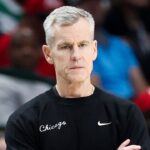
Billy Donovan’s Exit Signals End of an Era for Chicago Bulls
The winds of change are howling through the United Center. In a move that reverberates more as a strategic retreat than a simple resignation, Billy Donovan has opted out of his contract, stepping away as head coach of the Chicago Bulls. This decision, announced Tuesday, doesn’t just create a coaching vacancy; it punctuates a failed era and accelerates a long-overdue organizational reckoning. Donovan’s departure, coming amid simultaneous searches for a new president of basketball operations and general manager, marks the most significant admission yet that the Bulls’ current trajectory is unsustainable. It is a divorce of convenience, a mutual acknowledgment that the path forward requires a clean slate.
Donovan’s statement was a masterclass in professional diplomacy, thanking ownership and the city while carefully framing his exit as a selfless act for the franchise’s future. “After a series of thoughtful and extensive discussions with ownership regarding the future of the organization, I have decided to step away… to allow the search process to unfold,” Donovan said. “I believe it is in the best interest of the Bulls to allow the new leader to build out the staff as they see fit.” The subtext, however, is glaring: Billy Donovan, a coach with a proven NCAA pedigree and NBA respect, decided not to stick around for the latest rebuild. His opt-out is a powerful vote of no confidence in the immediate prospects of the roster he helped assemble.
The Donovan Era: A Statistical Stalemate and Missed Opportunities
Evaluating Billy Donovan’s six-season tenure in Chicago is an exercise in understanding context. His final record—226 wins against 256 losses—paints a picture of persistent mediocrity, a near-perfect .469 winning percentage that epitomizes the NBA’s dreaded “middle.” Yet, to lay this solely at Donovan’s feet is to ignore the flawed roster construction and injury misfortune that defined his time. His first season in 2020-21 was a surprise success, leveraging a tough defensive identity to a 31-41 record and a playoff berth in a COVID-shortened year. That team, built around Zach LaVine and a resurgent Nikola Vučević, played with a grit that promised more.
The following season delivered on that promise, briefly. With the high-profile addition of DeMar DeRozan and the emergence of Lonzo Ball as the team’s connective tissue, the Bulls roared to a 27-11 start and first place in the Eastern Conference. The vision was clear: offensive firepower from LaVine and DeRozan, orchestrated by Ball’s elite perimeter defense and transition passing. Then, the foundation crumbled. Lonzo Ball’s catastrophic knee injury, from which he has not returned in over two and a half years, exposed the roster’s lack of depth and defensive versatility. Donovan was left to patch together lineups around three high-usage, defensively limited stars, a formula that proved untenable against elite competition.
The subsequent years were a grind:
- An Offensive Identity Crisis: Without a true point guard, the offense devolved into isolation-heavy sets, ranking in the bottom half of the league in assists consistently.
- Defensive Decline: From a top-10 defense with Ball, the Bulls became middling, unable to contain perimeter-oriented teams.
- Play-In Purgatory: The team settled into a cycle of fighting for the 9th or 10th seed, winning just one playoff game in two appearances.
Donovan, 60, was often criticized for rotations and late-game execution, but his greatest challenge was maximizing a roster with a glaring, injury-induced flaw at its core. The front office, led by Artūras Karnišovas, failed to adequately address the point guard void, leaving Donovan to manage an unbalanced squad.
A Franchise at a Crossroads: Leadership Void and Rebuild Reality
Donovan’s timing is as significant as his decision. The Bulls are currently a ship without captains at the helm. With the searches for a new president of basketball operations and general manager ongoing, the organization’s power structure is in complete flux. Last week’s report that the Bulls wanted Donovan to return now reads as a desperate attempt to maintain a sliver of stability. By opting out of the clause for the 2026-27 season, Donovan seized control of his own fate, choosing not to be a lame-duck coach for a new executive who didn’t hire him.
This creates a cascading effect. A new head of basketball operations will now have the autonomy to install their own head coach, a crucial first step in any rebuild. There were no indications the Bulls proposed a front-office role to Donovan, nor did he express public interest in one. This is a clean break. The new leadership trio—President, GM, and Head Coach—will be aligned philosophically from day one, tasked with answering the monumental questions this roster presents.
The immediate future is fraught with difficult decisions:
- The DeMar DeRozan Dilemma: The veteran star is an unrestricted free agent. Does a new regime invest in an aging, win-now player?
- Zach LaVine’s Market: Attempts to trade the high-scoring guard were hampered by his contract, recent foot surgery, and perceived defensive liabilities. His value is at an all-time low.
- Asset Accumulation: The Bulls owe a top-10 protected pick to San Antonio in 2025. Is the goal to be just good enough to keep the pick, or to bottom out and accelerate a youth movement?
Donovan’s exit is the first, loudest signal that the “competitive rebuild” is over. A true rebuild, likely painful and protracted, is now the most probable path.
What’s Next for the Bulls and for Billy Donovan?
The coaching carousel is already spinning, and the Bulls’ job will be a fascinating case study. It is not a premier destination given the current roster uncertainty, but it is a major market with a storied history and the promise of full organizational control for a new coach-GM partnership. Candidates will likely fall into two categories: a developmental coach tasked with nurturing young talent like Coby White, Ayo Dosunmu, and Patrick Williams (if retained), or a seasoned tactician who believes they can re-engineer the existing core.
For Billy Donovan, his stock remains high in NBA circles. He is widely respected for his basketball IQ, preparedness, and player relationships. He navigated the Bulls’ turmoil with professionalism. He will instantly become one of the most sought-after candidates for any unexpected opening, or a prime candidate for teams in the 2025 hiring cycle. A seasoned winner with over 700 combined NBA and NCAA victories does not stay unemployed for long. A refreshed situation with a clearer roster direction could be the perfect next chapter.
Conclusion: A Necessary End Precedes a New Beginning
Billy Donovan’s tenure with the Chicago Bulls will be remembered as a well-intentioned project doomed by a single, devastating injury and compounded by roster inflexibility. His decision to opt out is the most honest thing to happen to this franchise in years. It bypasses a slow fade and forces immediate, radical change. The “Three Alphas” experiment 2.0 has conclusively failed, and the architect of the roster and the coach tasked with executing it are both departing.
The pressure now shifts entirely to ownership and the incoming basketball leadership. The mandate must be clarity and patience. The Bulls have languished in NBA irrelevance for too long, chasing play-in games instead of championships. Donovan’s departure is not an end, but a necessary clearing of the deck. The United Center rafters, adorned with the legends of Jordan and Pippen, deserve a franchise with direction. The long, complicated process of building one that can truly honor that legacy begins today, with an empty coach’s chair and a universe of possibilities.
Source: Based on news from Deadspin.
Image: CC licensed via georgewbush-whitehouse.archives.gov