Boots from the Easter Bunny and Teenage Parties: The Unfiltered Oliver Glasner
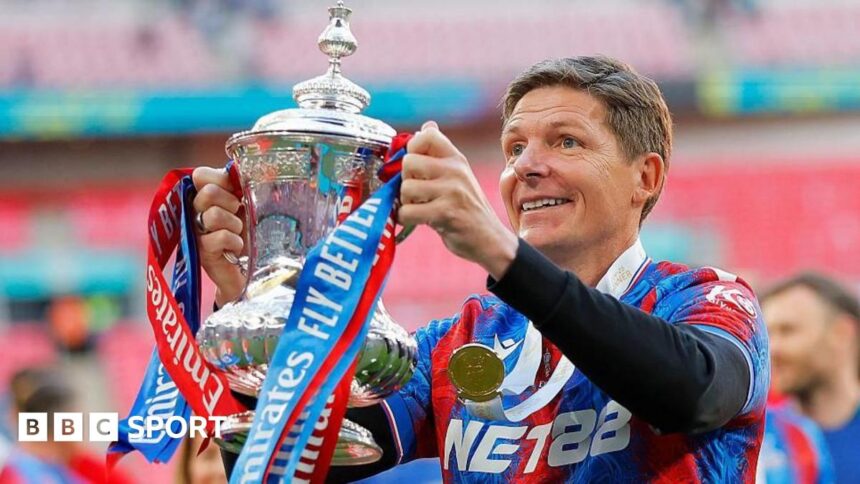
In the high-stakes, often sterile world of modern football management, Oliver Glasner’s departure from Crystal Palace feels like the end of a refreshingly human chapter. Announcing his exit after a transformative two-year spell, the Austrian leaves as a bona fide club legend, having delivered the Eagles’ first major trophy and a historic European adventure. Yet, beyond the FA Cup glory and tactical acumen, a recent intimate interview reveals the profound personal journey of the man himself—a story woven with childhood magic, teenage rebellion, and a career-altering brush with mortality.
From Austrian Idyll to the Selhurst Park Summit
Oliver Glasner’s managerial persona—calm, articulate, and fiercely principled—is deeply rooted in his upbringing in the small Austrian town of Schärding. In his conversation with the BBC’s Kelly Somers, Glasner painted a picture of a childhood defined by community and a family where hard work and football were the currencies of life. His father, a butcher, and his mother instilled a relentless work ethic. But it was a whimsical family tradition that perhaps best foreshadowed a future in football.
“My first football boots were a present from the Easter Bunny,” Glasner revealed, a charming anecdote that underscores the supportive, almost fated, environment of his youth. This wasn’t a superstar’s narrative of relentless academy grooming, but one of organic love for the game, nurtured in local clubs and backyard kicks. It was this grounded foundation that would later allow him to connect with players and fans at Palace on a level that transcended tactics.
His playing career as a robust defender was progressing steadily in Austria’s Bundesliga. However, Glasner’s path was violently redirected not by a loss of form, but by a life-threatening event. A clash of heads during a match in 2011 left him with a severe cerebral hemorrhage. Forced into immediate retirement at 36, his life—and his relationship with football—was irrevocably changed.
This near-tragedy is the pivotal, unspoken cornerstone of the Glasner philosophy. It gifted him a perspective rarely found on the touchline. Football, while all-consuming, is part of life, not more important than it. This clarity likely fueled the fearless, progressive style he implemented at Palace and the empathetic leadership that made him a father figure to a vibrant, young squad.
The Party Animal Teenager and the Manager Who “Gets It”
In a revelation that will endear him to fans and perhaps horrify parents of aspiring footballers, Glasner openly discussed his teenage years. He was, by his own admission, far from the dedicated professional-in-waiting.
“I was partying a lot,” he confessed, detailing a focus on friends and social life that took precedence over athletic discipline. This candid admission is a masterstroke in humanization. It paints a portrait of a complete person, one who understands temptation, balance, and the journey of maturation. For the young stars at Crystal Palace—the Eze’s, Olise’s, and Guehi’s—having a manager who hasn’t forgotten the pulls of youth culture, yet has reached the pinnacle of his profession, is incredibly powerful. It builds trust and a channel for communication that a disciplinarian from a different era might never achieve.
This blend of personal history created a unique managerial profile:
- Empathetic Leader: His own non-linear path and traumatic injury fostered a deep understanding of player psychology and well-being.
- Cultural Architect: He didn’t just coach a team; he built a resilient, attacking-minded identity that supporters adored.
- Big-Game Mentor: His calm demeanor in finals and European nights transmitted confidence to a squad with little prior experience of such occasions.
Analyzing the Glasner Legacy: More Than Just a Cup
While the FA Cup triumph will forever be the jewel in his Palace crown, Glasner’s impact is measured in more than silverware. He inherited a talented but inconsistent side and transformed them into a cohesive, bold unit that could go toe-to-toe with the Premier League’s elite. Securing European football was a monumental achievement, altering the club’s ambition and financial landscape.
His departure, while saddening for fans, is handled with the same class that defined his tenure. There is no rancor, no leaked fallout, simply a sense of a cycle completed. This dignified exit protects the club’s stability and his own legacy, allowing the focus to remain on the season’s finale. It is the action of a man who sees the bigger picture, a perspective undoubtedly sharpened by his life-altering experiences.
The recent FA Cup exit to non-league Macclesfield, a shock result that made headlines, is now a mere footnote. It does not tarnish his legacy but rather highlights the fickle nature of cup football. In the broader narrative of his reign, it is an anomaly in a era of consistent upward trajectory.
What’s Next for Glasner and Crystal Palace?
The future for both manager and club is ripe with intriguing possibilities. For Glasner, his stock has never been higher. His proven ability to develop players, implement an attractive style, and win trophies will attract attention from across Europe’s top leagues. He possesses the rare blend of tactical sophistication and emotional intelligence that modern clubs crave.
Potential destinations could include:
- A return to the Bundesliga with an ambitious project.
- A Serie A club seeking a progressive, disciplined approach.
- A national team role, where his man-management skills could shine on an international stage.
For Crystal Palace, the task is daunting: replace the irreplaceable. The board must seek a manager who can protect the positive culture Glasner embedded while continuing to evolve the playing style. The club is now a more attractive proposition than ever—a London-based Premier League side with a trophy-winning mentality, European pedigree, and a stellar academy. The next appointment will define whether Glasner’s era was a beautiful peak or a sustainable platform.
A Conclusion Forged in Humanity
Oliver Glasner’s story, as told in his own words, is a powerful reminder that behind every successful manager is a human being shaped by joy, tragedy, and ordinary experiences. The boy who received boots from the Easter Bunny and the teenager who loved a party became the man who stared down mortality and then led a club to its greatest heights. His legacy at Crystal Palace is not just etched on the FA Cup, but in the hearts of a fanbase who saw one of their own in his passion, and in the careers of players he elevated.
As he prepares for his next chapter, the football world would do well to remember the Glasner blueprint: authenticity, resilience, and perspective are not just personal virtues, but potent professional tools. His interview with the BBC is more than a farewell; it’s a testament to a life in football, lived fully and humanly. The Premier League, and Crystal Palace, will be poorer for his absence.
Source: Based on news from BBC Sport.