Brady Tkachuk, White House AI Video Spark Unprecedented Cross-Border Sports Controversy
The intersection of sports, international rivalry, and artificial intelligence has created a surreal diplomatic-adjacent incident, with Ottawa Senators captain Brady Tkachuk at its center. Days after his golden moment with Team USA at the IIHF World Championship, Tkachuk is navigating an unexpected storm stemming from a “clearly fake” AI-generated video posted by an unlikely source: the official White House TikTok account.
From Gold Medal Glory to Digital Deception
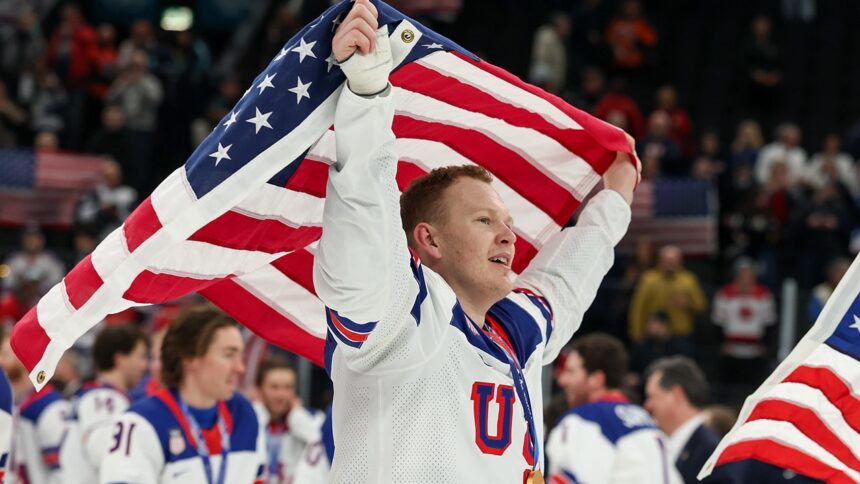
Brady Tkachuk’s week began with the pinnacle of international hockey achievement: helping the United States defeat Canada to win the gold medal at the IIHF World Championship. The victory was a classic, hard-fought battle on the ice, the kind that fuels the friendly yet fierce rivalry between the two nations. Tkachuk, a beloved figure in Canada’s capital as the heart-and-soul leader of the Senators, returned to Ottawa for a crucial offseason focused on building a playoff contender.
However, the narrative took a bizarre turn when a video surfaced on the White House’s TikTok. The clip used authentic-looking but fabricated audio, spliced over real footage of Tkachuk from a 2023 4 Nations Face-Off press conference. The AI-manipulated video falsely portrayed Tkachuk delivering a mocking, disparaging rant about Canada and its citizens. The post, which was later deleted, was captioned with a joke about the U.S. win, but its use of deepfake technology crossed a line from standard rivalry banter into potentially harmful misinformation.
Tkachuk’s Response and the “Clearly Fake” Fallout
Facing a potential public relations nightmare in the city he calls home, Brady Tkachuk addressed the situation head-on. His response was a masterclass in damage control, blending clarity, humor, and genuine respect.
- Immediate Clarification: Tkachuk swiftly labeled the video as “clearly fake,” leaving no room for ambiguity about its authenticity.
- Affirmation for Ottawa: He emphasized his love for the city of Ottawa and its fans, a crucial message for his local community.
- Genuine Disappointment: Rather than leaning into the joke, Tkachuk expressed a tone of slight bewilderment at the situation, acknowledging the awkward position it created for him.
“It’s a weird situation, for sure,” Tkachuk was reported as saying. “You never expect something like that to come from there… I love Ottawa, I love our fans here. That wasn’t me.” This direct approach effectively neutralized any potential backlash, reaffirming his commitment to the Canadian community that supports him nightly from October to April.
Expert Analysis: When Deepfakes Enter the Sports Arena
This incident is far more significant than a simple social media blunder. It represents one of the highest-profile incursions of AI-generated deepfake technology into the world of professional sports, with a major government institution inadvertently as the catalyst.
Sports media and public relations experts point to several alarming implications:
- Erosion of Trust: The ease with which a convincing fake can be created and disseminated by a credible source threatens the fundamental trust between athletes, media, and the public.
- New Frontier of “Trash Talk”: Could fabricated statements be used to psychologically target players before big games or create false narratives in heated playoff series?
- Player Safety and Reputation: As seen with Tkachuk, a deepfake can instantly place an athlete in a diplomatically or socially precarious position, damaging community relations or even inciting misplaced fan anger.
“The Tkachuk situation is a wake-up call,” says a veteran sports communications strategist. “We now have to consider digital authenticity as a core component of an athlete’s brand protection. A player’s words can be weaponized against them without them ever opening their mouth. Proactive media literacy and rapid response plans are now essential.”
Predictions: The New Normal for Athletes in the AI Era
Moving forward, the Brady Tkachuk-White House video episode will likely be studied as a precedent. We can anticipate several developments in its wake:
League and Union Action: Major sports leagues, including the NHL, and player associations will be compelled to develop formal policies and educational resources about AI deepfakes. This will include legal frameworks for pursuing action against malicious creators and guidelines for official social media conduct.
Verification as Standard Practice: Sports journalists and broadcasters will increasingly need to verify the source of viral athlete audio and video clips before reporting on them. Outlets may begin using digital content authentication tools as part of their standard fact-checking process.
Enhanced Player Media Training: Future media training for rookies will undoubtedly include modules on digital impersonation and crisis management for AI-fabricated scenarios. Players will be coached on how to issue swift, definitive denials akin to Tkachuk’s “clearly fake” declaration.
Fan Education: Teams and leagues may launch campaigns to educate fans on identifying potential deepfakes, fostering a more skeptical and informed audience to slow the spread of such content.
Conclusion: A Victory for Authenticity in a Fabricated World
While the initial White House TikTok was a misstep in digital diplomacy, the resolution of the Brady Tkachuk AI video scandal ultimately reinforces the enduring value of authenticity. Tkachuk’s genuine connection with Ottawa and his straightforward, honest response proved more powerful than any algorithm-generated falsehood. This incident underscores that in an era where technology can convincingly distort reality, the true character of an athlete—and the trust they build with their community—remains the ultimate defense.
The final score from this off-ice controversy? Brady Tkachuk 1, AI Misinformation 0. He handled an unprecedented situation with the same grit and integrity he displays on the ice, turning a potential diplomatic faux pas into a testament to his real-world reputation. As the sports world grapples with this new digital frontier, the lesson is clear: no deepfake can replicate the value of being genuine.
Source: Based on news from Fox Sports.