Braves Make Calculated Move with Yastrzemski, But Bigger Offseason Rumors Swirl
The Hot Stove season in Atlanta is simmering with a blend of a surprising, logical signing and the persistent, high-octane rumors that define an Alex Anthopoulos offseason. While the Braves haven’t yet landed the seismic, headline-grabbing trade, their first major financial commitment of the winter signals a clear strategy: targeted improvement with an eye on both the present and a looming future need. The signing of veteran outfielder Mike Yastrzemski is a nuanced move, but the surrounding whispers suggest it may merely be the prelude to a far more aggressive play.
Decoding the Mike Yastrzemski Signing: A Veteran Platoon Anchor
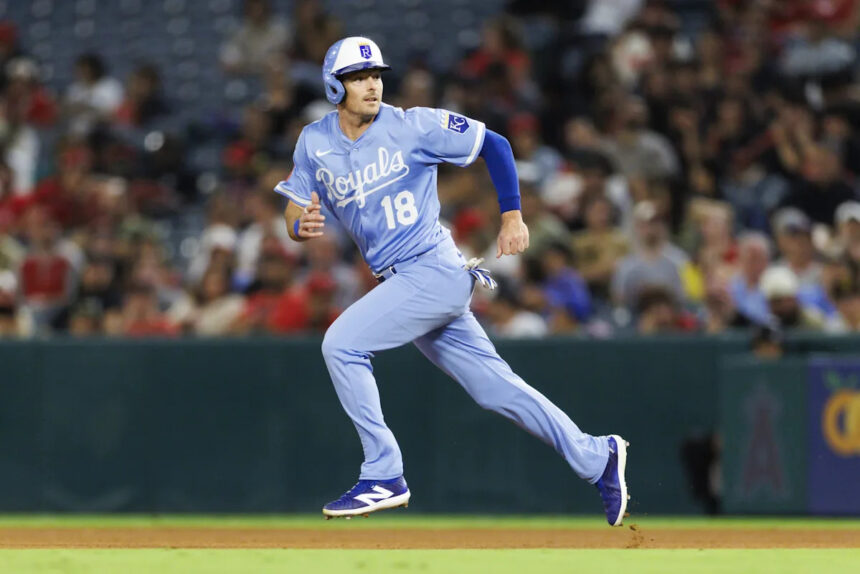
The Braves agreed with free agent Mike Yastrzemski on a two-year, $23 million deal that guarantees him $19 million. The contract will pay him $9 million in 2026 and $10 million in 2027, and includes a 2028 club option worth $7 million with a $4 million buyout. On the surface, signing a 33-year-old outfielder coming off a .233 season doesn’t scream “blockbuster.” However, a deeper look reveals the Anthopoulos front office’s trademark surgical precision.
Yastrzemski’s value is highly specialized and immediately useful. He possesses a well-established track record of mashing right-handed pitching. Over his career, he holds a .790 OPS against righties, a skill that plays perfectly in a platoon or heavy-rotation role. Defensively, he provides respectable outfield defense at all three spots, a critical trait for a team that values flexibility.
This move serves multiple purposes:
- Insurance for Michael Harris II: If the young star’s offensive adjustments take more time, Yastrzemski offers a reliable, veteran presence who can capably handle center field.
- Lineup Balance: He adds another potent left-handed bat to a lineup that can lean right-handed, especially against tough righty starters.
- DH and Flexibility: He allows manager Brian Snitker to rotate his outfielders—including Harris, Jarred Kelenic, and Ronald Acuña Jr.—through the DH spot to keep them fresh without a significant defensive drop-off.
- Future Planning: With Acuña’s long-term future a constant consideration and Kelenic still proving himself, Yastrzemski is a cost-controlled, known commodity for the next several seasons.
It’s not a move that will sell jerseys, but it’s a smart, depth-building addition that addresses specific roster construction needs.
The Relentless Pursuit: Pitching and the Persistent Shortstop Question
While Yastrzemski addresses a niche, the Braves’ overarching offseason mission has been no secret: upgrade the pitching staff, both in the rotation and the bullpen. Multiple reports confirm the front office has been canvassing the market for impact arms. This pursuit took a tangible form with their reported strong interest in star relievers.
The Braves were linked to both Edwin Díaz and Kyle Finnegan before they re-signed with their respective clubs. Most notably, they have been repeatedly connected to San Diego Padres closer Robert Suarez, one of the most dominant late-inning arms in baseball. Securing a pitcher of his caliber would fundamentally reshape the back of the bullpen, but the cost in trade prospects would be significant.
Perhaps even more intriguing is the lingering question at shortstop. Despite the presence of Vaughn Grissom and the emerging prospect of Orlando Arcia, the Braves have been reportedly open to upgrading at shortstop. This isn’t a new theme for Anthopoulos, who is perpetually looking for ways to elevate every position. The speculation has ranged from the fantastical—like a trade for a Corey Seager-level star—to more attainable high-end players. This ambition is tempered by two realities: the financial flexibility remaining after the Yastrzemski deal and the prospect capital the Braves are willing to part with. How this plays out will be the defining storyline of the winter.
Mock Drafts and Future Eyes: Building the Next Wave
Even as the major league roster takes shape, the Braves’ player development machine continues to plan for the future. The organization holds the ninth overall pick in the upcoming draft, a rare opportunity to add elite, top-of-the-board talent. Our draft expert Matt Powers published a comprehensive mock draft projecting all the way to the Braves’ pick, while Gaurav identified five super early targets for the Braves at that coveted ninth selection.
This dual focus is classic Braves operation. While the big league club pursues immediate championships, the scouting department is tasked with replenishing the system. Names like power-hitting college bats, advanced pitchers, or high-ceiling prep stars are already circulating as potential fits. The pick at #9 represents a cornerstone for the next competitive window and is a critical asset the front office will weigh carefully against any potential trade for a current star.
Predictions: What’s Next for the Anthopoulos Braves?
Predicting Alex Anthopoulos is a fool’s errand, but the patterns and reports point toward inevitable action. The Yastrzemski signing feels like the calm before the storm. Here’s what to expect:
- A Major Bullpen Addition: The interest in Robert Suarez is too specific and persistent to ignore. The Braves will likely push hard to acquire him or pivot to another high-leverage arm like a Zac Gallen if he becomes available, though the prospect cost would be astronomical.
- Starting Pitching Depth: Even after re-signing Charlie Morton, the rotation could use another reliable arm. Expect the Braves to be in the mix for mid-rotation stabilizers, possibly via trade, to insulate themselves from injury.
- The Shortstop Saga: This is the wild card. An upgrade is clearly on their mind, but it will require a creative and likely prospect-heavy trade. If the right deal emerges—one that doesn’t completely gut the farm system—Anthopoulos will pounce. If not, they will confidently roll with their internal options.
- More Under-the-Radar Moves: Like the Yastrzemski deal, expect another signing or trade that solves a specific platoon or bench need, further rounding out the roster’s edges.
Conclusion: A Strategic Start with the Main Event Still to Come
The Atlanta Braves’ offseason is a narrative in two acts. Act One was the signing of Mike Yastrzemski: a thoughtful, value-driven move that strengthens the team’s floor, its bench, and its strategic flexibility against right-handed pitchers. It is the embodiment of modern roster building—finding undervalued skills that fit a precise need.
Yet, it is Act Two that has the potential to define the 2025 season and beyond. The Braves are hunting for impact, with a clear focus on dominating pitching and an opportunistic eye on a star-level shortstop. The resources—both financial and in prospect capital—are being marshaled. In the world of Alex Anthopoulos, the logical, quiet move is often the precursor to the bold, landscape-altering strike. For Braves Country, the Yastrzemski signing is the solid single that gets a runner on base. The entire league is now waiting to see if Anthopoulos is about to swing for the fences.
Source: Based on news from Yahoo Sports.