David Stearns Completes the Circle: Mets Acquire Freddy Peralta in Blockbuster Trade
In the high-stakes world of Major League Baseball, narratives often come full circle. Few, however, are as poetically symmetrical as the one that unfolded on January 21st, when the New York Mets, under the guidance of President of Baseball Operations David Stearns, acquired ace right-hander Freddy Peralta from the Milwaukee Brewers. The trade, which also sent right-hander Tobias Myers to Queens in exchange for top prospects Jett Williams and Brandon Sproat, is more than a simple transaction. It is the closing of a loop that began nearly a decade ago, a masterstroke of long-term vision meeting immediate ambition. For Stearns, it’s the reunion with the pitcher who helped define his early executive career. For the Mets, it’s the acquisition of a bona fide ace to front a revamped rotation. And for the Brewers, it’s a painful but necessary pivot toward a new future.
The Stearns-Peralta Connection: A Legacy Trade
The roots of this deal stretch back to December 9, 2015. A young, newly hired general manager named David Stearns made his first significant move for the Milwaukee Brewers, trading first baseman Adam Lind to the Seattle Mariners. The return was an 18-year-old pitching prospect few outside the scouting world knew: Freddy Peralta. It was a classic under-the-radar Stearns move, identifying undervalued talent with elite potential.
That move now stands as one of the most consequential in recent Brewers history. Peralta blossomed, evolving from a live-armed teenager into a dominant, all-star campaign pitcher. In 2023, he posted a career-best 2.70 ERA with a 17-6 record, establishing himself as one of the National League’s most feared starters. Stearns, having moved to the Mets in 2023, found himself in a familiar position: needing an ace. But this time, the cost was not a veteran role player, but a significant chunk of the Mets’ prospect capital. The executive who once bet on Peralta’s future is now betting his present can transform the Mets’ fortunes.
Breaking Down the Blockbuster Deal
The final agreement, first reported by ESPN’s Jeff Passan and confirmed by the Milwaukee Journal Sentinel, is a complex exchange with significant implications for both franchises.
New York Mets Receive:
- RHP Freddy Peralta: The centerpiece. An ace in his prime (29 years old) coming off a Cy Young-caliber season. He immediately becomes the Mets’ Opening Day starter.
- RHP Tobias Myers: A 25-year-old pitcher with MLB experience who adds valuable rotation depth and team control.
Milwaukee Brewers Receive:
- SS/OF Jett Williams: The Mets’ former No. 1 prospect, a dynamic, toolsy infielder/outfielder with elite speed and a high offensive ceiling.
- RHP Brandon Sproat: A power-armed pitching prospect drafted in 2023, known for a high-velocity fastball and significant upside.
This trade is a classic “win-now” vs. “build-for-the-future” swap. The Mets, with a soaring payroll and championship aspirations, leverage their prospect wealth for proven, elite talent. The Brewers, facing Peralta’s impending free agency after the 2024 season and operating with a different financial model, cautiously shopped Peralta all offseason to secure a massive return that injects high-ceiling talent into their system.
Immediate Impact: Reshaping the NL Landscape
The ripple effects of this trade will be felt across the National League from Opening Day onward.
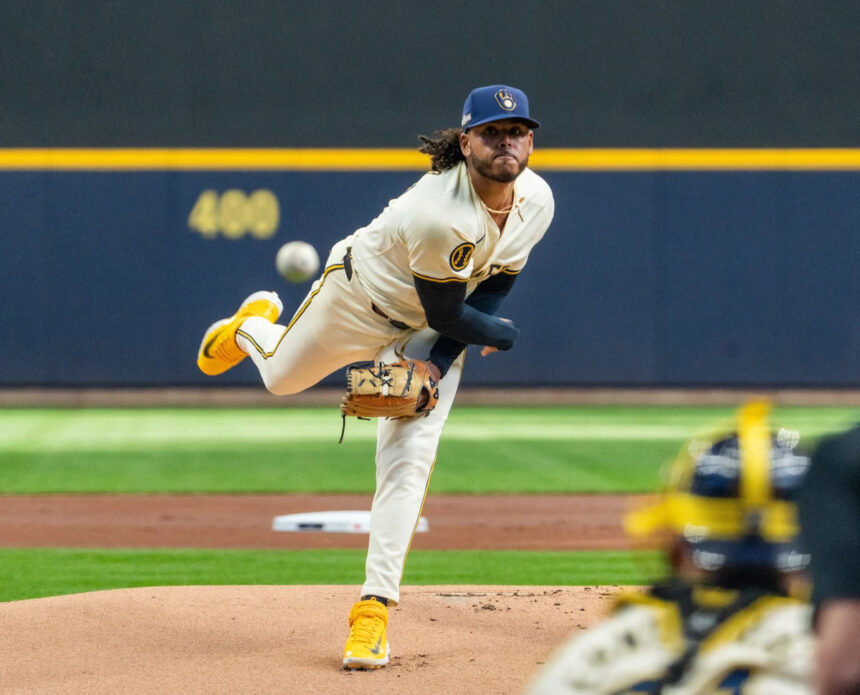
For the New York Mets, the acquisition is transformative. A rotation that was a major question mark now features a true No. 1 in Peralta, slotting ahead of Kodai Senga and Jose Quintana. It signals to the league and their fanbase that despite a disappointing 2023, the mission under Stearns is immediate contention. Peralta’s electric stuff—a deceptive fastball and a devastating slider—plays even better in the spotlight of New York. The pressure will be immense, but he has the demeanor and the arsenal to thrive.
For the Milwaukee Brewers, this marks the end of an era. Peralta was the last remaining member of the “Big Three” alongside Corbin Burnes and Brandon Woodruff. Trading him is a stark acknowledgment of the team’s economic realities and a strategic decision to retool. However, in landing Jett Williams, they acquire a potential franchise cornerstone. His versatility and offensive profile are perfect for the modern game. Brandon Sproat adds another arm to a pipeline that has consistently developed pitching talent. The Brewers’ front office, having held out for the proper return, believes this deal secures their long-term health.
Expert Analysis: Risks, Rewards, and the Road Ahead
From a pure value perspective, this trade is a fascinating case study. The Mets are acquiring peak performance, but it comes with inherent risk. Peralta is in his final year of his contract, meaning this could be a one-year rental unless the Mets can secure a massive extension. His injury history, including a 2022 shoulder issue,, though seemingly behind him, is a factor. The Mets are unequivocally in “go for it” mode, and Peralta makes them dramatically better.
The Brewers’ calculus is different. They maximized the value of an asset at its absolute peak. Jett Williams is the key. If he develops into the star many project, this trade will be remembered in Milwaukee as a painful but brilliant piece of business. The success of this deal for the Brewers won’t be judged in 2024, but in 2027 and beyond.
Prediction: Peralta will thrive in New York, posting another sub-3.00 ERA season and finishing in the top five of NL Cy Young voting. The Mets will be a playoff team. The Brewers will struggle offensively but remain competitive due to their pitching depth, while Williams will quickly become a top-20 prospect in all of baseball. The most likely next step? The Mets will sign Peralta to a five-year extension by the All-Star break, making him a cornerstone for their next championship push.
Conclusion: A Full-Circle Moment with Lasting Repercussions
The trade of Freddy Peralta from the Brewers to the Mets is more than a headline. It is a story of legacy, strategy, and the relentless pursuit of a championship. David Stearns, the architect who first identified Peralta’s potential as a teenager, has now cashed in his greatest chip to fuel his new team’s ascent. For Peralta, it’s a chance to dominate on the game’s biggest stage. For the Brewers, it’s a brave step into a new chapter, fortified by premium prospects.
This deal perfectly encapsulates the cycles of baseball. Players develop, executives move, and fortunes change. But the core transaction—the exchange of future potential for present glory—remains timeless. The Mets are betting on now. The Brewers are betting on tomorrow. And the entire National League will watch, knowing the landscape has been irrevocably altered by a reunion nine years in the making.
Source: Based on news from Yahoo Sports.