Arthur Fery Stuns Cobolli: Britain’s Unheralded Talent Creates Australian Open Day One Shock
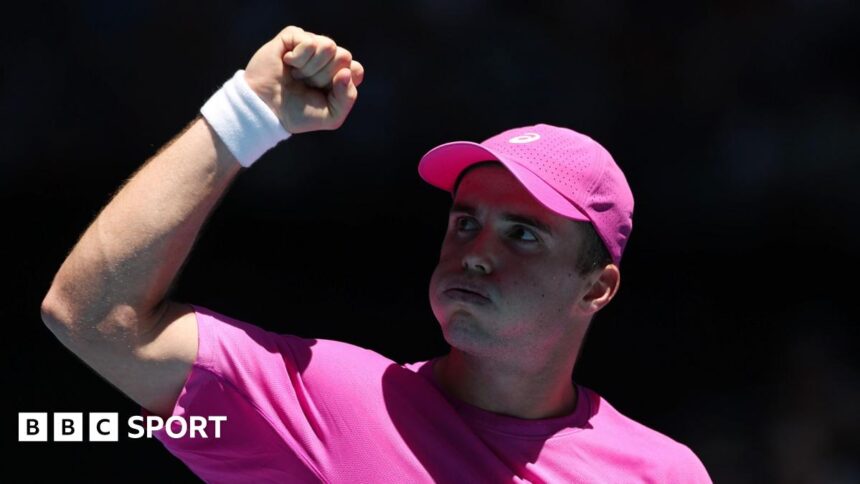
The Australian Open, a tournament steeped in the lore of legends and the scorching Melbourne sun, often writes its first dramatic chapter on day one. This year, the opening salvo was fired not by a seasoned champion, but by a smiling, unassuming British qualifier playing in his first main-draw Grand Slam outside of Wimbledon. Arthur Fery, the world number 185 and Britain’s sixth-ranked man, delivered the first major upset of the 2025 tournament, dismantling Italian 20th seed Flavio Cobolli in straight sets. In a performance blending tactical nous with relentless pressure, Fery announced himself on the global stage, proving his previous Wimbledon heroics were no mere fluke.
From Qualifying Queries to Centre Stage Triumph
For Arthur Fery, the path to the Rod Laver Arena was a testament to quiet perseverance. While the tennis world’s eyes were fixed on bigger names and brighter lights, the 23-year-old was navigating the gruelling qualifying rounds, a world away from the main-draw glamour. His main-draw debut at an overseas Grand Slam was earned the hard way. This context makes his victory not just an upset, but a monumental career milestone. Fery transitioned from the anonymity of the qualifying courts to the sun-drenched expanse of Melbourne Park’s showcourt with a composure that belied his experience. The significance of this moment for the former Stanford University standout cannot be overstated; it is the tangible reward for years of balancing academia and elite sport, a leap from collegiate courts to conquering a seeded player on one of tennis’s most iconic arenas.
The match dynamics were intriguing from the outset. Cobolli, a talented and fiery competitor, was visibly off-colour, grappling with a stomach issue that hampered his movement and power from the first ball. The Italian’s discomfort peaked at the end of a tightly contested first set, which he lost in a tie-break, prompting a swift exit for a medical timeout. However, to attribute Fery’s victory solely to his opponent’s ailment would be a grave disservice. The Brit masterfully exposed Cobolli’s physical limitations with intelligent, disciplined tennis.
- Relentless Depth and Accuracy: Fery pinned Cobolli behind the baseline, denying the Italian any opportunity to dictate or shorten points.
- Clinical Conversion: He converted break points with ruthless efficiency, applying scoreboard pressure that compounded Cobolli’s physical struggles.
- Mental Fortitude: Winning a first-set tie-break 7-1 against a seeded player, regardless of their health, requires immense mental strength and focus.
Anatomy of an Upset: Tactical Brilliance Meets Grand Slam Pedigree
Fery’s 7-6 (7-1), 6-4, 6-1 victory was a blueprint for how a qualifier can topple a seed. After navigating the first-set tie-break dominance, he never looked back. His game is built on a solid foundation: a reliable serve, crisp groundstrokes hit with deceptive weight, and an underrated net game honed on the grass courts of London. Against Cobolli, he executed a perfect match plan. He extended rallies, moved the Italian side-to-side, and patiently waited for errors or created openings for aggressive forehands. As Cobolli’s energy waned, Fery’s confidence soared, his game expanding with each game.
This was not entirely uncharted territory for Fery. In a post-match quip that revealed his growing belief, he noted, “It seems I like drawing 20th seeds at Grand Slams.” The reference was to his stunning four-set victory over Australia’s 20th seed, Alexei Popyrin, in the first round of Wimbledon 2024. That win was considered a career-defining moment, but one potentially confined to his favoured grass surface. This victory in Melbourne, on hard courts against a different style of opponent, signals a critical evolution. It proves Fery possesses a versatile, all-court game capable of translating across surfaces—the true mark of a player ready to climb the rankings.
Expert analysis of Fery’s game points to a high tennis IQ. He lacks the raw, thunderous power of some contemporaries but makes up for it with precision, variety, and impeccable timing. His transition from the American college system (NCAA) is also noteworthy. The team environment and competitive schedule at Stanford University have seemingly equipped him with a resilient mindset, a trait glaringly evident as he closed out the biggest win of his career without a hint of nerves.
What’s Next for Britain’s Newest Grand Slam Threat?
Arthur Fery’s triumph instantly reshapes the narrative of his season and potentially his career. The biggest win of his career (jointly with the Popyrin victory) comes with valuable ranking points and a massive financial boost, but more importantly, it delivers an immeasurable injection of self-belief. He is no longer just a British prospect or a Wimbledon curiosity; he is an Australian Open third-round contender.
Looking ahead, the draw opens up intriguing possibilities. The immediate challenge will be to avoid a let-down performance—a common pitfall after a career-best win. The unique pressures of following up a shock victory test a player’s professionalism and hunger. Based on his articulate and grounded post-match demeanour, Fery appears well-equipped to handle the newfound attention. His game, built on consistency rather than explosive shot-making, is the type that can trouble a variety of opponents, especially if he maintains the first-serve percentage and depth he displayed against Cobolli.
Predictions for Fery’s 2025 season must now be radically revised. A climb into the world’s top 120 seems a minimum target. More Grand Slam main-draw appearances are a certainty, and he will begin to earn direct entry into more ATP Tour events. The key will be consistency on the regular tour, translating this Grand Slam prowess into weekly results. For British tennis, Fery’s emergence provides vital depth behind the established names, offering a new and compelling storyline in the men’s game.
Conclusion: A Star is Born in Melbourne’s Crucible
The first day of the Australian Open is designed for surprises, but Arthur Fery’s masterclass was a shock with substance. It was a victory forged not from luck, but from a perfect storm of meticulous preparation, tactical intelligence, and seizing an opportunity with both hands. While Flavio Cobolli’s physical struggles were a factor, Fery was the architect of this upset, applying constant pressure and showcasing a mature, complete game that belongs at this level.
This win transcends a single match result. It marks the arrival of a legitimate, multi-surface Grand Slam competitor. Fery has moved from the periphery of British tennis to its exciting forefront, demonstrating that the notable Grand Slam scalp at Wimbledon was a sign of things to come, not a peak. As the Melbourne fortnight unfolds, all eyes will be on this poised 23-year-old to see if he can extend his dream run. One thing is certain: Arthur Fery is no longer a secret. He is the author of the Australian Open’s first great story, and the tennis world is eagerly awaiting the next chapter.
Source: Based on news from BBC Sport.