The Legacy of No. 34: Chris Morris and the Brooklyn Nets Jersey History
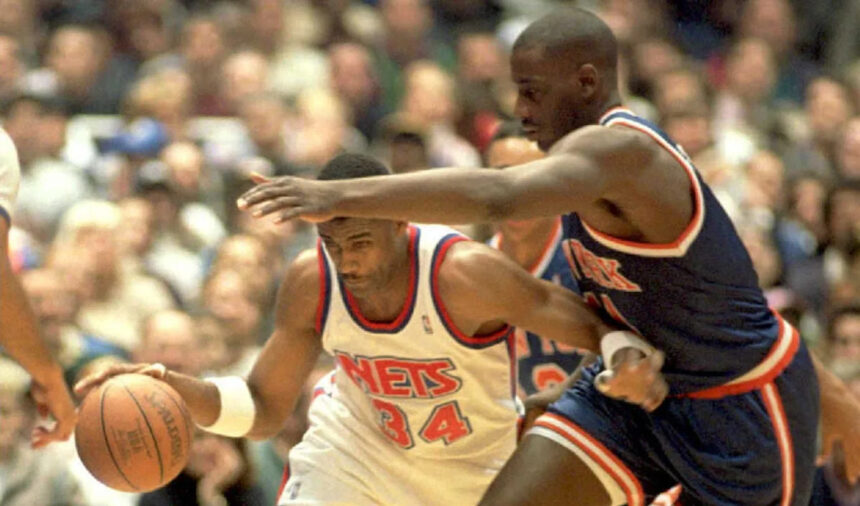
Across the sprawling tapestry of the Brooklyn Nets franchise, 52 jersey numbers have been worn by over 600 players. Each number carries a lineage, a story woven through eras of the ABA, the nomadic shifts from New Jersey to New York and back, and finally to the bright lights of Brooklyn. This journey through the team’s jersey history is more than a list; it’s an excavation of identity. Today, we focus on one of the most dynamic and complex threads in that fabric: jersey number 34. While seven players have donned the digits for the Nets, one man from a transformative era wore it with a unique, explosive flair that captured a moment in time—Chris Morris.
From Auburn to the Swamp: The Arrival of a High-Flyer
In 1988, the New Jersey Nets, anchored by a young core featuring Buck Williams and a rising star in point guard Mookie Blaylock, held the fourth overall pick in a draft rich with talent. With names like Mitch Richmond and Hersey Hawkins on the board, the Nets looked to the Southeastern Conference and selected Auburn’s Chris Morris. The Atlanta native was a breathtaking athlete, a 6’8” forward whose leaping ability and defensive versatility made him a tantalizing prospect. His selection signaled a commitment to athleticism and upside, a hope that he could be the dynamic wing to propel a franchise seeking relevance.
Morris’s rookie season was a promising glimpse of things to come. He didn’t start immediately, but his energy off the bench was palpable. He averaged 8.4 points and 4.2 rebounds, earning a spot on the NBA All-Rookie Second Team. More than the stats, it was the manner of his play that turned heads. In an era before highlight reels were a click away, Morris played with a kinetic, sometimes unpredictable, style that could electrify the Meadowlands. He was a transition terror, capable of finishing with powerful dunks or surprising agility for his size. His game was a harbinger of the modern, positionless forward, though the league wasn’t quite ready to define it as such.
The Pinnacle in New Jersey: A Versatile Force
By his third season, Chris Morris had cemented himself as a full-time starter. His peak with the Nets came in the early 1990s, a period of transition for the franchise. As the team cycled through coaches and roster changes, Morris remained a constant, evolving into one of the league’s most versatile and underrated two-way players. His statistical zenith arrived in the 1991-92 and 1992-93 seasons, where he averaged over 14 points and 6 rebounds per game.
Morris’s value, however, extended far beyond the box score. He was a defensive Swiss Army knife, tasked with guarding the opposing team’s most dangerous perimeter player, from explosive shooting guards to burly small forwards. Offensively, he was a multifaceted threat:
- Three-Point Pioneer: In an era that still viewed the three-pointer with skepticism, Morris embraced it. He led the Nets in three-pointers made for three consecutive seasons (1992-94), stretching defenses in a way many forwards of his size did not.
- Transition Engine: His ability to grab a defensive rebound and immediately ignite the fast break was a cornerstone of the Nets’ offense. He was a one-man fast break, a precursor to the point-forward role.
- Reliable Scorer: While not a classic go-to option, Morris could create his own shot with a solid mid-range game and an array of slashing moves to the basket.
His most memorable single-game performance came on April 8, 1993, against the Boston Celtics. Morris erupted for a career-high 40 points, showcasing his entire arsenal in a stunning display of his peak capabilities.
The Unfulfilled Promise and a Jersey’s Legacy
For all his talent and production, Chris Morris’s tenure in New Jersey is often viewed through a lens of “what could have been.” This perception is less about his individual failings and more about the context of the franchise. The Nets of the early ‘90s were perpetually on the cusp of playoff contention but lacked the superstar or cohesive roster to break through. Morris, for his part, was sometimes criticized for inconsistent focus and occasional on-court decisions that matched the unpredictable nature of his athletic gifts. He was a brilliant piece, but the puzzle around him never fully came together.
After seven seasons, 525 games, and over 6,000 points in a Nets uniform, Morris departed as a free agent in 1995, signing with the contending Utah Jazz to play alongside Karl Malone and John Stockton. His departure marked the end of an era for No. 34. In the decades since, the jersey has been worn sparingly, most notably by veteran big man Jason Collins during the 2013-14 season. Yet, Morris’s imprint remains the defining one for that number in Nets lore. He wasn’t a franchise-altering legend, but he was a homegrown star who represented a specific, exciting, and frustrating period for the team—a player whose game was arguably ahead of its time.
Expert Analysis: Morris’s Place in Nets and NBA History
Analyzing Chris Morris’s career requires a historical adjustment. In today’s NBA, a 6’8” forward who shoots threes at volume, switches defensively across multiple positions, and thrives in transition is not just valuable; he’s a coveted archetype. Morris was doing all of that in the early 1990s. His game was a prototype for players like Scottie Pippen (though without the playmaking genius) and a direct ancestor to the versatile wings that dominate today. His willingness to launch from deep—he attempted over 300 threes in three separate seasons with the Nets—was radical for a forward at the time.
Within the Nets’ franchise history, Morris’s legacy is secure. He ranks among the top 15 in several all-time categories for the franchise, including points, rebounds, and steals. He was a bridge between the Buck Williams era and the dawn of the Jason Kidd-led renaissance that would come years later. For fans who endured those often-middling seasons, Morris was a reason to tune in, a player capable of a breathtaking play that could shift the momentum of a game in an instant. He embodied the athletic hope of the Nets during a period of organizational uncertainty.
Conclusion: The Essence of Jersey History
The history of a jersey number is not reserved solely for the retired jerseys hanging from the rafters. It lives in the contributions of every player who has worn it, in the moments they created and the era they represented. Chris Morris’s tenure with the Nets as the premier wearer of No. 34 encapsulates this perfectly. He was a high draft pick who delivered on much of his promise, a versatile star whose style presaged the future of basketball, and a central figure for a franchise finding its way. As the Brooklyn Nets continue to build their future, remembering players like Morris is crucial. They are the connective tissue of a franchise’s identity, reminding us that legacy is built not just by championships, but by the dynamic, unforgettable players who, for a time, made the number on their back synonymous with excitement and possibility.
Source: Based on news from Yahoo Sports.