Jack Haley and No. 44: The Unlikely Thread in the Brooklyn Nets’ Jersey Tapestry
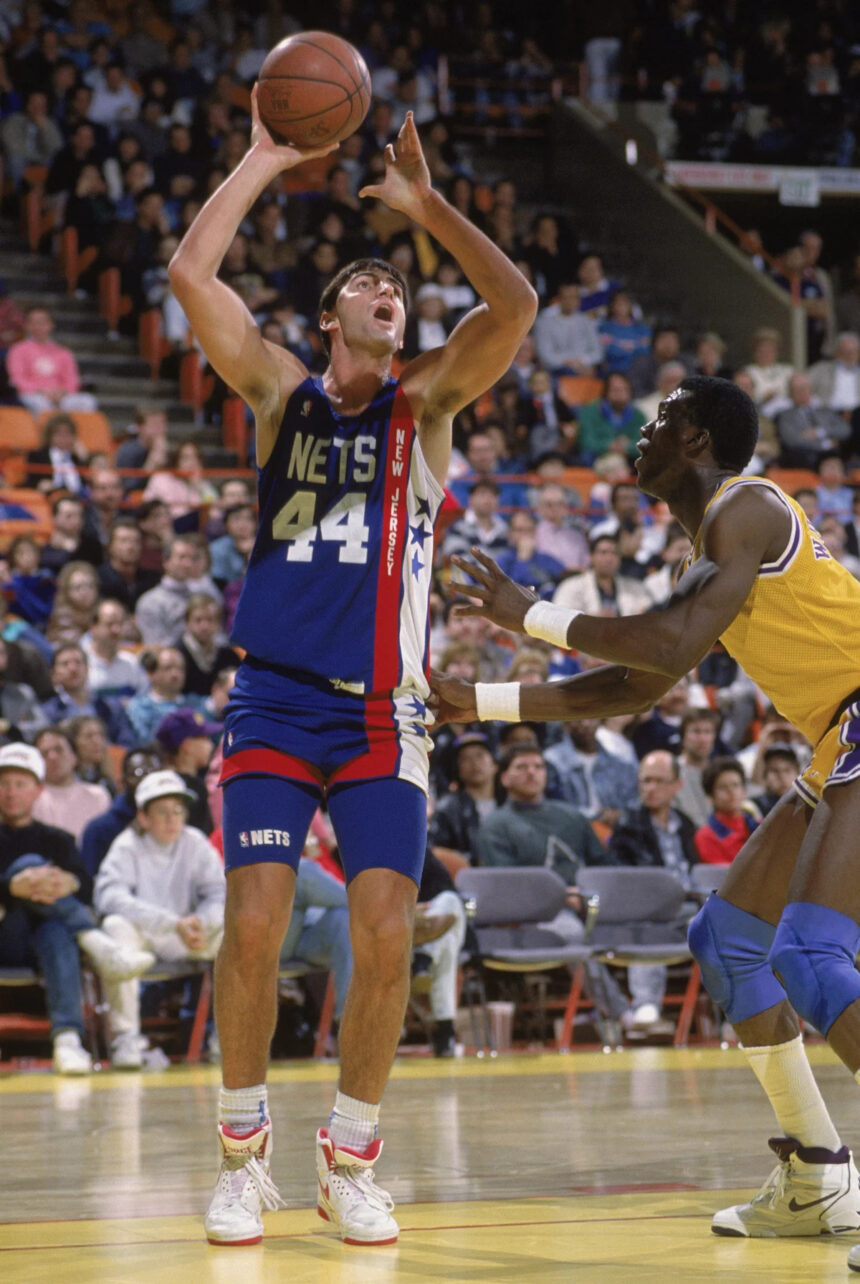
The history of the Brooklyn Nets is woven from a vibrant and complex tapestry of players, eras, and identities. From the ABA’s New Jersey Americans to the high-flying New York Nets of Julius Erving, through the New Jersey years and into the Brooklyn era, over 600 players have donned the uniform. They have worn just 52 jersey numbers, meaning each digit carries a legacy of its own, a story of multiple men who shared a number but often little else. In this ongoing chronicle of franchise lineage, some numbers evoke superstardom, while others, like No. 44, tell a more human story of resilience, role-playing, and an unexpected connection to basketball immortality. The tenth of twenty-one players to wear Nets No. 44, Jack Haley, embodies this latter narrative—a journey man whose two tours with the franchise bookended a career that would, improbably, place him at the epicenter of NBA history.
From Bruins to the Bulls: The Making of a Professional Role Player
Jack Haley’s path to the Nets began in the celebrated basketball crucible of UCLA. As a Bruin, he honed the skills that would define his professional career: toughness, rebounding, and a willingness to do the gritty work in the paint. Selected by the Chicago Bulls with the 87th overall pick in the 1987 NBA Draft—a testament to the depth of drafts in that era—Haley’s early years were a classic rookie struggle for footing. He played sparingly for the Bulls across two seasons, a young big man trying to find a niche in a league dominated by legendary centers. His break came not through a blockbuster trade, but through the transactional fine print of the league. In 1989, the New Jersey Nets, perpetually in search of serviceable frontcourt depth, claimed Haley off waivers. This move would begin his first, and most significant, tenure with the franchise.
Haley’s arrival in New Jersey was understated, but it offered him a genuine opportunity. The Nets of the late 80s and early 90s were a team in transition, providing minutes for a player of Haley’s hustle. He was not a star, nor was he expected to be. His role was clear:
- Provide physical interior presence off the bench.
- Grab rebounds and set punishing screens.
- Use his fouls strategically against more talented opponents.
- Bring energy and professionalism to practice and the locker room.
For two seasons, Haley did exactly that. He appeared in 108 games for the Nets, averaging 3.4 points and 2.9 rebounds in about 10 minutes per game. The stats were modest, but they represented the honest toil of an NBA journeyman. In 1991, he departed via free agency for the Los Angeles Lakers, beginning a basketball odyssey that would lead him back to New Jersey under the most extraordinary of circumstances.
The Championship Detour and a Historic Friendship
Haley’s career after his first Nets stint is a crucial chapter in understanding his legacy. After a season with the Lakers and a brief stop with the San Antonio Spurs, he returned to the Chicago Bulls for the 1995-96 season. This move was not merely a homecoming; it was a strategic signing that would link Haley to basketball lore. The Bulls, led by Michael Jordan and Scottie Pippen, were assembling a historic team. They also had a famously mercurial superstar in Dennis Rodman. The Bulls’ management identified Haley, known for his easygoing personality and professionalism, as the ideal “companion” and stabilizing influence for Rodman.
This role, often dubbed the “Rodman Whisperer,” became Haley’s primary function. He was Jordan’s teammate, Pippen’s teammate, but most notably, Rodman’s designated friend and minder. His presence was considered so vital to team chemistry that he was kept on the roster specifically to help manage Rodman’s eccentricities. While Haley played in only 38 games that season, his contribution was measured in cohesion, not statistics. He was on the bench as the Bulls rampaged to a then-record 72 wins and the 1996 NBA Championship, earning a ring for his crucial off-court role. He had become an integral part of one of the greatest teams ever assembled, a footnote with a front-row seat to history.
Return to New Jersey: The Veteran’s Final Act
With a championship ring in hand, Jack Haley’s journey circled back to its roots. In 1997, he signed with the New Jersey Nets for a second time. This homecoming was for a different player and a different team. Haley was now a seasoned veteran, a champion who had shared a locker room with icons. He returned to a Nets squad that was young and on the rise, featuring the budding talents of Keith Van Horn and Kendall Gill. His role had evolved from energetic backup to sage mentor. He played 43 games over two seasons, providing minutes when called upon and a wealth of experience gathered from his unique career path.
His final NBA game was played in a Nets uniform in 1998. When he retired, he left behind a career stat line that was humble but a career story that was rich. He was a bridge between eras: a player who competed in the physical late-80s, witnessed the global explosion of the NBA in the 90s, and contributed to its most iconic team. His two stints with the Nets, six years apart, framed this remarkable journey, making the franchise’s No. 44 jersey a symbol of persistence and professional adaptability.
Legacy of No. 44: Haley’s Place in the Nets’ Tapestry
In the grand narrative of the Brooklyn Nets, Jack Haley’s name will never headline the franchise’s all-time lists. The number 44 will more readily be associated with other contributors in the team’s long history. Yet, to dismiss Haley’s story is to miss the point of sports history—it is built not only by superstars but by the supporting cast that makes their success possible. Haley’s legacy is multifaceted:
- A Nets Role Player: He fulfilled his on-court duties with consistency during two separate tenures.
- A Championship Catalyst: His off-court role with the 1996 Bulls is a legendary piece of NBA folklore, proving value exists beyond the box score.
- A Jersey Number Chronicler: As the 10th of 21 to wear No. 44, he represents the layered, interconnected stories that each number holds.
For fans collecting the threads of franchise history, Haley’s No. 44 is a compelling strand. It connects the hard-working Nets of the early 90s to the dynasty of the 90s Bulls and back to the hopeful Nets of the late 90s. It is a reminder that every jersey has a story, and sometimes, the most unexpected stories are those that travel through the heart of greatness before coming home. In the Brooklyn Nets’ vast jersey history, Jack Haley’s No. 44 is a testament to the enduring value of the professional who plays his part, wherever that part may lead.
Source: Based on news from Yahoo Sports.