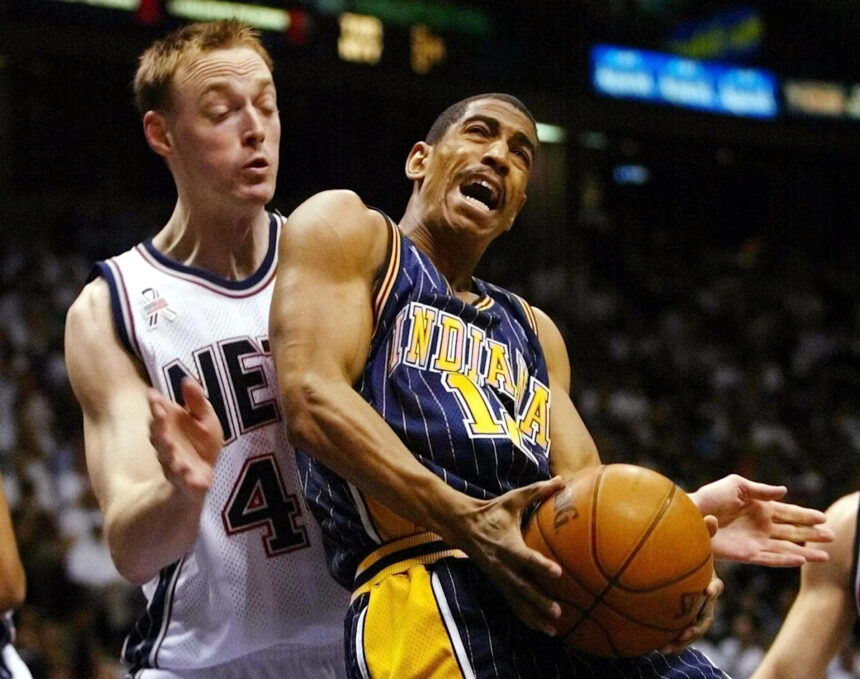
The Legacy of No. 44: Keith Van Horn’s Pivotal, Yet Fleeting, Era with the Nets
In the sprawling tapestry of the Brooklyn Nets’ jersey history, spanning over 600 players and 52 numbers from their ABA origins to the modern NBA, certain digits carry the weight of an era. The No. 44 jersey, worn by 21 different players in franchise lore, is one such number. It evokes a specific time: the late 1990s and early 2000s, a period of tantalizing hope and eventual heartbreak for the then-New Jersey Nets. And no player better encapsulates that complex, transitional period than the 13th man to don the number, forward Keith Van Horn. His story is not one of a career-long tenure or championship glory, but of a foundational piece whose arrival signaled ambition and whose departure, just five seasons later, cleared the runway for an NBA Finals ascent. This is the nuanced legacy of Keith Van Horn in Nets’ No. 44.
- The Arrival: A Draft-Night Shakeup and a New Face of the Franchise
- The Peak and the Pivot: Van Horn’s Role in a Resurgent New Jersey
- The Trade That Changed Everything: End of an Era, Dawn of a Dynasty
- Expert Analysis: Van Horn’s Lasting Impact and Jersey Number Legacy
- Conclusion: A Complicated, But Essential, Chapter
The Arrival: A Draft-Night Shakeup and a New Face of the Franchise
The 1997 NBA Draft was a watershed moment for the New Jersey Nets. Holding the seventh overall pick, the franchise’s trajectory was altered by a stunning, near-draft-night deal. The Philadelphia 76ers selected the polished, scoring sensation Keith Van Horn out of Utah with the second overall pick, but he was never meant to play in Philadelphia. In a pre-arranged trade, the Nets sent their No. 7 pick (Tim Thomas), veteran forwards Michael Cage and Don MacLean, and cash to the Sixers for the draft rights to Van Horn. The message was clear: New Jersey had acquired a ready-made star.
Van Horn entered the league with immense expectations. A 6’10” forward with a smooth shooting stroke, advanced footwork, and a high basketball IQ, he was seen as the perfect modern offensive weapon. He wasn’t just another rookie; he was anointed as the new cornerstone for a franchise desperate to escape the lottery and establish a winning identity. Wearing No. 44, he immediately delivered, finishing second in the 1998 Rookie of the Year voting (to Tim Duncan) and averaging 19.7 points and 6.6 rebounds. Alongside fellow young star Stephon Marbury, Van Horn formed the core of a promising, high-scoring duo that made the Nets a league-pass curiosity and a playoff team by his second season.
The Peak and the Pivot: Van Horn’s Role in a Resurgent New Jersey
For several seasons, Keith Van Horn was the Nets’ most consistent and potent offensive force. His game was a blend of finesse and fundamental grit:
- Elite Perimeter Shooting: For a man his size, Van Horn’s ability to stretch the floor was revolutionary for the Nets’ offense. He was a constant three-point threat, forcing opposing power forwards to venture far from the basket.
- Crafty Post Play: He possessed a deep bag of post moves, including a reliable turnaround jumper and a clever up-and-under game, making him a difficult cover for smaller forwards.
- Clutch Scoring Mentality: Van Horn was never afraid of the big moment, often serving as the go-to option in late-game situations during his tenure.
He averaged over 19 points per game in three of his first four seasons, earning a reputation as one of the league’s most skilled forwards. In the 2001-02 season, he played a key role in helping the Nets, now led by the dynamic point guard Jason Kidd, secure a franchise-record 52 wins. However, the playoffs that year revealed a harsh reality. While effective, Van Horn’s defensive limitations and lack of elite athleticism were exposed against the league’s best teams. The Nets reached the NBA Finals, but Van Horn struggled, and the team was swept by the Los Angeles Lakers. The front office, led by Rod Thorn, faced a critical decision: stay the course or make a bold move to get over the hump.
The Trade That Changed Everything: End of an Era, Dawn of a Dynasty
On July 30, 2002, the Keith Van Horn era in New Jersey ended as abruptly as it began. In a blockbuster trade, the Nets sent Van Horn and Todd MacCulloch to the Philadelphia 76ers for the league’s reigning Defensive Player of the Year, Dikembe Mutombo. The symbolism was stark. The Nets traded their finesse, high-scoring forward for a defensive titan and veteran leader. The move was universally seen as an effort to match up with the dominant big men of the Western Conference, like Shaquille O’Neal and Tim Duncan.
While the Mutombo fit was imperfect, the trade’s deeper significance was its admission that the team’s identity needed to change. Van Horn, for all his scoring brilliance, represented an older blueprint. His departure solidified Jason Kidd as the undisputed heart of the team and allowed Richard Jefferson to step into the starting lineup, adding a level of athleticism and defensive versatility the team previously lacked. The Nets returned to the Finals the very next season. Thus, Van Horn’s legacy is forever tied to this pivot; he was the valuable asset sacrificed to transform a very good team into a perennial contender.
Expert Analysis: Van Horn’s Lasting Impact and Jersey Number Legacy
Evaluating Keith Van Horn’s place in Nets history requires a dual lens. Statistically, he was a success. He ranks among the franchise’s all-time leaders in points per game and was a primary offensive engine during a crucial revitalization period. He helped bring respectability and playoff basketball back to the Meadowlands.
However, his historical impact is more nuanced. He is often remembered as the “guy who was traded for Mutombo” or the “star before Jason Kidd arrived.” This undersells his importance. Van Horn was the bridge between the dreary late-90s and the exhilarating back-to-back Finals teams. He maintained the team’s competitiveness, making it an attractive destination for a superstar like Kidd. In many ways, he helped build the foundation that later players soared upon. Within the lineage of Nets wearing No. 44—a group that includes figures like Buck Williams and Cliff Robinson—Van Horn stands out as the number’s most potent scorer and a defining personality of his specific moment in time.
Conclusion: A Complicated, But Essential, Chapter
The journey of the Brooklyn Nets, from ABA charter member to NBA mainstay, is built on chapters like Keith Van Horn’s. His tenure in No. 44 was not a storybook career of a lifer, but a compelling, five-season snapshot of ambition, peak performance, and strategic evolution. He arrived as a savior, peaked as an All-Star-level scorer, and was traded as a key piece in a championship-caliber gamble. In the grand narrative of the franchise’s 52 jersey numbers, Van Horn’s No. 44 represents a specific and vital turning point. It is a reminder that not all legacy players are legends; some are essential catalysts, whose value is measured both in the points they scored and in the future their departure helped to create. For Nets fans of a certain generation, the sight of No. 44 will forever evoke the smooth jumper, the crafty moves, and the complex, promising era of Keith Van Horn.
Source: Based on news from Yahoo Sports.