Brosnan, Prince Naseem and the Embrace That Never Happened: A Ghost at the Premiere
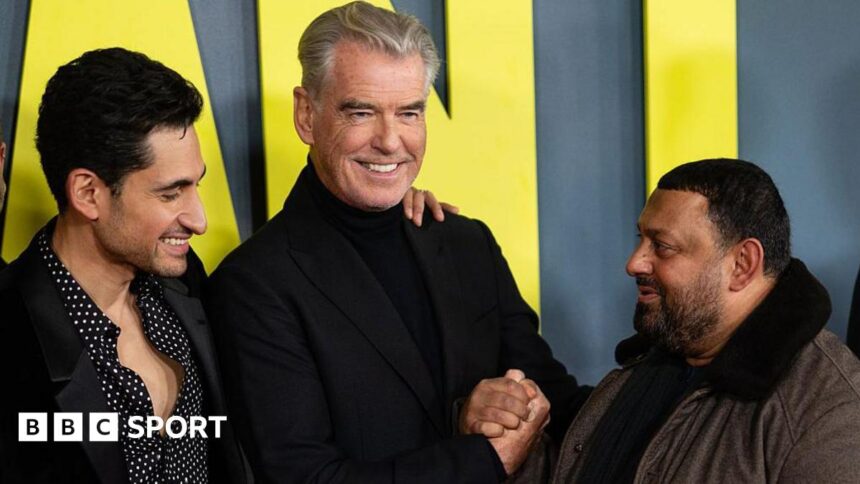
The flashbulbs popped, the velvet rope fell away, and three men stood together on a London red carpet. To one side, Pierce Brosnan, cinematic icon. At the centre, Amir El-Masry, the actor tasked with a monumental portrayal. And to his right, the original himself: Prince Naseem Hamed, the former featherweight world champion whose flamboyant genius once captivated and divided the sporting world. It was the UK premiere of ‘Giant,’ the long-awaited biopic of Hamed and his mercurial relationship with trainer Brendan Ingle. The photo-op was perfect, a convergence of star power and real-life legacy. Yet, in that very moment of celebration, a profound and palpable absence lingered—the ghost of an embrace that never was, and now never can be.
The Unhealed Wound: A Champion’s Enduring Regret
For years, the story of Prince Naseem Hamed has been one of breathtaking athleticism, audacious showmanship, and a dramatic, fractious split from the Sheffield gym and the man who moulded him. Brendan Ingle, the wise, eccentric Irish sage of the Wincobank gym, didn’t just teach Naz how to fight; he architectured the unorthodox style and instilled the confidence that became his trademark. Their fallout, as Hamed’s star ascended into the global stratosphere, was bitter and public. It became the defining rupture of his career, a schism that time did not mend before Ingle’s passing in 2018.
Now 51, Hamed confronts this legacy head-on in ‘Giant.’ Speaking to BBC Sport, the former champion voiced a regret that has matured with age, stripped of the bravado of his youth. “I always wanted that to happen,” Hamed admitted, referring to a reconciliation with his mentor. The film’s narrative, and its very premiere, became a vessel for this unresolved history. Seeing El-Masry and actor Aaron Pierre (who plays Ingle) recreate their bond and its breakdown on screen offered Hamed a haunting vision of an alternate reality. It was an imagined moment that gave Prince Naseem Hamed the vision of what reality could have been—a path not taken, a conversation never had, a final, forgiving hug that remained forever out of reach.
Giant: More Than a Biopic, A Cathartic Reckoning
The film ‘Giant’ is positioned not merely as a highlight reel of ring entrances and knockout punches, but as a deep psychological exploration of a father-son dynamic gone awry. The pivotal part of the story is not the world titles, but the silence that followed the triumph. The reconciliation with Brendan Ingle which never occurred is the film’s aching, central core. It transforms the project from a sports movie into a universal tale of pride, legacy, and the cost of ambition.
For Hamed, attending the premiere was an act of confronting his own history. Watching the dramatization forced a reflection on the choices that led to the irreversible estrangement. Experts in sports psychology often note that the end of an athlete’s career triggers a period of profound reckoning, where the suppressed costs of single-minded pursuit come due. For Naz, this reckoning is inextricably tied to his relationship with Ingle. The film serves as a public catharsis, laying bare the emotional complexity behind the cartoonish persona. Key themes the film and this moment highlight include:
- The Price of Genius: How Ingle’s unique tutelage created an unstoppable force, but perhaps one that outgrew its creator.
- Pride Before the Fall: The collision of two immense wills—the mentor’s communal, humble gym ethos versus the protégé’s individual, global superstardom.
- The Irreversibility of Time: The stark truth that some ruptures, delayed too long, become permanent through circumstance alone.
- Legacy Beyond the Belt: How a champion is ultimately defined not just by wins, but by the relationships he sustains and, painfully, those he loses.
Analysis: The Red Carpet as a Stage for Unfinished Business
The presence of Pierce Brosnan at the premiere adds a fascinating layer of meta-commentary. Brosnan, an actor famed for playing a fictional icon (James Bond), stood beside a real-life icon confronting the myth of his own making. It was a juxtaposition that underscored the theme of persona versus person. Naz, the ‘Prince,’ was always a character—a brilliant, arrogant, captivating performance. The man, Naseem Hamed, is now dealing with the aftermath of that performance’s third act.
This public moment of reflection is rare in the often-defensive world of elite sports. Hamed’s candid admission of regret signals a maturity and a willingness to engage with his narrative’s shadows. It also serves as a powerful, cautionary tale for the current generation of athletes. In the era of entourages and transactional relationships, the profound bond between coach and athlete remains the sport’s most sacred and most fragile. The Hamed-Ingle story exemplifies its potential and its peril. The analysis suggests that ‘Giant’ will resonate not because it shows how high Naz flew, but because it examines why the connection that launched him was ultimately severed, and the hollow space that remained.
Predictions: How This Reckoning Will Reshape the Hamed Legacy
The release of ‘Giant’ and Hamed’s accompanying vulnerability mark a significant turning point in how his legacy will be perceived. We can predict several outcomes:
- Humanization of the Caricature: A new audience, unfamiliar with his ring dominance, will encounter a nuanced story of talent and tragedy, softening the edges of his villainous persona.
- Renewed Appreciation for Ingle’s Method: The film will spark a resurgence of interest in Brendan Ingle’s philosophical, holistic approach to boxing and community, cementing his status as a true sporting revolutionary.
- A Catalyst for Private Healing: While public reconciliation is impossible, this process may allow Hamed to find a private peace, potentially strengthening his ties with the Ingle family and the Sheffield community he left behind.
- Elevation of the Story’s Status: This is no longer just a boxing story. It enters the canon of great, tragic sporting narratives—akin to the complexities of Ali or Tyson—where the inside-the-ring brilliance is forever intertwined with outside-the-ring turmoil.
Conclusion: The Echo of the Unspoken Embrace
The image from the premiere will endure: the star, the actor, and the legend, smiling for the cameras. But the true power of that moment lies in the invisible space between them—a space occupied by the memory of Brendan Ingle. The regret the former world champion has learned to live with is not a weight he has discarded, but one he has finally chosen to acknowledge and articulate. In doing so, Prince Naseem Hamed completes a different kind of courageous act, far from the bright lights of the ring.
He steps out of the caricature and into the complicated truth of being human, where the most painful defeats sometimes occur after the final bell has rung. The embrace with Ingle will never happen in this world. But by allowing his story to be told in all its raw, unvarnished glory, Hamed extends a different kind of embrace: one to his past, to his mentor’s memory, and to the fans who must now reconcile the prince with the man. In the end, ‘Giant’ is not about the reconciliation that failed to happen in life, but about the understanding that, through story and shared regret, can finally begin.
Source: Based on news from BBC Sport.