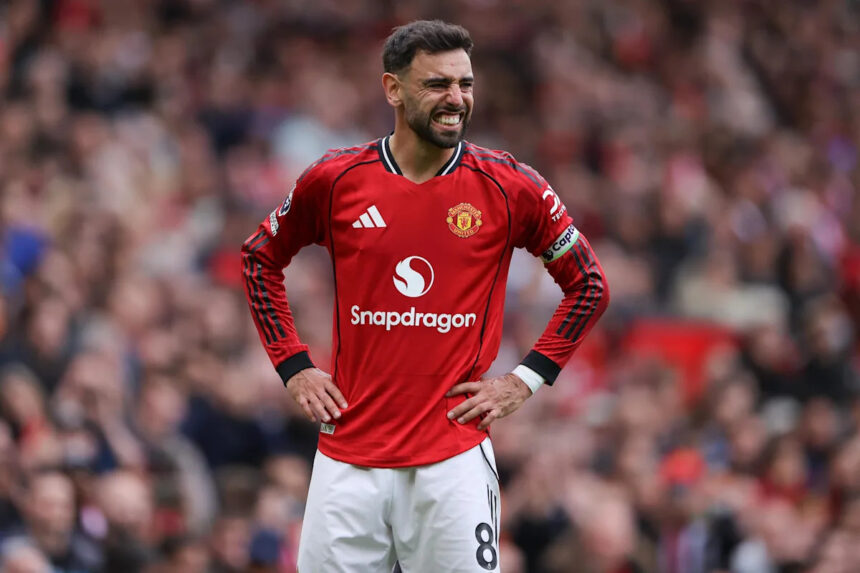
Bruno Fernandes Named FWA Footballer of the Year: The Maestro Who Reclaimed United’s Throne
In a season defined by resurgence, redemption, and relentless creativity, one name has risen above the din of English football. Bruno Fernandes, the talismanic captain of Manchester United, has been officially named the FWA Footballer of the Year for the 2025/26 season. The award, voted on by approximately 900 members of the Football Writers’ Association, marks a seismic moment for the club. It is the first time a United player has claimed the prestigious honor since Wayne Rooney in 2010—a 16-year drought that underscores just how monumental this achievement is for both the player and the institution.
This is not merely a popularity contest. The FWA award is a barometer of influence, consistency, and technical brilliance, judged by the sharpest eyes in the game. Fernandes has not only met that standard; he has redefined it. With a blend of visionary passing, relentless work rate, and a captain’s steel, he has dragged Manchester United back to the UEFA Champions League and, in doing so, etched his name alongside the greats of English football history.
The Numbers That Tell the Story: Assists, Goals, and History
Let’s talk statistics, because Fernandes’ campaign is a statistical marvel that belongs in the pantheon of Premier League greatness. At the time of writing, the Portuguese playmaker has amassed eight goals and 19 assists in 32 Premier League appearances. But those 19 assists are not just a number—they represent a chase for immortality. Fernandes is currently on the verge of matching the all-time single-season assists record, a benchmark set at 20 by the legendary Thierry Henry and the modern genius Kevin De Bruyne.
Here is why that context matters:
- Consistency over chaos: Unlike many flair players who fade in winter, Fernandes has delivered in every phase of the season. His assist tally is not padded by hat-tricks against minnows; it spans wins over title contenders and gritty away fixtures.
- Chance creation king: Beyond the raw assists, his big chances created per 90 minutes ranks among the top three in Europe’s top five leagues. He is the engine that turns defense into attack in a single, weighted pass.
- Leadership through output: Eight goals from midfield is a haul that would satisfy most strikers. His ability to arrive late in the box, convert penalties with ice in his veins, and score from range has made him a dual threat that defenses cannot solve.
If Fernandes secures that 20th assist in the remaining fixtures, he will not just equal a record; he will have done so while wearing the armband for a team that was written off at Christmas. That is the stuff of legend.
The Michael Carrick Effect: A Second-Half Surge That Silenced the Critics
The most compelling chapter of this story is the transformation under interim manager Michael Carrick. When Carrick took the reins, United were languishing in mid-table, their Champions League hopes flickering like a candle in a storm. Fernandes, however, did not waver. Instead, he became the focal point of a tactical revolution.
Since Carrick’s appointment, United have won 10 of their 14 fixtures, a run that has secured a top-four finish with three games to spare. This is not a coincidence. Carrick, a former midfield maestro himself, unlocked Fernandes by giving him greater license to roam between the lines, freeing him from defensive duties that had shackled his creativity under previous regimes.
Expert analysis: What we are witnessing is a symbiotic relationship. Carrick understands the weight of the United shirt; Fernandes wears it with pride. The manager has built a system where the number 8 is the fulcrum—dropping deep to collect possession, then surging forward to link with wingers and runners. The result? A midfield general who controls tempo, dictates transitions, and delivers the final ball with surgical precision.
This second-half surge has not only salvaged the season but has also silenced the doubters who questioned whether Fernandes could lead a team under pressure. He has answered emphatically: with a Champions League qualification, a personal trophy, and a place in the record books.
Why the FWA Voted for Fernandes: Beyond the Trophies
The Football Writers’ Association does not vote for the loudest player or the one with the most Instagram followers. They vote for the player who has the most profound impact on the pitch, week in and week out. Fernandes has been exactly that. But why did he edge out other contenders like Erling Haaland, Bukayo Saka, or Phil Foden?
The intangible factor: Fernandes is a totemic presence. In a season where Manchester United needed a leader to drag them out of the mud, he did not hide. He took the ball in tight spaces, he demanded it when others shied away, and he delivered in the moments that mattered most. His performance in the 3-1 win over Aston Villa—where he recorded two assists and a goal—was a microcosm of his season: relentless, intelligent, and decisive.
Predictions for the future: With this award in his pocket, Fernandes is now entering the conversation as one of the Premier League’s all-time great midfielders. If he maintains this form into next season’s Champions League campaign, do not be surprised to see him on the shortlist for the Ballon d’Or. At 31, he is in his prime, and his football intelligence suggests he can sustain this level for another three to four years. United fans should savor this era, because the post-Ferguson wilderness is officially over.
The Rooney Echo: A United Captain Reclaims the Crown
The last Manchester United player to win the FWA Footballer of the Year was Wayne Rooney in 2010. That season, Rooney scored 34 goals and dragged a flawed United side to within touching distance of the title. Fernandes’ 2025/26 campaign mirrors that narrative in uncanny ways. Both players carried the weight of a club in transition. Both were captains who led by example. And both have now been recognized by the journalists who see the game beyond the highlights.
But there is a crucial difference: Rooney’s award came in a season where United finished second. Fernandes has delivered a top-four finish that secures Champions League revenue and prestige. That financial and competitive boost cannot be overstated. It allows United to attract elite talent in the summer transfer window, and it gives Carrick a platform to build a genuine title challenge.
Strong conclusion: This is not just a redemption story for Bruno Fernandes; it is a redemption story for Manchester United. The club that once dominated English football has found its leader again. The FWA award is the validation that the rebuild is working, that the culture is shifting, and that the captain is the cornerstone. As Fernandes lifts that trophy, he does so not as an individual star, but as the symbol of a sleeping giant that has finally opened its eyes.
The 2025/26 season will be remembered as the year Bruno Fernandes silenced the noise and wrote his name alongside legends. The record chase continues. The Champions League anthem awaits. And for the first time in 16 years, a Manchester United player stands alone as the best in England. The journey is far from over—but the destination is now in sight.
Source: Based on news from Yahoo Sports.