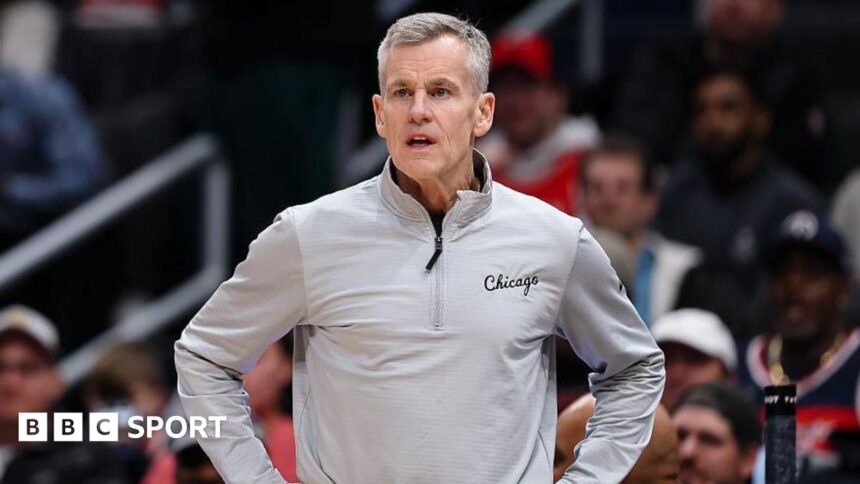
Billy Donovan’s Era Ends: Bulls Head Coach Resigns After Six Seasons
The winds of change are howling through the United Center. In a move that signals a long-awaited pivot, the Chicago Bulls and head coach Billy Donovan have mutually agreed to part ways, with Donovan resigning from his post after six seasons. The decision, confirmed by the organization on Monday, closes a chapter defined by fleeting hope, persistent injury woes, and ultimately, unmet expectations. Donovan’s departure, coming just weeks after a major front office shakeup, unequivocally marks the end of an era and the beginning of a critical rebuild for one of the NBA’s most storied franchises.
Donovan’s exit was framed as a resignation, stemming from what he called “thoughtful and extensive discussions” with ownership. While the Bulls reportedly wanted to retain him despite firing executive vice president of basketball operations Arturas Karnisovas and general manager Marc Eversley in early April, Donovan chose to step away. With a contract option for the 2024-25 season on the table, the 66-year-old coach effectively turned down a chance to continue, opting instead to “allow the search process to unfold” for a new leader. This move spares the organization a difficult decision and grants Donovan a graceful exit, but it leaves a gaping hole on the sidelines as Chicago stares down an uncertain future.
A Tenure of “What Ifs” and Near Misses
Billy Donovan arrived in Chicago in 2020 with a sterling reputation, built on successful college tenures at Florida and a respected stint with the Oklahoma City Thunder. His mission was clear: elevate a floundering team back to relevance. For a brief, electrifying moment in the 2021-22 season, it seemed he had succeeded. The Bulls, powered by the trio of Zach LaVine, DeMar DeRozan, and Nikola Vučević, roared out to an Eastern Conference-best start. The city buzzed with a belief not felt since the Derrick Rose era.
However, that promise proved fragile. The core’s stylistic limitations on defense, coupled with catastrophic injury luck—most notably to defensive anchor Lonzo Ball, who missed over two full seasons—exposed the roster’s flaws. The Bulls’ identity became one of gritty, mid-range heavy offense that often stalled in crunch time against elite competition. Under Donovan, the team was consistently competitive but never a true contender:
- Regular Season Record: 221-225 (.495) over six seasons.
- Playoff Appearances: Two (2022, 2023), both ending in first-round exits.
- Defining Limitation: A persistent struggle to finish above .500 and secure a top-six playoff seed, leading to two consecutive play-in tournament losses and a complete miss this past season.
Donovan’s coaching acumen was never in serious question; he maximized the talent available, particularly unlocking an All-NBA season from DeRozan. Yet, the roster construction, plagued by a lack of shooting, perimeter defense, and youthful athleticism, created a ceiling the most savvy coaching couldn’t break through. The partnership between Donovan and the front office reached its logical, if somber, conclusion.
The Ripple Effect: Why Now, and What’s Next for the Bulls?
The timing of Billy Donovan’s resignation is as significant as the act itself. The dismissal of Karnisovas and Eversley on April 6th was a clear signal from ownership that the current trajectory was unacceptable. The new head of basketball operations, whoever that may be, will undoubtedly want to select their own coach to lead the new vision. Donovan’s decision to resign preempts that inevitable power dynamic and allows the incoming executive a clean slate.
This sequence of events points to a full-scale organizational rebuild. The Bulls are not looking for a coach to tweak the edges of the existing core. They are seeking an architect for a new foundation. This fundamentally alters the profile of their ideal candidate. The search will likely prioritize:
- A Developer of Young Talent: With an aging roster and limited draft capital, the next coach must excel at nurturing prospects.
- A Modern Tactical Mind: The NBA is dominated by pace, space, and three-point shooting—areas where the Bulls have lagged.
- Patience and Process: This will not be a quick fix. The new coach must align with a long-term, potentially painful, team-building strategy.
Names like former Charlotte Hornets coach James Borrego (known for offensive innovation), current top assistants such as Denver’s David Adelman or Boston’s Charles Lee, and even college coaches with NBA pedigrees will immediately surface in speculation. The key will be finding a philosophical partner for the yet-to-be-named lead executive.
Donovan’s Legacy and Future: A Crossroads for Both Sides
Assessing Billy Donovan’s legacy in Chicago is an exercise in nuance. He was not a failure, but nor was he the savior some hoped for. He provided stability and professionalism during a transitional period for the franchise. He navigated immense adversity, particularly the bizarre and devastating injury to Lonzo Ball, with unwavering composure. He helped restore a baseline level of respectability, but in a results-driven league, a .495 win percentage and no playoff series wins will be the headline of his tenure.
For Donovan, this resignation offers a chance to reset. At 66, he remains one of the most respected minds in basketball. His future options are plentiful:
- An Immediate Return: Several teams with veteran-ready rosters (like the Los Angeles Lakers, should a vacancy arise) could value his experience and steady hand.
- A Broadcasting Role: His analytical mind and calm demeanor would translate well to television.
- A Strategic Sabbatical: Taking a year to observe the league before jumping back in for the right opportunity.
Donovan leaves Chicago with his reputation intact, a respected coach who simply couldn’t overcome the roster and injury challenges presented to him. The divorce feels amicable, born of a shared recognition that the path forward required a new voice.
The Daunting Road Ahead for a Iconic Franchise
The Chicago Bulls now stand at their most critical juncture in over a decade. The decisions made in the coming months—hiring a top basketball executive, who then selects the head coach—will chart the course for the next half-decade. The challenges are monumental: an expensive, aging core with limited trade value, a depleted war chest of future draft picks, and a fanbase growing increasingly impatient for a return to glory.
The resignation of Billy Donovan is the first, definitive step in acknowledging that the “competitive rebuild” model has run its course. The play-in tournament is no longer the goal. The mission must now be to construct a roster capable of competing for championships, not just playoff berths. This process will require tough decisions on beloved players, a potential step backward in the win column, and absolute alignment from ownership down to the coaching staff.
As the search for a new leader begins, the shadow of the Jordan-era dynasty looms less as a motivator and more as a reminder of how far the franchise has to climb. Billy Donovan’s tenure was a bridge between eras—from the post-Thibodeau chaos to a semblance of structure. Now, the bridge has been crossed. The hard work of building something lasting on the other side truly begins. The resignation is not an ending, but a necessary and sobering new beginning for the Chicago Bulls.
Source: Based on news from BBC Sport.