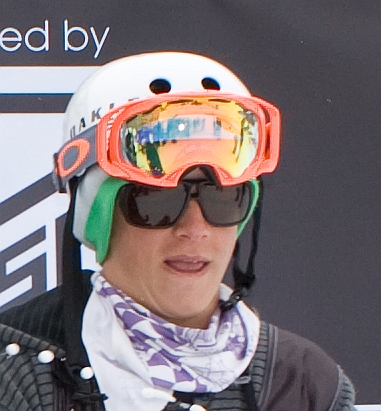
Canadian Snowboard Icon Mark McMorris Sidelined from Olympic Big Air After Scary Crash
The high-flying, gravity-defying world of Olympic snowboarding was dealt a sobering blow today in Livigno. Mark McMorris, Canada’s legendary slopestyle and big air pioneer, has been forced to withdraw from the men’s big air qualifying at the Milano Cortina 2026 Winter Games following a significant crash in training. The announcement, delivered by the athlete himself via social media, casts a shadow over one of the marquee events and reshapes the competitive landscape just hours before the contest was set to begin.
A Sudden Impact: The Crash That Changed Everything
The incident occurred on Wednesday evening during a routine practice session. According to a statement from Team Canada, McMorris suffered a “heavy crash” upon landing a jump. The impact was severe enough to require him to be taken off the mountain on a stretcher and transported to a local hospital for precautionary evaluation. While specific medical details were not disclosed, the focus was clearly on a head injury.
In a video posted to Instagram, a visibly disappointed but resilient McMorris addressed his fans directly. “I hit my head, and I will not be able to compete in big air tonight, unfortunately,” he stated. The rawness of the moment was palpable. This was not a strategic withdrawal but a necessary concession to athlete safety, a principle that has become paramount in action sports following increased awareness around concussion protocols.
The scene was a stark reminder of the razor-thin margins these athletes operate within. One moment, a rider is pushing the progression of the sport, launching into complex triple-cork variations; the next, a slight miscalculation in air awareness or landing angle can have immediate consequences. McMorris, no stranger to adversity after his life-threatening crash in 2017, understands this better than most.
Shifting Focus: The Slopestyle Silver Lining
Despite the setback, McMorris’s message was not one of defeat. He quickly pivoted to a note of cautious optimism, highlighting a potential path forward in these Games. “But fortunately, things are looking up for slopestyle,” he said. “So I’m just trying to stay positive and shift my focus to that event.”
This strategic shift is critical for the 31-year-old veteran. The slopestyle contest, scheduled to begin on February 16 in Livigno, represents a more technical and traditionally successful discipline for McMorris. It is where he has carved his legacy:
- Three-time Olympic bronze medalist (Slopestyle: 2014, 2018, 2022)
- Multiple X Games gold medals across both slopestyle and big air
- A foundational figure in progressing snowboard park riding to its current level
By withdrawing from big air, McMorris and his medical team are making a calculated decision to prioritize recovery and preparation for the slopestyle course. The extra days of rest and assessment could be the difference between another medal performance and missing his final event entirely. This is the mindset of a seasoned champion: managing a crisis, adapting goals, and finding a new competitive focus under immense pressure.
Expert Analysis: The Ripple Effect on the Competition
McMorris’s absence sends shockwaves through the big air field. As a three-times Olympic medalist and a constant threat on any podium, his withdrawal creates a significant opportunity for other riders while diminishing the star power of the event.
“Mark is a titan of the sport,” says veteran snowboard analyst Clara Jensen. “His runs are not just about difficulty; they’re about style, consistency, and competitive ice in his veins. When he’s in the start gate, everyone else knows they have to be perfect. Without him, there’s a psychological shift. Riders like Japan’s Taiga Hasegawa, the reigning big air world champion, or American Red Gerard might feel the door to gold is now wider open. But it also removes a key rival who pushes everyone’s level up. The event will feel different.”
The impact extends beyond the competition. McMorris is one of snowboarding’s most recognizable global ambassadors. His absence from big air broadcasts means lost narrative threads for viewers: the quest for a elusive gold, the veteran’s fourth Olympic campaign, the brotherly rivalry with teammate Max Parrot. The storytelling burden now falls on other athletes to step into that spotlight.
Predictions and Legacy: What Comes Next for McMorris?
The immediate question is his readiness for slopestyle in just over a week. Head injuries are notoriously unpredictable, and the strict return-to-play protocols of the International Olympic Committee and Team Canada will be the ultimate decider. His participation will depend entirely on medical clearance and his ability to return to training without symptoms.
If he is able to compete, McMorris instantly reverts to a medal favorite in slopestyle. His experience in high-stakes Olympic finals is unparalleled. He possesses a veteran’s course management and a trick book deep enough to craft two medal-worthy runs. The challenge will be compressing his preparation timeline and regaining the precise muscle memory needed for the intricate rail sections and massive jumps of the Livigno course.
Regardless of the outcome in slopestyle, this incident underscores a pivotal chapter in McMorris’s remarkable career. He has evolved from a prodigious talent to a resilient survivor and now to a wise elder statesman of the sport. His decision to prioritize health over hardware in big air sets a powerful example for younger competitors. It reinforces that the culture of “riding through anything” is being rightfully replaced by a culture of long-term well-being.
Conclusion: Resilience Redefined
The image of Mark McMorris being stretchered off the mountain is a jarring counterpoint to the soaring freedom his sport represents. Yet, his response—grateful, transparent, and forward-looking—exemplifies the modern Olympic athlete. He thanked the medical staff and fans, acknowledged the disappointment, and immediately charted a new course.
His journey at these Milano Cortina Games is now a story of resilience and adaptation. The dream of an Olympic big air medal may be deferred, but the quest for slopestyle glory remains vibrantly alive. The snowboarding world will now watch, wait, and hope that one of its greatest competitors can recover in time for one more shot at Olympic history. In facing this setback with clarity and perspective, Mark McMorris is teaching a final, powerful lesson in longevity and grace under pressure, adding yet another complex layer to an already legendary career.
Source: Based on news from Deadspin.
Image: CC licensed via commons.wikimedia.org