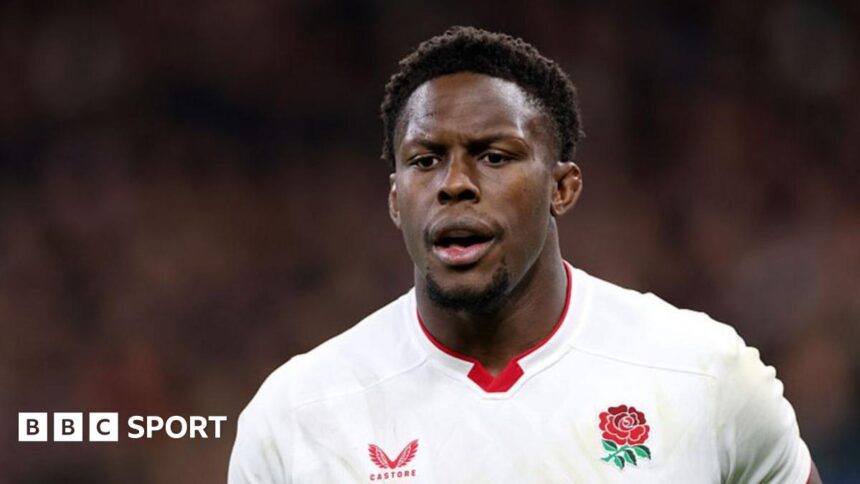
Captain Itoje Returns to England XV for Calcutta Cup Clash with Scotland
The Six Nations Championship is built on narratives of redemption, rivalry, and resurgence. As England prepare to travel north to Murrayfield, they do so with their talismanic leader restored. After a one-week absence from the starting lineup, Maro Itoje reclaims his place in the engine room and, most crucially, the captain’s armband for Saturday’s seismic Calcutta Cup encounter against Scotland. This strategic reinstatement, following a 48-7 demolition of Wales, signals Steve Borthwick’s intent: the phony war is over; the real battle begins now.
England’s opening performance was a study in efficient brutality, but the visit to Edinburgh represents an entirely different caliber of test. The return of Itoje, a player whose very presence alters the psychological and physical battlefield, is the headline act in a selection that blends continuity with calculated muscle. With the Scots wounded after a controversial defeat in France, and England seeking to prove their title credentials on hostile turf, the stage is set for a classic.
Itoje’s Restoration: More Than Just a Selection Call
Maro Itoje starting on the bench against Wales was a decision wrapped in layers of management. It was a chance to manage his workload, offer game time to others, and perhaps send a subtle message that no player is immune to rotation. His return, however, is unequivocal. Itoje is not just a world-class lock; he is England’s defensive quarterback, their chief disruptor, and a spiritual leader. His partnership with Ollie Chessum in the second row provides a blend of athleticism, grit, and lineout intelligence that is crucial for navigating the Scottish threat.
The impact of his return is twofold. Firstly, it significantly bolsters England’s set-piece and breakdown presence. Scotland, with masters of chaos like Finn Russell and Duhan van der Merwe, thrive on quick, unstructured ball. Itoje’s primary mission will be to slow that ball down, to impose his trademark “pest” factor on the gain line, and to dominate the aerial contests. Secondly, his leadership restores a familiar hierarchy. While Jamie George performed admirably as captain, Itoje’s on-pitch persona—constantly communicating, challenging referees, and rallying troops—is a unique asset in the white-hot atmosphere of Murrayfield.
The other change in the pack sees Luke Cowan-Dickie start at hooker, with George moving to a formidable impact role on the bench. This rotation keeps both front-row warriors fresh and allows England to maintain ferocious set-piece intensity for the full 80 minutes. It’s a selection that speaks to depth and strategic flexibility.
Building on the Welsh Blueprint: Can England Elevate Again?
The convincing win over poor Wales was a promising foundation, but it came with caveats. Wales were insipid, and England’s attack, while powerful, will face a sterner defensive examination. The key for Borthwick’s men is to transfer the positives from that performance—the dominant forward platform, the sharpness of Tommy Freeman, the control of George Ford—into a far more pressurized environment.
Against Scotland, the game will be won and lost in key battles:
- The Breakdown War: Itoje, Chessum, and the back row must negate the threat of Scottish jackalers like Rory Darge. Slowing Scottish ball is non-negotiable.
- Containing the Russell Factor: England’s defensive system, now orchestrated by Felix Jones, will face its ultimate test against Finn Russell’s mercurial genius. Discipline and communication must be flawless.
- Winning the Territorial Battle: Kicking strategies will be paramount. Ford’s boot must find grass, and the chase, led by men like Immanuel Feyi-Waboso, must be relentless to pin back the dangerous Scottish back three.
The flying start against Wales has built confidence, but England must be wary of any complacency. Murrayfield is a graveyard for English ambition in recent years, with Scotland claiming three of the last five home fixtures in this fixture. The memory of last year’s thrilling Twickenham defeat will also be fresh in the minds of both squads.
The Murrayfield Crucible: A Defining Test for Borthwick’s England
This match is more than just a second-round Six Nations game; it is a litmus test for the progress of Steve Borthwick’s project. Victories over faltering sides are expected. Triumphs in the cauldron of Murrayfield, against a skilled and motivated Scottish side, are statements.
For Scotland, this is a season-defining moment. After the heartbreak in Marseille, their championship hopes hinge on a victory. They will be ferocious, leveraging the emotional energy of a packed home crowd desperate for Calcutta Cup redemption. The threat of their backline, with Sione Tuipulotu and Huw Jones punching holes for van der Merwe and Kyle Steyn, is clear and present.
England’s response to this adversity will define their campaign. The return of Captain Maro Itoje is the cornerstone of their resistance. His ability to galvanize the pack, to win critical turnovers, and to project an aura of unflappable intensity is precisely what is required in such a fixture. The leadership dynamic between Itoje on the field and the experienced heads like Ford and George in supporting roles will be fascinating to watch.
Prediction: A Brutal, Narrow Affair
Expect a contest of vastly different textures to the free-flowing try-fest against Wales. Murrayfield under the lights promises a tighter, more visceral, and potentially ill-tempered battle. Set-piece reliability and goal-kicking accuracy will be worth their weight in gold.
England, with their reinforced pack and settled half-backs, have the tools to grind out a victory. Their bench, featuring the experience of George, Dan Cole, and the dynamism of Chandler Cunningham-South, looks potent. However, underestimating a wounded Scotland at home is a perilous mistake.
This will be a game of fine margins, decided by moments of individual brilliance or critical errors. The presence of Maro Itoje tips the psychological scale slightly in England’s favor. His return is a declaration that England are ready for the fight. In a brutal, seesawing encounter, England’s forward power and bench impact may just see them edge a classic by less than a score, silencing Murrayfield and taking a giant step towards championship contention.
Conclusion: The Captain’s Call to Arms
The narrative for England’s trip to Edinburgh is powerfully simple: the leader is back. Maro Itoje’s return to the starting XV is the pivotal selection in a match that will reverberate through the rest of the Six Nations. It is a move that strengthens England technically, but perhaps more importantly, it fortifies them mentally. After a convincing win over poor Wales provided a platform of confidence, the true measure of this England team’s growth will be taken in the fiercest of fires.
The Calcutta Cup is more than silverware; it is a symbol of historic rivalry and national pride. For Scotland, it’s a chance to salvage a season. For England, it’s an opportunity to prove that their early promise is built on granite, not sand. With their captain restored to his rightful place at the heart of the battle, England send a clear message: they are coming to Murrayfield not just to compete, but to conquer. The stage is set for a collision that will define the trajectory of both nations’ championships.
Source: Based on news from BBC Sport.