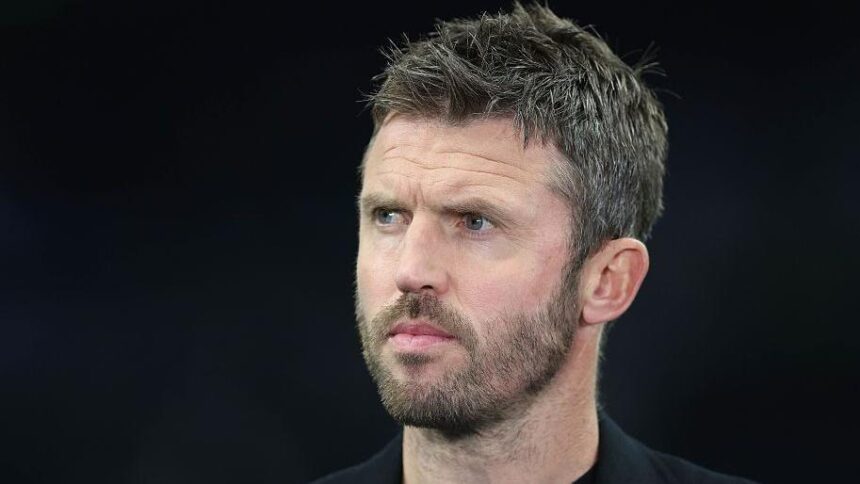
Michael Carrick Takes the Helm: Inside Manchester United’s Surprising Caretaker Appointment
The managerial merry-go-round at Old Trafford spins once more, but this time it has settled on a familiar face in a moment of profound transition. In a move that underscores both the club’s current instability and a deep-seated yearning for a connection to its recent past, Manchester United have confirmed Michael Carrick as their caretaker head coach until the end of the season. This is not Carrick’s first rodeo in the hot seat, but the context and the supporting cast around him make this a uniquely pivotal appointment for the fallen giants.
A Bridge Over Troubled Waters: Carrick’s Second Act
Michael Carrick’s return to the Old Trafford dugout is a narrative steeped in both nostalgia and necessity. The 44-year-old, a five-time Premier League winner with the club as a player, previously steadied the ship for three matches following Ole Gunnar Solskjaer’s dismissal in 2021. His brief tenure included a crucial Champions League victory against Villarreal and a defiant draw at Chelsea. Now, he is tasked with a far more substantial rescue mission.
The club’s decision comes after the abrupt sacking of Ruben Amorim on January 5th, a tenure that lasted just 14 months. First-team coach Darren Fletcher stepped in for two matches, but the board has now turned to Carrick to provide a steadier hand through the turbulent remainder of the campaign. His immediate baptism of fire? None other than a Premier League derby against arch-rivals Manchester City at the Theatre of Dreams this Saturday.
This appointment is a clear signal from the United hierarchy. It is an admission that the season’s primary objectives—a title challenge—are likely over, and the focus must shift to securing a top-four finish, navigating cup competitions, and, most importantly, restoring a semblance of identity and fight to a squad that has looked alarmingly disjointed.
Analyzing the New-Look Carrick Brain Trust
Perhaps more telling than Carrick’s own appointment is the composition of his backroom staff. United have not simply handed the keys to a club legend and wished him luck; they have constructed a multifaceted support team that blends elite experience, defensive grit, and academy continuity.
- Steve Holland as Assistant: This is the standout addition. Holland, Gareth Southgate’s long-time right-hand man with the England national team, brings a wealth of tournament experience, tactical discipline, and a proven track record of managing elite players. His presence suggests a move towards greater structural organization, a trait sorely lacking.
- Jonathan Woodgate & Jonny Evans: The inclusion of these two former defenders is a masterstroke in addressing United’s most glaring weakness: a porous and error-prone defense. Woodgate, a meticulous coach, and Evans, a recent title-winner and revered figure in the dressing room, will provide daily, expert tuition to a backline in crisis.
- Travis Binnion: The retention of the club’s Head of Player Development and Coaching ensures a vital link to the academy and the club’s long-term vision, reminding the first-team squad of the standards and pathway from within.
This is not a solo mission for Carrick. It is a collaborative, specialist effort designed to plug specific leaks in the United ship. The Carrick-Holland partnership, in particular, could be the tactical axis that finally gives United a coherent game plan.
Immediate Challenges and Season Predictions
Carrick’s in-tray is overflowing from the moment he walks through the door at Carrington. The derby against Pep Guardiola’s City is a monstrous first test, but it may also serve as a free hit where passion and organization can be the only metrics of success. The real work begins in the matches that follow.
The primary objectives for the caretaker boss are clear:
- Stabilize the Defense: With Woodgate and Evans drilling them, expect a rapid shift towards a more conservative, disciplined defensive shape. The days of being open and easy to play through must end immediately.
- Re-engage the Dressing Room: Carrick’s calm demeanor and respected status, combined with Evans’s voice and Holland’s man-management pedigree, should help unify a fractured squad.
- Define a Clear Style of Play: Moving away from the reactive patterns seen under Amorim, the new team must implement a simple, repeatable system that maximizes the strengths of players like Bruno Fernandes and Rasmus Hojlund.
Predictions for the remainder of the season are fraught with difficulty, but the Carrick appointment suggests a pragmatic approach. A top-four finish remains possible but will be a fierce battle. A deep run in the FA Cup now seems a more tangible target and would provide a crucial morale boost. Do not expect revolutionary football; expect a tougher, more resilient United that is harder to beat—a necessary foundation for any future permanent manager to build upon.
What This Means for United’s Long-Term Future
Michael Carrick’s second stint as temporary boss is arguably more significant than his first. It represents a conscious pivot from the club’s recent cycle of hiring (and firing) big-name, philosophically divergent managers. By installing a respected ex-player supported by a world-class tactical assistant in Holland and specialist coaches, United are, perhaps accidentally, modeling a modern coaching structure.
This caretaker period is no longer just about seeing out the season. It is a live audition for Carrick as a potential part of the long-term solution, whether as a future head coach or a key lieutenant. It is also a critical evaluation period for the squad: which players embrace the new demands for discipline and fight, and which ones are revealed as incompatible with the standards required?
The presence of Steve Holland is particularly intriguing. If the Carrick-Holland axis succeeds in bringing stability and a clear identity, it would not be a surprise to see the club attempt to make this arrangement permanent in the summer, albeit with Carrick likely in the lead role. It is a low-risk, high-reward strategy that finally leverages the club’s heritage in a modern football context.
Conclusion: Manchester United’s appointment of Michael Carrick is far more than a simple stopgap. It is a symbolic and strategic move that reaches back to the club’s core values while attempting to address its contemporary failings with a shrewdly assembled coaching team. The Carrick-Holland partnership, bolstered by defensive expertise, forms a compelling new power structure at Old Trafford. The mission is no longer about chasing dreams; it is about restoring pride, implementing basics, and building a platform. The journey back to the summit is long, but for the first time in a while, United’s first steps appear to be guided by a coherent plan. The Carrick Era, Part Two, begins not with a fanfare for a savior, but with the quiet, determined work of a repair crew. The football world will be watching, starting with the Manchester derby, to see if this unexpected blend of past and present can finally chart a course for the future.
Source: Based on news from Yahoo Sports.