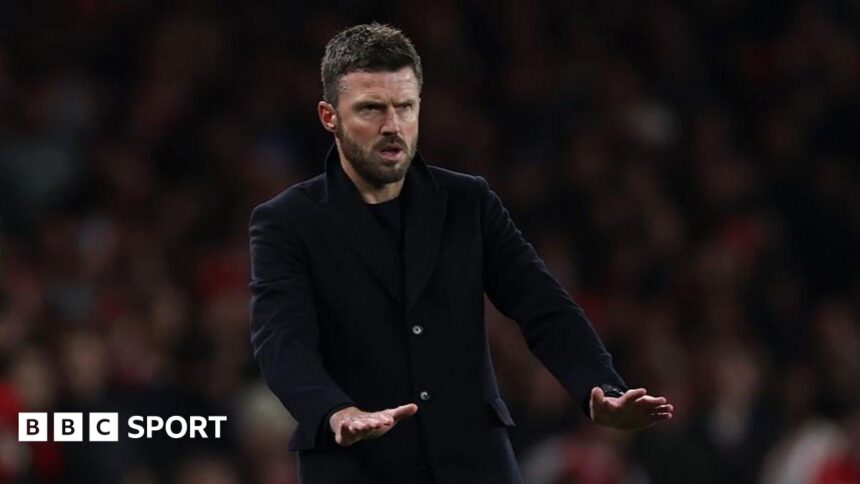
Carrick Keeps Cards Close to His Chest as Manchester United Deadline Day Drama Looms
The air at Old Trafford is thick with a potent, unfamiliar cocktail: the euphoria of a last-gasp victory over a historic rival, mixed with the lingering, anxious scent of a transfer window about to slam shut. In the afterglow of Manchester United’s thrilling 3-2 triumph over Arsenal, interim head coach Michael Carrick, typically a study in midfield composure, delivered a line that will fuel speculation until Monday’s 11pm deadline. When asked about potential reinforcements, he did not rule out a late foray into the market. This simple refusal to shut the door has thrown the club’s January strategy into a fascinating, uncertain light.
A Window of Frustration and Missed Opportunities
To understand the significance of Carrick’s non-committal stance, one must first rewind to the simmering discontent that marked the early weeks of the window under former manager Ruben Amorim. The Portuguese coach, now departed, had publicly expressed confidence in adding new faces, specifically highlighting the need for a dynamic, goal-scoring forward. The primary target was crystal clear: Antoine Semenyo of Bournemouth.
United’s pursuit of the explosive forward was serious, with a £65 million package reportedly prepared. However, in a move that stung the Old Trafford hierarchy, Semenyo opted for the blue half of Manchester, joining Pep Guardiola’s City in a deal that felt like a direct blow to United’s rebuilding ambitions. The club’s steadfast refusal to repurpose that significant sum for an alternative striker was, according to sources close to Amorim, a source of major frustration and highlighted a strategic disconnect that ultimately contributed to the manager’s exit.
This backdrop makes Carrick’s current position uniquely challenging. He is navigating the final days of the window with a squad he did not assemble, addressing needs he did not publicly define, and operating under a sporting director and ownership in a state of flux. The Semenyo saga is a ghost at the feast, a reminder of what might have been and the financial constraints—or strategic cautions—now in play.
The Glaring Hole: United’s Midfield Conundrum
While the striker chase captivated headlines, the most persistent and logical rumors have swirled around the engine room. Even in victory against Arsenal, the moments where United’s midfield was bypassed underscored a long-standing issue. The lack of a world-class, defensive-minded orchestrator has been a theme for years, and the links this January point directly to that void.
The most prominent name is a familiar Premier League foe: Ruben Neves. The former Wolves captain, now plying his trade with Al-Hilal in Saudi Arabia, embodies the profile United crave—exquisite long-range passing, tactical intelligence, and Premier League-proven quality. A loan move has been mooted, offering a low-risk, high-reward solution for all parties. Neves could provide immediate stability, allowing the likes of Kobbie Mainoo to develop without overwhelming pressure.
Beyond Neves, the club’s scouts have cast a wide net. The search appears focused on players who can control tempo and break lines with penetrative passing:
- Experience for the Run-In: Targeting a seasoned professional like Neves suggests a desire for an instant impact player who can handle the white-hot pressure of a top-four chase, rather than a project for the future.
- Financial Pragmatism: Given the heavy summer spending, any major permanent signing seems unlikely. Loan deals or clever negotiations for players entering the final 18 months of their contracts are the most probable avenues.
- A Stop-Gap or a Statement? The nature of any incoming deal will signal the board’s intent: is this a mere plaster for the rest of the season, or the first strategic move of a new era?
Carrick’s Calculated Ambiguity: A Masterstroke or Necessity?
Michael Carrick’s press conference demeanor was a lesson in management. By neither promising signings nor closing the door, he achieves several key objectives. Firstly, he avoids unsettling his current squad. Publicly hunting for a new midfielder could undermine the confidence of players like Scott McTominay and Christian Eriksen, who have fought valiantly in that area.
Secondly, he maintains a strategic negotiating position. Openly declaring United’s desperation would only inflate asking prices. Keeping the market guessing is Transfer Window 101. Finally, and perhaps most importantly, he aligns himself with the club’s often-opaque hierarchy. Carrick, in his interim role, is a company man; his comments reflect the reality that the final decision rests with John Murtough and the Glazer family, not the technical area.
This ambiguity, however, is a double-edged sword. For a fanbase yearning for clear direction and ambitious signals after a tumultuous period, the lack of a definitive “yes” or “no” can feel like more of the same indecision that has plagued the club in the post-Ferguson era. Carrick’s calm is admirable, but it does little to quell the inherent anxiety of deadline day.
Deadline Day Predictions: What to Really Expect at Old Trafford
So, will there be a new face holding up the famous red shirt by Monday night? The odds are finely balanced, but the scales may tip slightly towards activity.
The Case for a Signing: The midfield need is not just a fan or media narrative; it is an observable, statistical, and tactical reality. The board is acutely aware of the need to secure Champions League football, both for finances and to attract top talent in the summer. One shrewd loan signing could be the difference in countless tight matches. The Neves link is too persistent to be entirely without substance, and Saudi clubs have shown a willingness to facilitate short-term moves for their European stars.
The Case for Quiet: United’s financial fair play position is tighter than many realize. The summer splurge on Rasmus Hojlund, Mason Mount, and Andre Onana was significant. The club may be preserving its powder for a major summer overhaul under a new, permanent football structure. Furthermore, with the manager’s position still unresolved—Erik ten Hag remains the favorite—there is a logic to waiting and allowing a new boss to shape his own squad.
Expert Verdict: Expect a late, opportunistic move. United’s modus operandi in recent windows has been reactive. If a value deal presents itself—particularly for a midfielder like Neves on favorable loan terms—the club will likely pounce. A big-money, permanent signing, however, seems off the table. The most probable outcome is one incoming player, with a focus on midfield, arriving in a cloud of deadline day drama.
Conclusion: A Pivotal Moment in a Season of Transition
Michael Carrick’s carefully chosen words have successfully ignited the final fuse on Manchester United’s January transfer window. The club stands at a crossroads. One path leads to a proactive, aggressive move to fix a known weakness, signaling ambition and a commitment to securing top four. The other leads to a cautious, internal-focused approach, betting on the current squad and a grander summer vision.
The Antoine Semenyo disappointment hangs heavy, a symbol of lost battles in a competitive market. But the pursuit of a Ruben Neves or similar profile offers a chance at redemption. This deadline day is about more than just a player; it’s a signal of intent from a club in the throes of transformation. Will it be a statement of ambition, or a admission of short-term limitations? The next 48 hours will reveal not just who might walk through the door at Carrington, but the true direction of the Manchester United project itself. The clock is ticking, and all of football is watching.
Source: Based on news from BBC Sport.