Carrick’s Calculated Ambiguity: The Rashford Saga and Manchester United’s Crossroads
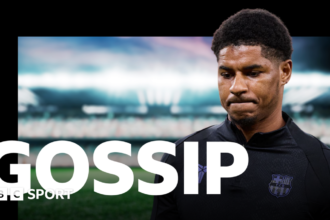
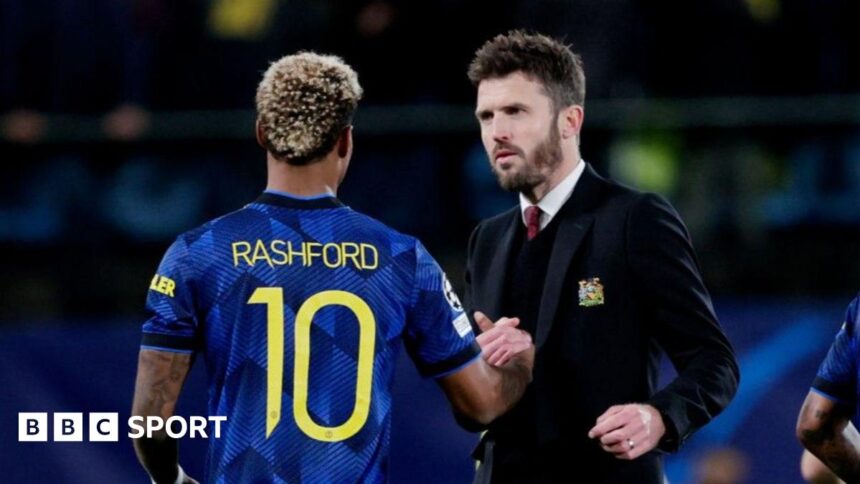
The Manchester United narrative is rarely straightforward, a tapestry woven with threads of legacy, expectation, and perpetual transition. As the club navigates another pivotal summer, a subplot from the recent past has resurfaced with compelling force: the future of Marcus Rashford. Currently plying his trade on loan at Barcelona, the England forward’s next move is shrouded in uncertainty. In a recent press conference, current head coach Michael Carrick, the man who once briefly steered Rashford’s United destiny, offered a masterclass in diplomatic openness, refusing to shut the door on a prodigal return. This isn’t just a simple loan recall; it’s a complex strategic puzzle involving finance, form, and the very identity of a club in flux.
- A Brief, Shared History: Carrick’s Interim and Rashford’s Crossroads
- The Stalemate in Spain: Barcelona’s Option and United’s Stance
- The Case For and Against a Rashford Renaissance at Old Trafford
- Expert Analysis: What Carrick’s Door-Ajar Policy Really Means
- Prediction: A Summer of Leverage and a Likely Departure
A Brief, Shared History: Carrick’s Interim and Rashford’s Crossroads
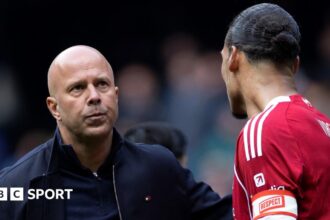
To understand the weight of Carrick’s words, one must rewind to a turbulent period at Old Trafford. Following Ole Gunnar Solskjaer’s dismissal in late 2021, Michael Carrick took interim charge for three critical matches. In that fleeting tenure, he managed a Marcus Rashford who was already showing signs of the stagnation that would define his subsequent seasons. While results were mixed, Carrick gained a firsthand, managerial perspective on Rashford’s talents and challenges within the United ecosystem. This shared history adds a layer of insider knowledge to Carrick’s current stance. He isn’t commenting on an abstract asset; he’s assessing a player he has personally deployed in high-stakes Premier League and Champions League fixtures. This context makes his refusal to rule out a Rashford return far more significant than standard coach-speak; it suggests a belief that the player he once managed could still have a role to play in the project he is now building.
The Stalemate in Spain: Barcelona’s Option and United’s Stance
The immediate future of Marcus Rashford is technically in the hands of FC Barcelona. The mechanics of the deal are clear, but the motivations are opaque.
- Barcelona’s June 15 Deadline: The Catalan club holds a €30m (£26.1m) option to buy Rashford permanently. This represents a potential bargain for a player of his pedigree and commercial appeal.
- United’s Contractual Resistance: Reports indicate the Old Trafford hierarchy is resistant to any attempt to change the terms. This is a firm line in the sand, suggesting they see the fee as non-negotiable and are prepared to welcome him back if Barcelona demurs.
- The Financial Elephant in the Room: Complicating matters is Rashford’s lucrative United contract. With two years remaining, it includes a 25% salary rise next season if United qualify for the Champions League. This clause impacts his valuation and attractiveness to other suitors, potentially making a return to Manchester his most financially logical move.
Barcelona’s decision will be a telling indicator of Rashford’s impact in La Liga. Has he done enough to convince a financially-strapped giant to part with €30m and absorb his significant wages? The clock is ticking.
The Case For and Against a Rashford Renaissance at Old Trafford
Should the Barcelona move collapse, Carrick and the United board will face a monumental decision. The debate splits the fanbase and likely the dressing room.
The Case FOR His Return: At his best, Rashford is a devastating, homegrown forward who embodies a direct, fearless style United fans crave. A World Cup summer with England under Thomas Tuchel could reignite his confidence. At 28, he theoretically enters his prime. For Carrick, a rehabilitated Rashford represents a proven, dynamic weapon who knows the club’s pressures and expectations intimately. In a system craving verticality and pace, his skill set could be revitalized. It would also be a powerful statement about redemption and faith in academy talent.
The Case AGAINST His Return: The memories of his final, disengaged seasons at United are still fresh. His form dipped alarmingly, his body language often drew criticism, and he seemed a shadow of the player who once terrorized defenses. Would his return disrupt a wage structure and a squad harmony that has been carefully rebuilt? There is a legitimate argument that both Rashford and Manchester United need a clean break to truly move forward. His return could be seen as a step backwards, a concession to sentiment over the cold, hard progress the club desperately needs.
Expert Analysis: What Carrick’s Door-Ajar Policy Really Means
Carrick’s public stance is a shrewd piece of management. By leaving the door open, he achieves several strategic objectives simultaneously. First, it maintains Rashford’s market value. Publicly discarding a player gives Barcelona—or any other club—all the leverage in negotiations. Second, it keeps a talented player motivated. Knowing his boyhood club hasn’t written him off could spur Rashford to excel at the World Cup, ironically boosting his value whether United sell or keep him. Third, and perhaps most crucially, it gives Carrick and the new football operations team optionality. The summer transfer window is unpredictable; if primary targets become unattainable, having a player of Rashford’s caliber as a potential “new signing” is a valuable fallback.
Ultimately, Carrick’s ambiguity is a power play. It signals that United are in control of this narrative. The message is clear: we are not desperate to sell, nor are we begging you to return. The ball is in your court—perform, convince Barcelona to pay, or come back and fight for a place in a new era. It places the onus squarely on Rashford to define his own next chapter.
Prediction: A Summer of Leverage and a Likely Departure
While the door is open, the wind seems to be blowing Rashford away from Manchester. The financial realities, combined with the need for a fresh start for all parties, point towards a permanent separation. Barcelona’s final decision is key, but even if they decline the option, a sale to another European club or a Premier League rival seems more probable than a reintegration at Carrington.
Carrick’s comments ensure United approach any sale from a position of strength, potentially sparking a bidding war. Rashford’s likely involvement in a successful World Cup campaign for England could be the perfect shop window. The most plausible scenario sees Rashford moving on, with Carrick’s dignified openness ensuring the departure is on United’s terms, preserving the club’s dignity and potentially its bank balance.
The Marcus Rashford saga is a microcosm of modern Manchester United: a story of immense talent, unfulfilled potential, financial complexity, and emotional ties. Michael Carrick, a figure who bridges the club’s past and present, has handled the public-facing element with deft calm. He has kept a door open that many assumed was locked, not out of overwhelming desire, but out of strategic necessity and professional respect. Whether Rashford walks back through it remains highly doubtful. But in the high-stakes poker of football transfers, Carrick has just shown his cards are close to his chest, and United, for once, are playing the hand, not reacting to it. The final move, however, will be dictated by events in Catalonia and on the world stage this summer.
Source: Based on news from BBC Sport.