Darkness Descends: Overtime Drama Electrified by Sudden Blackout at Mullins Center
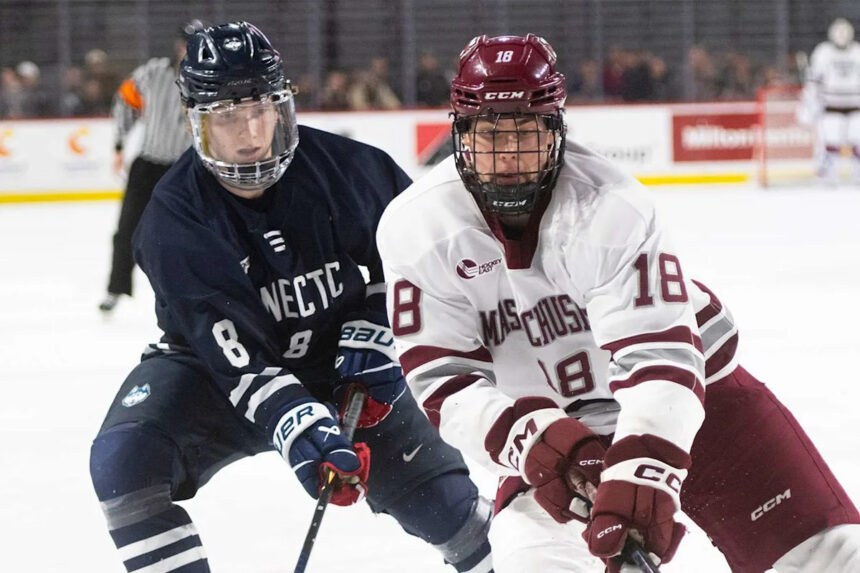
In the world of sports, we often speak of moments being “frozen in time.” But during a pivotal Hockey East clash on Saturday night, time wasn’t frozen—it was utterly consumed by darkness. A critical men’s college hockey game between the University of Connecticut Huskies and the University of Massachusetts Minutemen was plunged into an eerie blackout at the most inopportune moment imaginable: the heart of overtime. With the score knotted at 3-3 and a potential game-winning chance unfolding, the Mullins Center’s lights flickered and died, creating a scene of surreal interruption that overshadowed the eventual shootout result.
A Sudden Eclipse: The Moment the Lights Went Out
The stage was set for a classic finish. After three periods of back-and-forth action, the game had progressed to a tense, sudden-death overtime period. Every rush held the weight of the outcome. Then, as UConn defenseman Kai Janviriya collected the puck and began steering a promising attack toward the UMass net, the arena’s lighting system staged a rebellion. Viral videos from the incident tell a chilling tale: the bright banks of lights began to strobe erratically, like a malfunctioning flashbulb, before surrendering completely. In an instant, the pristine sheet of ice, the vibrant jerseys, and the anxious faces of players and fans were swallowed by shadow. The abrupt silence, punctuated only by the confused murmurs of the crowd, was as dramatic as any roaring goal. This wasn’t a planned stoppage; it was a pure, unscripted technical difficulty that left everyone in a state of suspended animation.
The immediate aftermath was a masterclass in improvisation. Officials halted play, players gathered at their benches, and arena staff scrambled. After a delay, emergency lighting provided a ghostly glow, enough to see outlines but not to play high-level Division I hockey. The extended interruption effectively neutered the momentum of overtime, casting a pall over the conclusion of the game’s most thrilling frame.
Beyond the Glitch: Analyzing the Impact on Play and Psychology
To dismiss this as a mere inconvenience is to misunderstand the high-stakes rhythm of playoff-caliber hockey. The psychological impact of such an interruption is profound and warrants expert analysis.
- Momentum Assassination: UConn, with Janviriya leading the charge, was building pressure. The blackout didn’t just stop play; it vaporized a potential game-winning sequence. The Huskies were forced to sit and cool down as the adrenaline seeped away.
- The Reset Effect: For UMass, a team that had just been under threat, the darkness provided a lifeline—a free timeout to regroup, breathe, and receive coaching instruction they otherwise wouldn’t have gotten.
- The Shootout Wild Card: When play finally resumed and the overtime concluded scoreless, the game moved to a shootout. This is a skills competition, a vastly different test than 5-on-5 overtime hockey. The team that may have been destined to win in flow-state play now had to compete in a lottery-style finish. The blackout didn’t just delay the outcome; it may have fundamentally altered the pathway to it.
Ultimately, the UMass Minutemen stabilized and secured the extra conference point by winning the shootout. But the victory, while official, will forever carry an asterisk of “what if?” in the minds of players and fans. Did the technical difficulties rob UConn of a chance, or simply provide a bizarre twist of fate that both teams had to endure? This debate is the true legacy of the event.
Infrastructure and Atmosphere: When the Stage Itself Fails
This incident shines an unforgiving light on arena operations and the fragile ecosystem of a live sporting event. Modern sports are a spectacle of light, sound, and seamless execution. A total failure of the primary lighting system during an event is exceptionally rare, suggesting a significant power or systems issue. It raises immediate questions about backup protocols and the stress on aging infrastructure in college athletic facilities.
Furthermore, the fan experience was irrevocably changed. The collective gasp, the shared confusion, and the extended wait under dim lights transformed a night of passionate fandom into a strange, communal vigil. While memorable, it’s not the memory teams or venues wish to create. The Mullins Center blackout serves as a stark reminder that for all the focus on player safety and game integrity, the game itself is utterly dependent on the invisible systems humming in the background.
Looking Ahead: Predictions and Repercussions
While the game’s result is logged in the standings, the reverberations from this event will be felt in several ways.
- League and Facility Scrutiny: Expect Hockey East and UMass facilities management to conduct a thorough review. Other venues will likely preemptively check their own systems. The conference may even consider protocols for such extreme interruptions.
- Recruiting Narrative: For programs like UConn and UMass, locked in a fierce battle for regional supremacy, every detail matters. A state-of-the-art, reliable game-day experience is a recruiting tool. An opponent’s facility failing at a critical moment becomes a talking point, however subtle.
- Team Resilience: How each team responds in their next matchup will be telling. For UConn, will this fuel a narrative of injustice and hardened resolve? For UMass, does the somewhat tainted win create complacency, or prove their ability to win amid chaos? The mental fallout is the next chapter.
As the season barrels toward the Hockey East tournament, this game will be referenced. If these two teams meet again in the playoffs, the storyline is pre-written: a chance for redemption in the light, or confirmation of supremacy under pressure.
Conclusion: An Unforgettable Night in the Dark
The clash between the UConn Huskies and UMass Minutemen will be remembered not for a dazzling overtime winner or a spectacular save, but for the absence of light. The sudden blackout at Mullins Center was a jarring reminder of sport’s vulnerability to the mundane—a blown fuse, a tripped breaker, a systems failure. It interrupted a moment of pure athletic poetry and replaced it with bewildering silence. While UMass officially earned the victory in the shootout, the true winner was the unpredictable drama of live sports. In an era of hyper-polished broadcasts, this raw, unfiltered malfunction proved that no script can account for everything. The darkness, however inconvenient and controversial, gave us a story that shines a light on the very essence of competition: the struggle to triumph not only over an opponent, but over circumstance itself.
Source: Based on news from Yahoo Sports.